



கம்பராமாயணம் 84 · பால 3.3
பாடல் · The poem
Tap a word to see its gloss in the commentary and where else it occurs.
பாட வேறுபாடு · Project Madurai reads
பொருள் · Meaning in Tamil
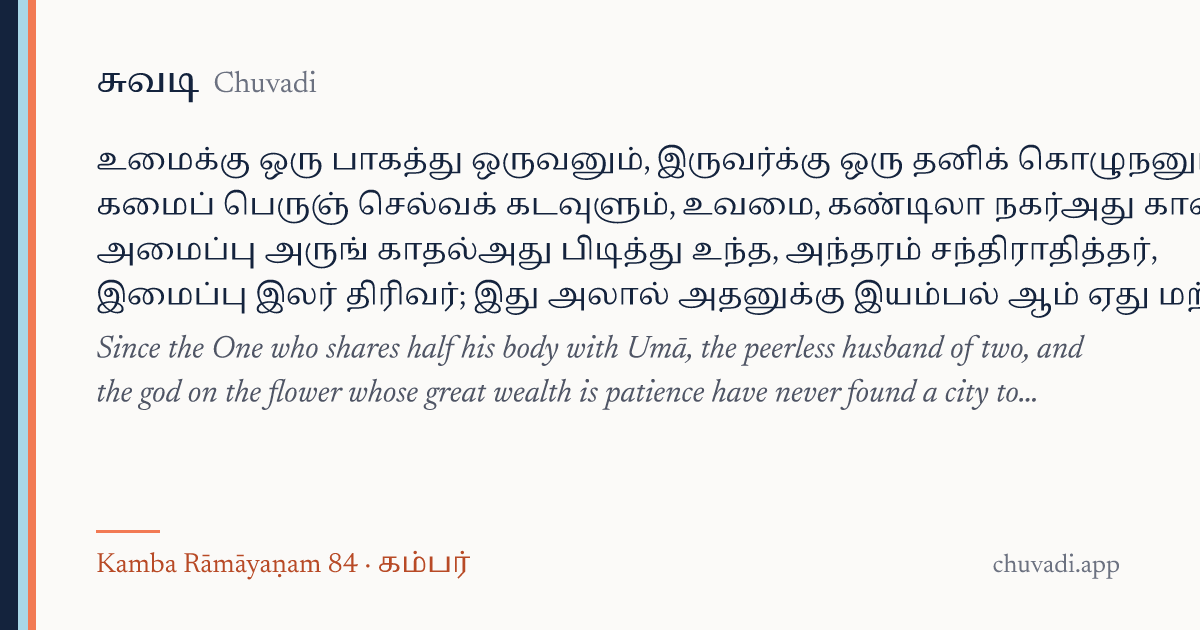
உமைக்கு ஒரு பாகத்து ஒருவனும் - உமாதேவியை இடப்பாகத்திலே கொண்டிருக்கும் சிவபெருமானும்; இருவர்க்கு ஒரு தனிக் கொழுநனும் - பூமகள், நிலமகள் ஆகிய இருவருக்கும் ஒப்பற்ற கணவனாகிய திருமாலும்; மலர்மேல்கமைப் பெருஞ்செல்வக் கடவுளும் - தாமரை மலரில் பொறுமையே பெருஞ் செல்வமாகக் கொண்டு வாழும் பிரம தேவனும்; உவமை கண்டிலா நகர் அது காண்பான் - எனவே இவர்களே உவமை கூற முடியாத வேறு இந்நகரைக் காண்பதற்கு நகர் இல்லை என்பதால்; அமைப்பு அருங் காதல் அது பிடித்துந்த - தடுக்கொணாத விருப்பம் பிடித்துத் தள்ள (அதனால்); அந்தரம் சந்திராதித்தர் இமைப்பிலர் திரிவர் - வானத்திலே சந்திர, சூரியர்கள் இமைக்காதவர்களாகத் திரிகின்றனர்; இது அலால் அதனுக்கு இயம்பலாம் ஏதுமற்றுயாதோ - இதுவல்லாது அவர்கள் திரிவதற்குச் சொல்லக் கூடிய காரணம் வேறு எது?
சிவன், திருமால், பிரமன் ஆகிய மூவருமே அயோத்திக்குச் சமமான ஒரு நகரத்தைக் கண்டதில்லை. சந்திரனும், சூரியனும் நாள்தோறும் கண்களை இமைக்காமல் வானத்திலே திரிந்து வரக் காரணம் இந்த நகரத்தைக் காண வேண்டும் என்பதே. அதுவல்லது வேறு காரணம் சொல்ல இயலுமோ என்பது கருத்து. இதுஒரு தற்குறிப்பேற்ற அணி. இருவர் திருமகளும் நிலமகளும்: கமை: பொறுமை. ஏது காரணம். அந்தரம்: வானம். ஆதித்தன்: சூரியன். படைத்தல், காத்தல், அழித்தல் ஆகிய முத்தொழில் புரியும் இம்மூவர் அறியாமல் வேறு ஒருநகர் இருப்பதற்கு இல்லை.
ஆங்கிலம் · English translationAI
Translation
- Since the One who shares half his body with Umā, the peerless husband of two, and the god
- on the flower whose great wealth is patience have never found a city to compare with it, to look at that city,
- driven by a longing that cannot be held back, the moon and the sun in the sky
- wander without ever blinking; what other cause for this could anyone name?
What the poem says
Why do the sun and moon travel across the sky every day without ever closing their eyes? The poet offers a fanciful explanation. Not even the three great gods have seen a city to compare with Ayōttī. Śiva shares his body with Umā, Vishnu is husband of the goddesses of fortune and earth, and Brahmā sits on his lotus, rich in patience. These three create, protect and destroy everything that exists. If they know no equal to Ayōttī, there is none. So the sun and moon, gripped by an irresistible longing, circle overhead day after day, gazing at it without blinking.