



கம்பராமாயணம் 8648 · யுத்த 21.161
பாடல் · The poem
Tap a word to see its gloss in the commentary and where else it occurs.
பொருள் · Meaning in Tamil
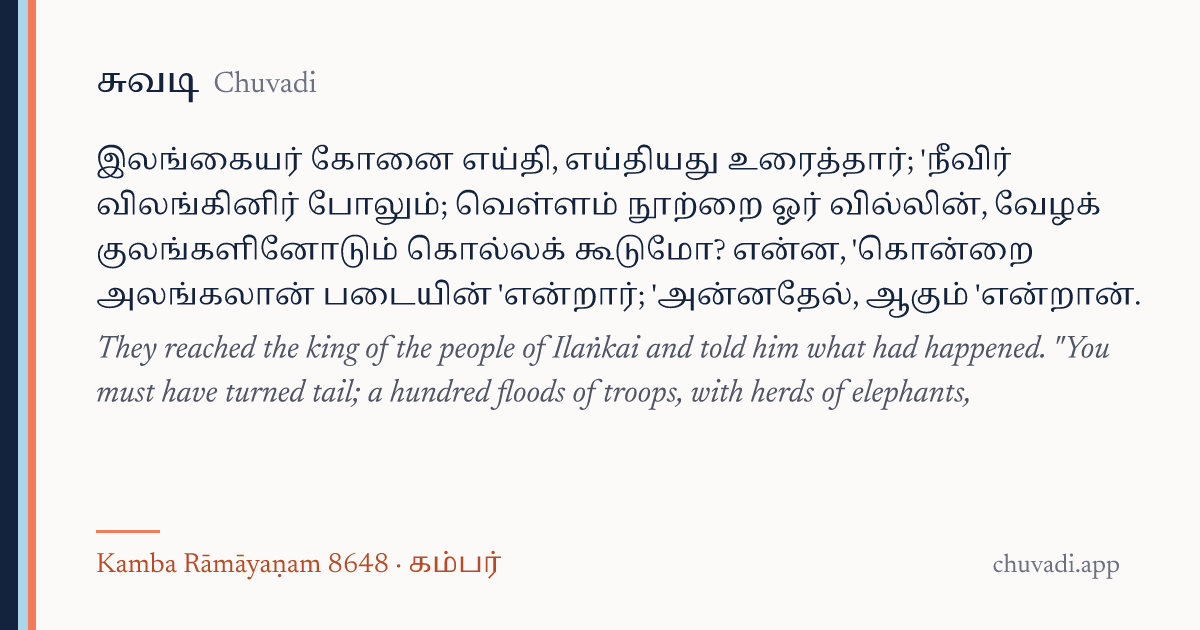
இலங்கையர் கோனை எய்தி - (சென்ற தூதர்கள்) இலங்கையர் வேந்தனாகிய இராவணனை அடைந்து; எய்தியது உரைத்தார் - (போர்க்களத்தில்) நிகழ்ந்த செய்தியை எடுத்துரைத்தார்கள்; நீவிர் விலங்கினர் போலும் - (அது கேட்ட இராவணன் அத்தூதர்களை நோக்கி) நீங்கள் (அஞ்சி) விலகித் திரும்பினீர் போலும்; வேழக் குலங்களினோடும் - யானைக் கூட்டத்துடன்; வெள்ளம் நூற்றை - நூறு வெள்ளம் சேனைகளையும்; ஓர் வில்லின் கொல்லக் கூடுமோ - ஒரு வில்லாலே கொன்றொழித்தல் கூடுமோ?; என்ன - என்று கேட்க; கொன்றை அலங்கலான் படையின் என்றார் - கொன்றை மாலை அணிந்த சிவபெருமானின் படைக்கலமாகிய பாசுபதாத்திரத்தினால் (இவ்வாறு நம் சேனை அழிவுற்றது) எனத் தூதர் விடை கூறினார்; “அன்னதேல், ஆகும்” என்றான் - (அதனைக் கேட்ட இராவணன் அப்படியானால் அரக்கர் சேனை எல்லாம் அழிவது நிகழ்ந்திருக்கும் என உடன்பட்டு உரைத்தான்.
ஆங்கிலம் · English translationAI
Translation
- They reached the king of the people of Ilaṅkai and told him what had happened. "You
- must have turned tail; a hundred floods of troops, with herds of elephants,
- killed by a single bow — can that be?" he asked. "By the weapon of him
- who wears the koṉṟai garland," they said. "If so, it may be," he said.
What the poem says
The messengers report the disaster to Irāvaṇaṉ. At first he does not believe them. He thinks they ran away, and he cannot accept that a hundred 'floods' of soldiers, an enormous number, could be destroyed by one archer.
When they say Ilakkuvaṉ used Śiva's weapon (Śiva wears the koṉṟai, the Indian laburnum flower), Irāvaṇaṉ accepts that such destruction is possible.