



கம்பராமாயணம் 8744 · யுத்த 22.26
பாடல் · The poem
Tap a word to see its gloss in the commentary and where else it occurs.
பொருள் · Meaning in Tamil
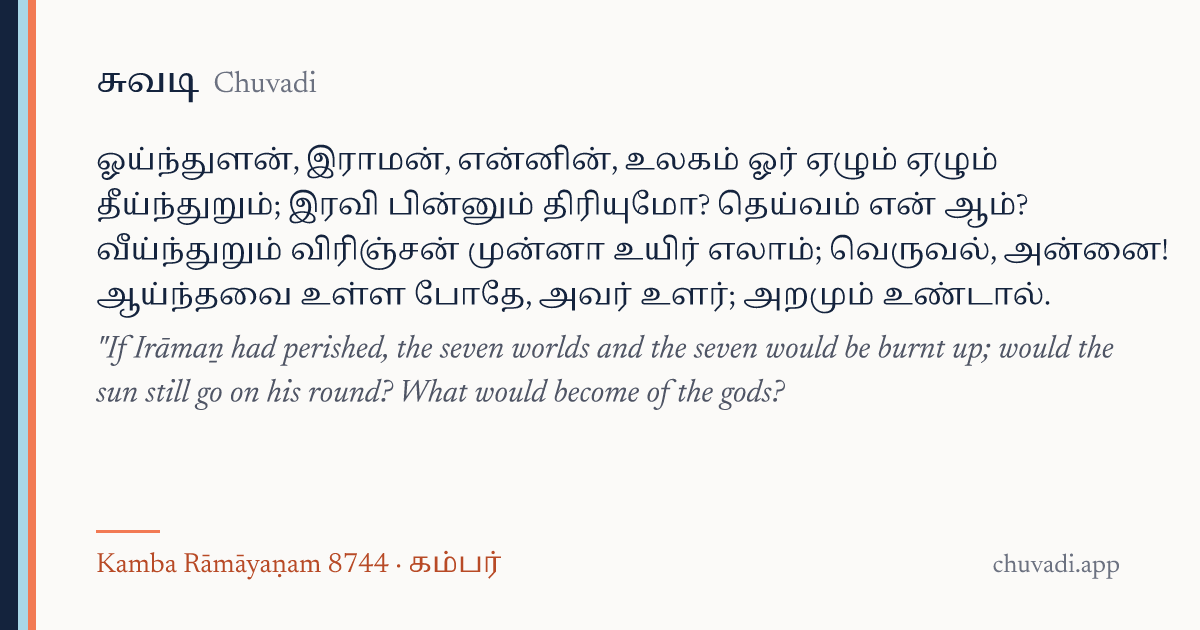
ஓய்ந்துளன், இராமன் என்னின் - இராமன் இறந்துளன் ஆயின்; உலகம் ஓர் ஏழும் ஏழும் தீய்ந்துறும் - கீழ் ஏழ் உலகமும் மேல் ஏழ் உலகமும் தீய்ந்து போயிருக்கும்; இரவி பின்னும் திரியுமோ? தெய்வம் என் ஆம்? - சூரியன் பின்னும் விண்ணில் திரிவானோ? ஊழாகிய தெய்வம் என்ன பயனுடையதாகும்? விரிஞ்சன் முன்னா உயிர் எலாம் வீய்ந்துறும் - பிரமன் முதலிய உயிர்கள் எல்லாம் அழிவுறும்; ஆய்ந்தவை உள்ளபோதே அவர் உளர்; அறமும் உண்டால் - மேற்கூறியவை அழியாமல் உள்ள போதே அவரும் இருக்கின்றனர்; தருமமும் உண்டு; அன்னை வெருவல் - அன்னையே நீ அஞ்சாதே!
உலகிற்கு முதற் காரணமாயிருக்கின்ற இராமன் அழிந்திருந்தால் அவன் காரியமாக விளங்கும் உலகங்களும் உயிர்களும் அழிந்திருக்க வேண்டும். அவை அழியாமலிருப்பதால் இராமனும் உளன், இலக்குவனும் உளன், தருமமும் உண்டு' என அருத்தாபத்தி அளவையால் திரிசடை நிறுவுகின்றாள். வீடணன் போலவே, அவன் மகளும் இராமனின் தெய்வத் தன்மையை அறிந்திருக்கிறாள்.
ஆங்கிலம் · English translationAI
Translation
- "If Irāmaṉ had perished, the seven worlds and the seven
- would be burnt up; would the sun still go on his round? What would become of the gods?
- All lives, with Brahmā at their head, would perish; do not be afraid, mother!
- So long as the things we have weighed still stand, they live; and Dharma lives too."
What the poem says
Tiricaṭai's last argument is from cause and effect. Irāmaṉ is the first cause of the universe. If he had died, the fourteen worlds would have burned, the sun would have stopped, and every being down to Brahmā would have perished.
All these still exist, so Irāmaṉ, Ilakkuvaṉ and Dharma must still live. The commentary notes that, like her father Vīṭaṇaṉ, Tiricaṭai understands that Irāmaṉ is divine.