



கம்பராமாயணம் 89 · பால 3.8
பாடல் · The poem
Tap a word to see its gloss in the commentary and where else it occurs.
பாட வேறுபாடு · Project Madurai reads
பொருள் · Meaning in Tamil
நால்வகைச் சதுரம் விதிமுறை நாட்டி - நான்கு சதுரமாகச் சிற்ப நூல் விதிப்படியே நாட்டப்பட்டு; நனி தவ உயர்ந்தன - மிகவும் உயர்ந்துள்ள மதில்கள் போன்ற; பனி தோய் மால் வரைக் குலத்தின் யாவையும் இல்லை - குளிர்ந்த பெரிய மலைக் கூட்டத்தின் எந்த மலையும் இங்கில்லை; ஆதலால் உவமை மற்றில்லை - ஆதலால் மதிலுக்கு உவமை கூற வேறு எதுவும் இல்லை; பொன்மதில் நிலை - அழகிய அந்நகரத்து மதில்களின் நிலைமை (பற்றிச் சொல்லு வோமானால்); நூல்வரை தொடர்ந்து - ஞான நூல்களின் எல்லை வரை சென்று; பயத்தொடு பழக - கற்றறிதலோடு நில்லாமல் பயனாகப் பெற்று உணர்ந்து அவற்றின்; நுணங்கிய நுவலரும் உணர்வே - நுணுக்கமாகியதும், கூறுதற்கரியதும் ஆகிய மெய்யுணர்வையே; போல் வகைத்து அல்லால் - போன்ற தன்மை உடையதல்லாமல்; உயர்வினோடு உயர்ந்தது - அந்த மெய்யுணர்வைப் போலவே உயர்ந்தது (என்றும் கூறலாம்).
வலிமையும், பெருமையும், உயர்வும் உள்ள மலைகளை மதிலுக்கு உவமை சொல்லலாம் என்றால், அம்மலைகள் சதுரமாக இல்லை. எனவே, உவமை பொருந்தாது. தவிர: மதில்கள் மலைகளைவிட உயர்ந்துள்ளன. வரைக்குலம்: மலைகளின் தொகுதி. பயன்: அறம் முதலிய நால் வகைப்பயன்கள்.
நுணங்கிய நுவலரும் உணர்வு: நுட்பமாகிய சொல்லுதற்கு இயலாத மெய்யுணர்வு எனலாம். 'உயர்வற உயர்வை' உடைய பரம்பொருளை எட்டிப் பிடிக்கும் உணர்வே மெய்யுணர்வாம். மதில் உயர்வுக்கு உணர்வை உவமை கூறியது உயர்வு நவிற்சி அணி. சிலேடை அணியும் கலந்த கலவையணி என்பதும் பொருந்தும். பொன்மதில்: பொன்னாலாகிய மதில் என்பதும் பொருள். 'செம்பு இட்டுச் செய்த இஞ்சி' (7431) என்ற இடத்தில் மதில்களை உலோகம் கலந்து கட்டுவது உண்டு என்று குறிப்பது காண்க. இலங்கை மதில் செம்பு இட்டுச் செய்தது. அயோத்தி மதில் பொன் (தங்கம் அல்லது உலோகம்) கலந்து கட்டியது.
உயர்வு: உயரமுள்ள பொருளைக் குறிக்கும். ஆகுபெயர்
ஆங்கிலம் · English translationAI
Translation
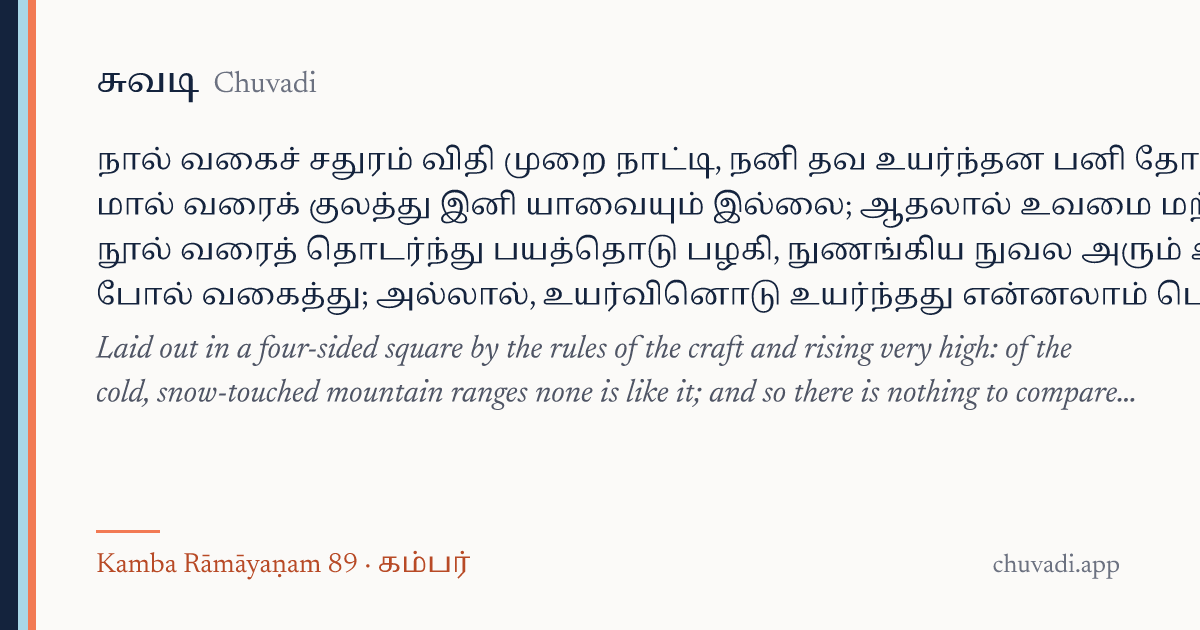
- Laid out in a four-sided square by the rules of the craft and rising very high: of the cold,
- snow-touched mountain ranges none is like it; and so there is nothing to compare with it;
- except the subtle understanding, beyond all telling, of those who follow the scriptures to their bounds and live them through their fruits:
- it is like that; or else one may say this golden wall stands as high as height itself.
What the poem says
The poet turns to Ayōttī's walls. Built as a perfect square according to the rules of architecture, they rise so high that even the Himalayan ranges cannot match them, for mountains are neither square nor as tall. The only fitting comparison is with true spiritual knowledge. That is the subtle understanding, too fine for words, reached by those who study the scriptures to their very end and live by them. Such knowledge rises to the Supreme, the "highest beyond all height".
The wall is called golden, which may mean it was built with gold or other metal worked into it. Elsewhere in the epic, Ilaṅkai's walls are said to be made with copper.