



கம்பராமாயணம் 898 · பால 14.12
பாடல் · The poem
Tap a word to see its gloss in the commentary and where else it occurs.
பொருள் · Meaning in Tamil
மின்னொடும் பிறங்கிய - மின்னல்களோடு விளங்கிய; மேகங்கள் - மேகங்கள்; இடை - அந்தச் சந்திர சயில மலைப் பக்கத்தில்; படி புக்காலென - பூமியில் சேர்ந்தாற் போல; பிடி புக்குப் படிதர - பெண்யானைகள் படிந்து நிற்க (அவற்றின் மேல் ஏறியிருந்த); கொடி அன்ன மடவார் - பூங்கொடி போன்ற மகளிர்; துடி புக்கா இடை - உடுக்கையை உவமையாகக் கூறப்பெறும் வெல்லும் இடை உடைய, திருமகள் தாமரை துறந்து - இலக்குமி தாமரை மலரைவிட்டு; குடி புக்கால் என - (அங்கே) குடி புகுந்தாற் போல; பரிபுரம் புலம்ப - (தம் கால்களின்) பாதச் சிலம்புகள் ஒலிக்கவும் (நடந்து), குடிபுக்கார் - (தத்தம் விடுதிகளில்) குடி புகுந்தார்கள்.
பெண் யானைகளின் மேல் ஏறிவந்த சில பெண்கள் அவை பூமியில் படிந்திருக்க, அவற்றிலிருந்து இறங்கிச் சென்று ஒரு சூழலில் குடிபுகுந்தனர் என்பது.
மகளிரைத் தாங்கிய பெண்யானைகளுக்கு மின்னலைத் தாங்கிய மேகங்கள் உவமை.
ஆங்கிலம் · English translationAI
Translation
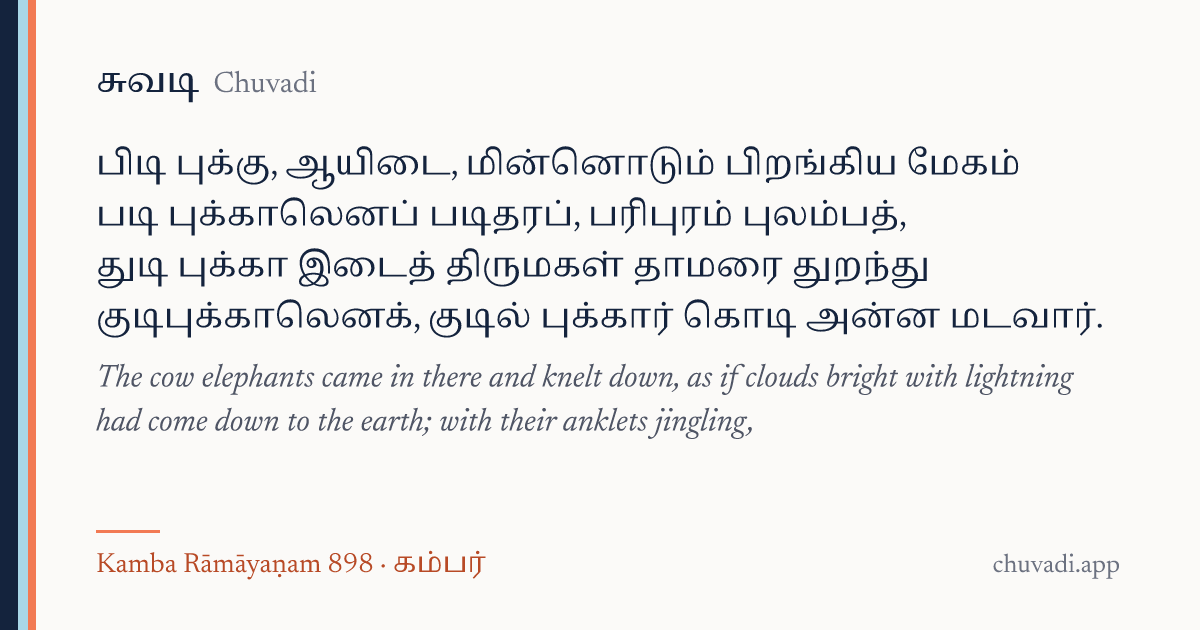
- The cow elephants came in there and knelt down, as if clouds bright with lightning
- had come down to the earth; with their anklets jingling,
- like Tirumakaḷ leaving her lotus to come and dwell there, she whose waist puts the drum to shame,
- the young women, slender as creepers, went into their lodges.
What the poem says
Other women arrive on cow elephants. The elephants kneel to let them down, looking like dark clouds with lightning that have sunk to the ground. The women, bright as lightning, climb down.
Then they walk with their anklets ringing into the tents set up for them. Each one is like Tirumakaḷ, the goddess of fortune, leaving her lotus to come and live in a new home. A slim waist is traditionally compared to the narrow middle of an hourglass-shaped drum, and theirs is slimmer still.