



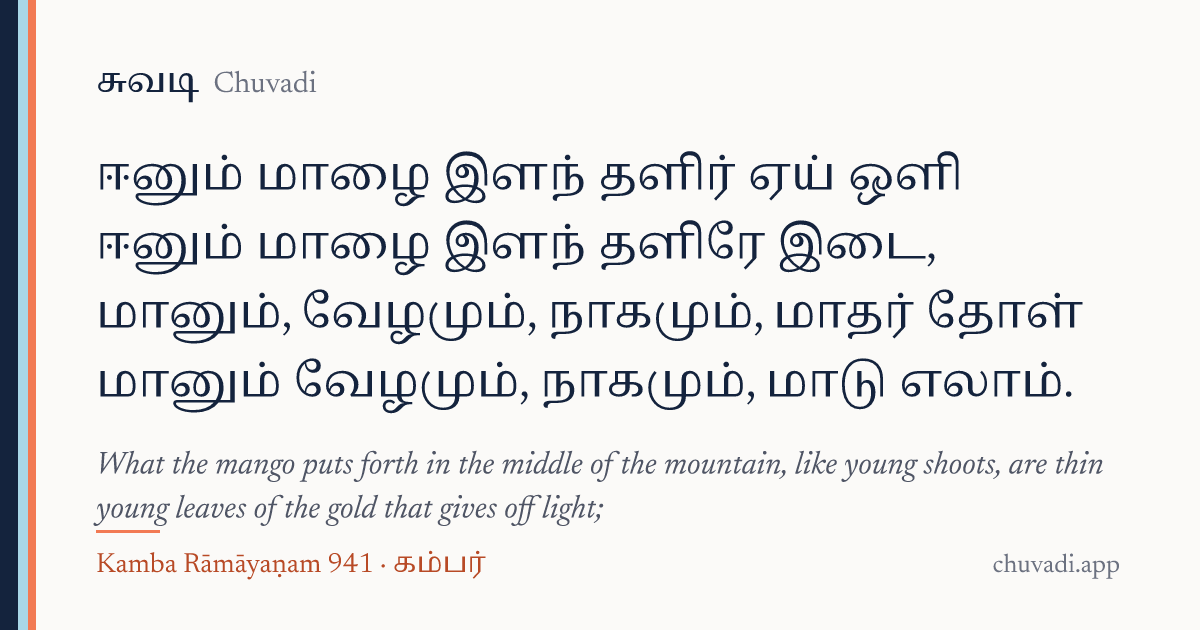
கம்பராமாயணம் 941 · பால 14.55
பாடல் · The poem
Tap a word to see its gloss in the commentary and where else it occurs.
பொருள் · Meaning in Tamil
இடை ஈனும் - (அம் மலையின்) நடுப்பாகத்தில் தளிர்க்கின்ற; மாழை இளந்தளிர் ஏய் - மாமரத்தின் இளைய தளிரையொத்த; ஒளி ஈனும் மாழை - ஒளியைத் தரும் பொன்னின்; இளந் தளிரே - மெல்லிய தகடுகளாகும்; மாடு எலாம் - அந்த மலையின் பக்கங்களிலெல்லாம்; மானும் வேழமும் - மானும் யானையும், நாகமும் - பாம்பும்; மாதர் தோள் மானும் - மகளிரின் தோளையொத்த தன்மையைக் கொண்ட; வேழமும் நாகமும் - மூங்கில்களும் சுரபுன்னை மரங்களும் (உள்ளன).
யமகம் என்னும் மடக்கணி. மாழை: மாமரம், பொன். நாகம்: பாம்பு.
ஆங்கிலம் · English translationAI
Translation
- What the mango puts forth in the middle of the mountain, like young shoots, are
- thin young leaves of the gold that gives off light;
- deer, elephants and snakes, and, like women's shoulders,
- bamboos and nākam trees are found on every side.
What the poem says
A new metre begins, and this verse is a yamakam: the first two lines, and the last two, repeat the same syllables with different meanings. Māḻai means both "mango" and "gold". Vēḻam means both "elephant" and "bamboo". Nākam means both "snake" and the nākam tree. Māṉum means both "deer" and "resembling".
So the mountain's mango trees put out shoots that are really thin leaves of gold. On every slope there are deer, elephants and snakes, and also bamboos as smooth as women's arms and nākam trees.