



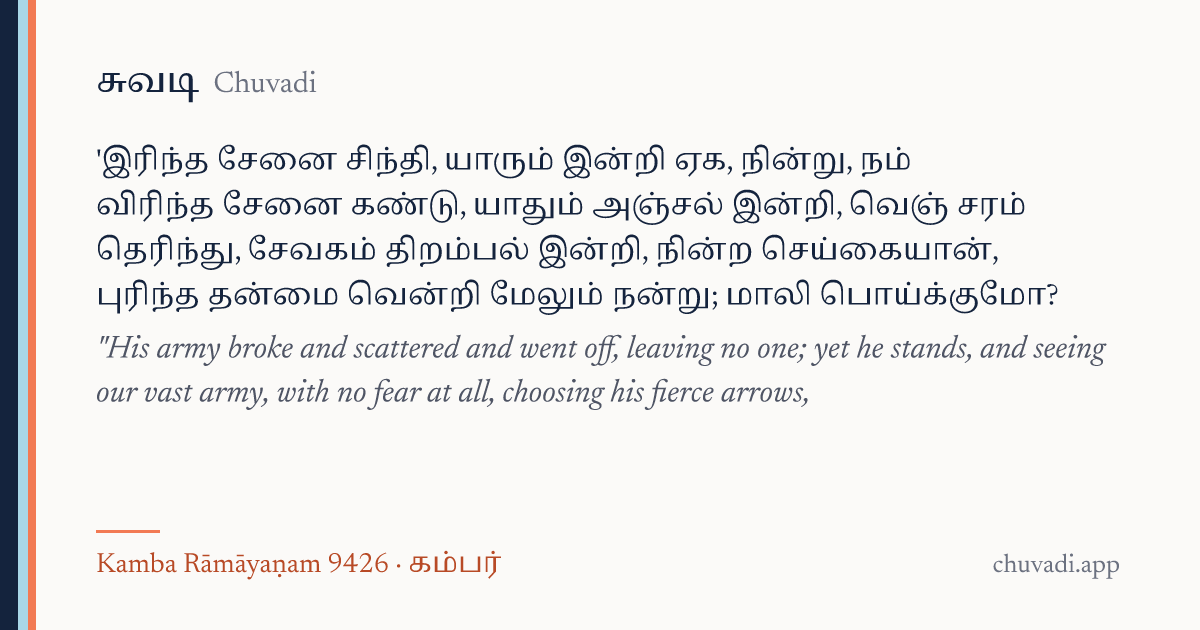
கம்பராமாயணம் 9426 · யுத்த 30.75
பாடல் · The poem
Tap a word to see its gloss in the commentary and where else it occurs.
பொருள் · Meaning in Tamil
இரிந்து சிந்தி - ஓடிச் சிதறி; யாரும் இன்றிச் சேனை ஏக - போர்க்களத்திலே எவரும் எஞ்சி நிற்காமல் வானர சேனை முழுவதும் போய்விட; நின்று - உறுதியாகப் போர்க்களத்திலே நிலைத்து நின்று; விரிந்த நம் சேனை கண்டு யாதும் அஞ்சல் இன்றி - பரந்துள்ள நம் அரக்கர் சேனையைக் கண்டு சிறிதும் பயம் இல்லாமல்; வெஞ்சரம் தெரிந்த சேவகம் திறம்பல் இன்றி - பகைவரை அழித்தலில் கொடிய கணைகளைத் தேர்ந்தெடுத்து எய்யும் வீரர்க்குரிய நெறியிலிருந்து பிறழாமல்; நின்ற செய்கையான் - போரிலே உறுதியாக நிற்கும் வீரச் செய்கை உடைய இந்த இராமன்; புரிந்த தன்மை வென்றி - போர் விரும்பும் தன்மையால் பெறும் வெற்றி; மேலும் நன்று - மேன்மேலும் சிறப்புடையதே யாகும்; மாலி பொய்க்குமோ - மாலியவான் சொன்னது பொய்யாகுமா (ஆகாது என்று அரக்கர் வியந்தனர்.
ஆங்கிலம் · English translationAI
Translation
- "His army broke and scattered and went off, leaving no one; yet he stands,
- and seeing our vast army, with no fear at all, choosing his fierce arrows,
- never swerving from a warrior's duty: the victory this man of steadfast deeds
- has aimed at is better still. Could Māli's words prove false?"
What the poem says
The demons themselves marvel at Irāmaṉ. His whole army has fled, yet he stands alone, unafraid of their vast host, carefully choosing his arrows and never straying from the warrior's code. Whatever victory he wins will be all the greater for it.
They recall the warning of Māliyavāṉ, Irāvaṇaṉ's aged grandfather, who had counselled against this war, and ask whether his words could ever prove false.