



கம்பராமாயணம் 963 · பால 14.77
பாடல் · The poem
Tap a word to see its gloss in the commentary and where else it occurs.
பாட வேறுபாடு · Project Madurai reads
பொருள் · Meaning in Tamil
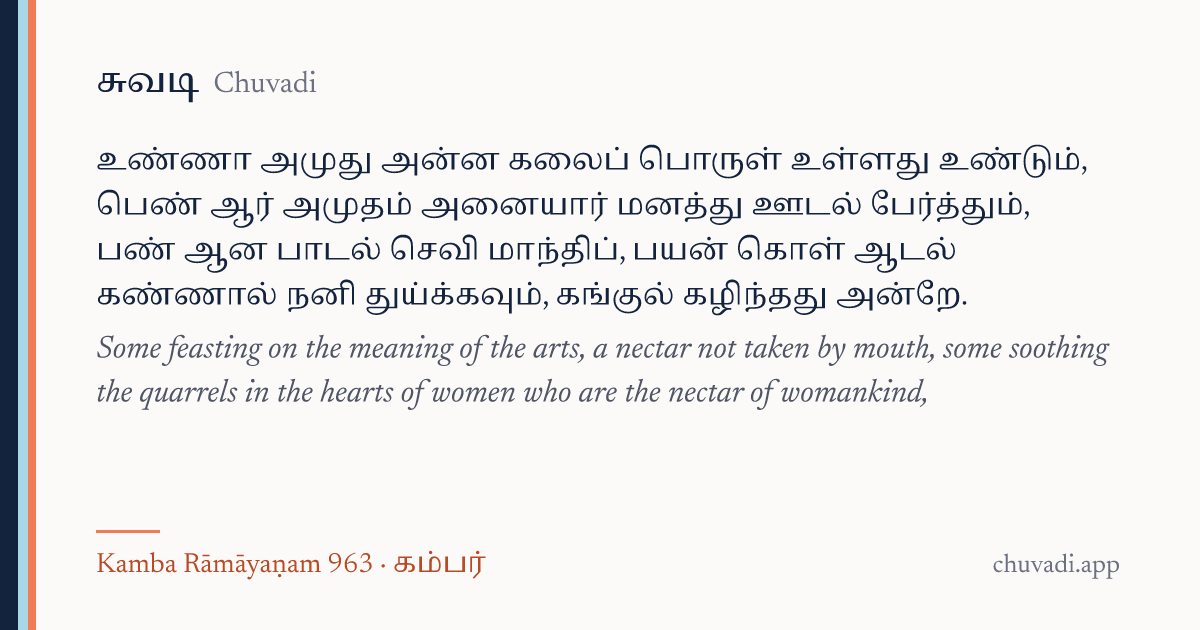
உண்ணா அமுது அன்ன - (வாயால்) உண்ணப்படாத அமுதத்தை ஒத்த; கலை உள்ளது பொருள் - கலையின் பொருள்நுட்பங்களாக உள்ளதை; உண்டும் - நேரில் அனுபவித்ததாலும்; பெண் ஆர் அமுதம் அனையார் - பெண்களுள் கிடைத்தற்குரிய அமுதம் போன்றவரான மாதர்களின்; மனத்து ஊடல் - நெஞ்சத்து ஊடலை, பேர்த்தும் - போக்குவதனாலும்; பண் ஆர்ந்த பாடல் - இசையோடு பொருந்திய பாடல்களை; செவி மாந்தி - காதால் கேட்டு; பயன் கொள் - அப்பாடலின் பொருளைக் கொண்ட; ஆடல் கண்ணால் - நடனத்தை தம் கண்களால்; நனி துய்க்கவும் - நன்றாக அனுபவித்ததாலும்; கங்குல் கழிந்தது - அன்றைய இரவு (அச்சேனை மக்களுக்கு) நீங்கியது.
அச் சேனையில் இருந்த ஆடவருள் சிலர் கலையின்பத்தை நேரே அனுபவித்தும், சிலர் தம் மனைவியரின் புலவியைப் போக்கியும் சிலர் இனிய இசையோடு பாடும் பாடலைக் கேட்டும் ஆடலைக் கண்டும் அந்த இரவைக் கழித்தனர் என்பது. பாடலின் பயன்கொண்ட ஆடல் - பாடற் பொருளை அபிநயித்துக் காட்டும் அபிநய நாடகம்.
ஆங்கிலம் · English translationAI
Translation
- Some feasting on the meaning of the arts, a nectar not taken by mouth,
- some soothing the quarrels in the hearts of women who are the nectar of womankind,
- drinking in with their ears songs set to melody, and with their eyes
- taking their fill of dances that bring out the songs' meaning, they saw the night pass.
What the poem says
The night passes in pleasure. Some enjoy the arts, a nectar tasted with the mind rather than the mouth. Some make up with their sulking wives. Others listen to songs and watch dances that act out the words of the songs in gesture.
This ends the poet's description of the halt at the Moon Mountain. The next day the march toward Mithila continues.