



கம்பராமாயணம் 967 · பால 15.4
பாடல் · The poem
Tap a word to see its gloss in the commentary and where else it occurs.
பாட வேறுபாடு · Project Madurai reads
பொருள் · Meaning in Tamil
திண் சிலை புருவம் ஆக - இந்தப் பெண்கள் தங்கள் புருவங்கள் என்னும் வலிய வில்லால்; சேயரிக் கருங்கண் அம்பால் - செவ்வரி பரந்த கரிய கண்களாகிய அம்புகளைக்கொண்டு, புண்சிலர் செய்வர் என்று - (நம்மைப்) புண்கள் சிலர் செய்யக் கூடும் என்று; மஞ்ஞை போவன போன்ற - மயில்கள் (அஞ்சி) அங்கிருந்து வெளியேறுவது போல் வெளியேறின (மாதறி; பண்சிலம்பு அணிவாய் ஆர்ப்ப - அந்தப் பெண்ணின் பண்கள் போல் ஒலிக்கும் அழகியவாய் ஒலியை (கேட்டு); கிள்ளை(கள்) நாணினால் பறந்த - கிளிகள் (அவர்கள் போலத் தம் வாயால் இன்னொலி எழுப்ப இயலாமைக்கு) வெட்கமுற்று (அங்கிருந்து) பறந்து போயின; மாதர் ஒண் சிலம்பு அரற்ற ஒதுங்கு தோறு(ம்) - அப் பெண்களின் ஒலிமிக்க சிலம்புகள் ஒலிக்க அடிபெயர்த்து நடக்கும் போதெல்லாம்; அன்னம் ஒதுங்கும் - (அவர்களின் அந்த அணி நடைக்குத் தோற்றுப்போன (நடைக்குப் புகழ் பெற்ற) அன்னப்பறவைகள் (அங்கிருந்து) வெளியேறும்.
பாவையர் சோலையுள் நுழைந்தவுடன், பறவைகள் சோலையினின்றும் வெளியேறின என நயம்பட உரைத்தார். இதுகாறும் சாயலுக்கும் மொழிக்கும் நடைக்கும் தாங்களே என்று புகழ் மகுடம் சூட்டிக் கொண்டிருந்தவை, இப்பெண்டிர் வருகையால் பெருமையிழந்து வெளியேறினவாம். அன்ன நடை இவர் நடையாதலால் இயலாமைக்கண்டு அவை ஓடி ஒளிந்தமையால் “ஒதுங்கும் அன்னம்” என்றார். தற்குறிப்பேற்றவணி. அன்னத்தின் ஒலி சிலம்பொலி போல் இருக்கும் என்பது, “சிலம்பின் அன்னம் நின்றிரங்கும்” (கம்ப. 335) என்பதனால் அறியலாம். ஆகவே, மாதர் ஒண் சிலம்பு அரற்ற, தம் இனமென்று பெண்கள் ஒதுங்கும் இடமெல்லாம் ஒதுங்கிச் சென்ற அன்னங்கள், பின் பெண்டிர் நடையழகு கண்டு நாணி வெளியேறுவன போன்று பறந்தன எனினுமாம்.
ஆங்கிலம் · English translationAI
Translation
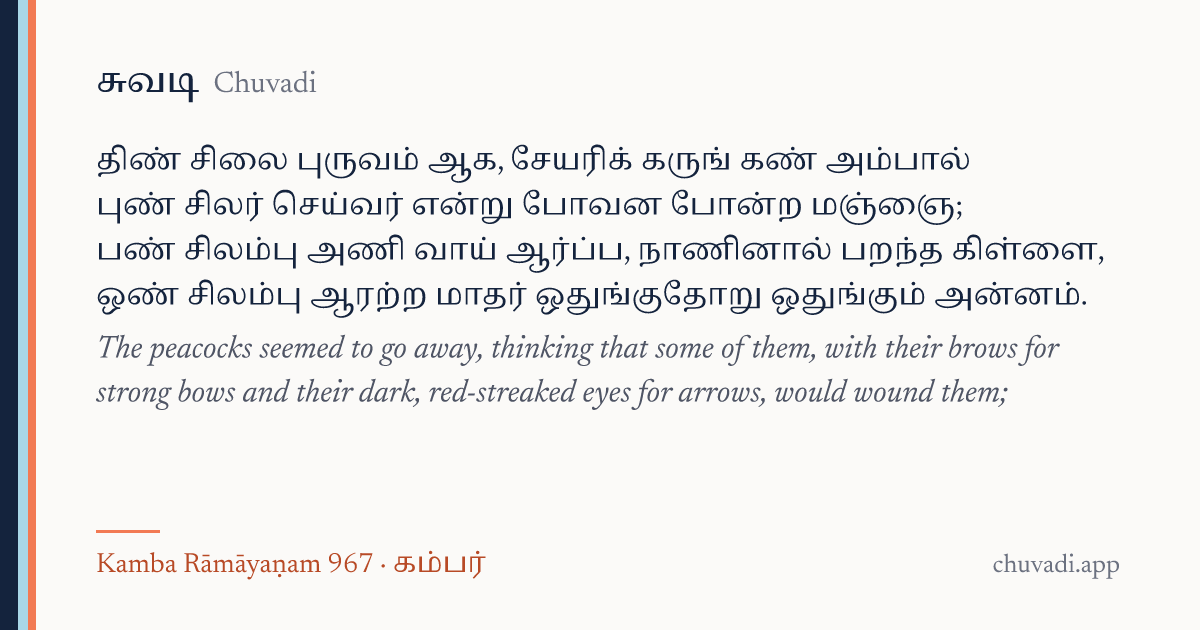
- The peacocks seemed to go away, thinking that some of them, with their brows for strong bows
- and their dark, red-streaked eyes for arrows, would wound them;
- the parrots flew off in shame as the women's lovely mouths rang out like tuned anklets;
- and the swans moved aside each time the women moved, their bright anklets crying out.
What the poem says
As the women enter the grove, the birds leave, each beaten at its own speciality. The peacocks, famous for their grace, flee as if afraid of the women's eyes, which are arrows shot from the bows of their brows. The parrots, famous for their speech, fly off ashamed because the women's voices are sweeter.
The swans, famous for their graceful walk, give way wherever the women walk. Another reading is that the swans first followed the women, taking the jingle of their anklets for the call of their own kind, and then flew off in shame when they saw how much more graceful the women's walk was.