



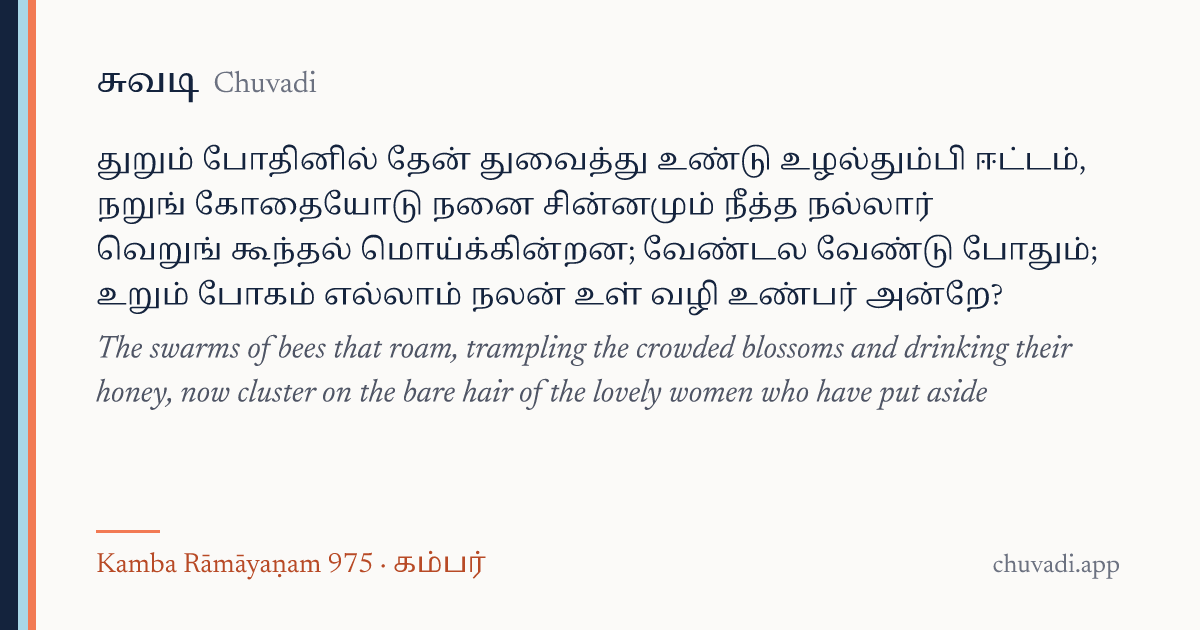
கம்பராமாயணம் 975 · பால 15.12
பாடல் · The poem
Tap a word to see its gloss in the commentary and where else it occurs.
பொருள் · Meaning in Tamil
துறும் போதினில் - அடர்ந்து கிடக்கின்ற மலர்களில்; துவைத்து - மிதித்து; தேன் உண்டு உழல் - தேனையுண்டு திரிகின்ற, தும்பி ஈட்டம் - வண்டுகளின் கூட்டம்; நறுங் கோதையோடு - மணம்மிகு மலர்மாலைகளோடு; நனை சின்னமும் - தேன் நனையும் விடு பூக்களையும்; நீத்த நல்லார் - நீக்கிய பெண்டிருடைய வெறுங் கூந்தல் மொய்க்கின்றன - (பூவில்லற) வெறுங் கூந்தலில் மொய்ப்பன ஆயின; வேண்டும்போதும் வேண்டல - (அவை முன்பு) விரும்பிய மலர்களையும் (இப்போது) விரும்பவில்லை; நலன் உள்வழி - (பெரியோர்) நற்குணங்கள் உள்ள இடத்தில்; உறும் போகம் எல்லாம் உண்பர் அன்றே! - அடையத்தக்க இன்பங்களையெல்லாம் (விடாது) அடைவார்கள் அல்லரோ?
பூங்காவில் மகளிர் பூக்கொய்ய நுழைந்தபோது, அதுவரை மலர்களைப் பெரியனவாய் எண்ணி, அவற்றில் மதுவுண்டு கொண்டிருந்தன வண்டினங்கள்; அவற்றை அறவே புறக்கணித்து, அவர்கள் நுழைந்தபின், அவர்களின் கூந்தலை மொய்க்கத் தொடங்கிவிட்டன. மலர்களில் உள்ள நறுமணத்தை விட, மகளிரின் மலர் சூடாக் கூந்தலில் உள்ள இயற்கை மணம் மிக்கிருத்தலால், “வெறுங் கூந்தல் மொய்க்கின்றன” என்றார். மகளிர் கூந்தலுக்கு இயற்கையிலேயே மணம் உண்டு என்பதனை, “அரிவை கூந்தலின் நறியவும் உளவோ நீ அறியும் பூவே?” (குறுந். 2) எனும் புகழ்பெற்ற இறையனார் பாடலால் அறியலாம். இன்றைய அறிவியலும் இதனைப்பும். “போதும் (மலரும்) வேண்டல; வெறுங் கூந்தல் மொய்க்கின்றன” என்றதனால் அம் மலர்களினும் கூந்தல் மணம் மிக்கிருந்தது என்பது புலப்படும். முன்பு சூடியிருந்த மலர்களின் மணம் அம்மலர்கள் இல்லாத போதும் நறுநெய் படிந்த கூந்தலில் தேங்கிக் கிடந்தமையால், வெறுங்கூந்தலிலும் வண்டுகள் மொய்த்தன எனினுமாம். வேற்றுப் பொருள் வைப்பணி. துறுதல்: அடர்தல், செறிதல். போது: மலர்
ஆங்கிலம் · English translationAI
Translation
- The swarms of bees that roam, trampling the crowded blossoms and drinking their honey,
- now cluster on the bare hair of the lovely women who have put aside
- their fragrant wreaths and their honey-soaked loose flowers; they no longer want even the flowers they wanted;
- where true excellence is found, do not all seek out every pleasure there is?
What the poem says
Before the women came, the bees were busy drinking from the flowers. Now the women have taken off their garlands and loose blossoms, yet the bees leave the flowers and crowd onto the women's bare hair. Its natural fragrance is sweeter than any flower's. An alternative reading is that the scent of earlier flowers still lingers in their oiled hair.
The poet recalls a famous Sangam poem, in which a lover asks a bee whether any flower it knows smells sweeter than his beloved's hair. He ends with a maxim: wherever real excellence is found, people go to enjoy it.