



கம்பராமாயணம் 977 · பால 15.14
பாடல் · The poem
Tap a word to see its gloss in the commentary and where else it occurs.
பாட வேறுபாடு · Project Madurai reads
பொருள் · Meaning in Tamil
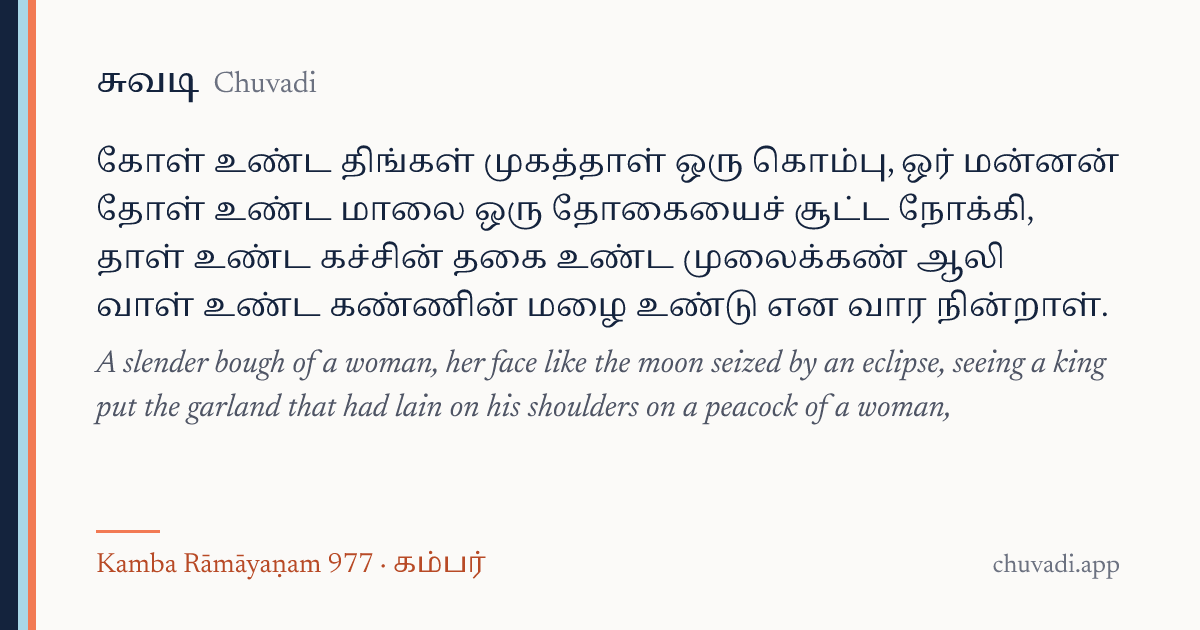
கோள் உண்ட திங்கள் முகத்தாள் ஒரு கொம்பு - மேகத்தால் சூழப்பெற்ற நிலாப் போன்ற முகமுடைய கொடி போன்றாள் தன் கணவனான; ஓர் மன்னன் தோள் உண்ட மாலை - அரசன் தோளில் அணிந்துள்ள மாலையை; ஒரு தோகையைச் சூட்ட நோக்கி - மயில் அனையாள் ஆகிய மற்றொரு உரிமை மகளுக்கு அணிவதைப் பார்த்து; தாள் உண்ட கச்சின் தகையுண்ட முலைக்கண் - முடிச்சிட்ட கச்சின் இயல்பையழித்த முலைக் கண்களின் மேல்; வாள் உண்ட கண் ஆலி - வாளைவென்ற கண்களிலிருந்து (வருகின்ற) கண்ணீர்த்துளிகள்; மழையுண்டென வார நின்றாள் - மழை பொழிவது போலப் பொழிய நின்றாள்.
தன் தலைவன் இத்தகு அன்போடு சூட்டவில்லையே எனும் ஏக்கம் அவள் கண்ணீருக்குக் காரணம் ஆயிற்று. நாருண்ட மாலையை விடவும் அவன் தோளுண்ட மாலைக்கே ஏங்கினாள் என்று கணவன் அன்புக்கு ஏங்கும் மகளிர் மனநிலை சுட்டினார். கண்களும் மழை பெய்வது உண்டு எனக் காட்டுவாள் போல் அழுதாள் என்பார் “கண்ணின் மழையுண்டென வார நின்றாள்” என்றார். “ஓர் மன்னன்” என வரற் பாலது, செய்யுள் ஆதலின் “ஓர் மன்னன்” என வந்தது. இனிவருவனவற்றிற்கும் இவ்வாறே கொள்க.
ஆங்கிலம் · English translationAI
Translation
- A slender bough of a woman, her face like the moon seized by an eclipse,
- seeing a king put the garland that had lain on his shoulders on a peacock of a woman,
- stood with the tears of her sword-defeating eyes pouring like rain
- onto the nipples of breasts that had burst the beauty of their knotted bodice.
What the poem says
A queen watches her husband, a king, take the garland from his own shoulders and put it on another of his wives. Her moon-like face darkens as if eclipsed. Her eyes, sharper than swords, pour tears like rain onto her breasts.
What she longs for is not the garland but the warmth of his shoulders that it carried, and the love it stands for.