




குறுந்தொகை 107
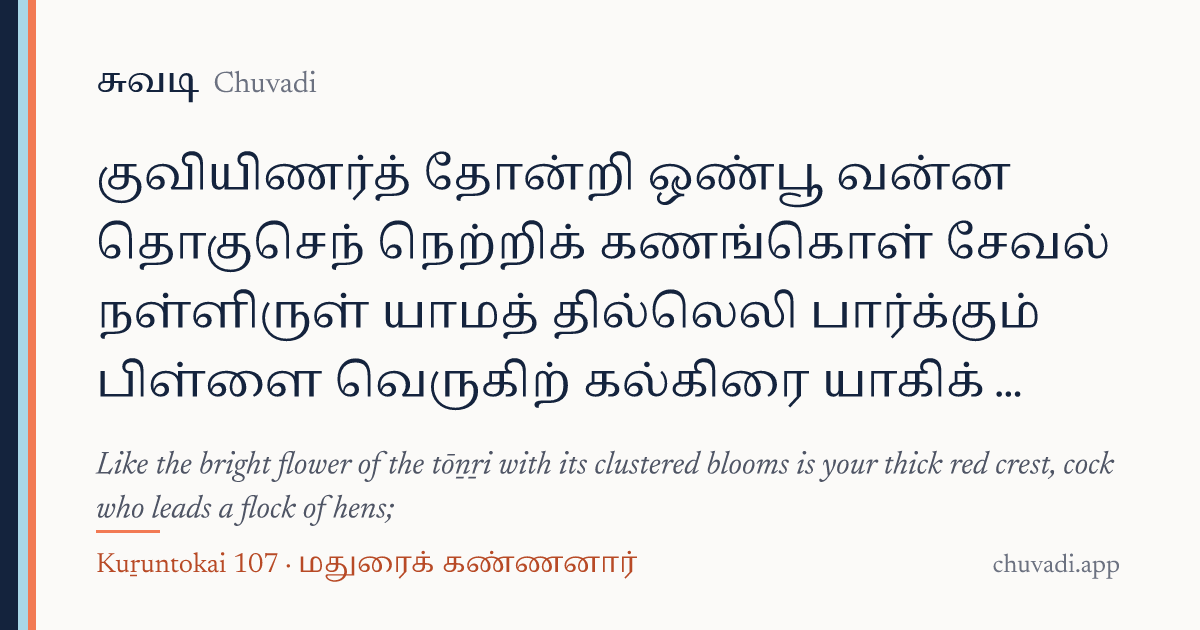
பாடல் · The poem
Tap a word to see where else it occurs.
பொருள் · Meaning in TamilAI
குவிந்த கொத்துகளுடைய தோன்றிப் பூவின் ஒளிமிக்க மலரைப் போலச் செறிந்த சிவந்த கொண்டையுடைய, பெட்டைக்கோழிக் கூட்டத்தோடு திரியும் சேவலே! நள்ளிரவு இருளில் வீட்டு எலிகளைத் தேடித் திரியும் இளங்காட்டுப்பூனைக்கு நீ இரவு உணவாகி, கொடிய துன்பத்தை அடைவாயாக! ஏனெனில், நீர்வளமும் புதுப்புது வருவாயும் மிக்க ஊரனோடு பாதுகாப்பாக நான் தூங்கிய இனிய உறக்கத்தை நீ கூவி எழுப்பிவிட்டாய்.
மருதத் திணை; தலைவி கூற்று. கணவனோடு கழித்த இரவை விடியலில் கூவிக் கலைத்த சேவலை அவள் சினந்து சபிக்கிறாள். சினமும் செல்லக்கோபமும் கலந்த இந்தச் சாபம், அந்த உறக்கம் அவளுக்கு எவ்வளவு அருமையானது என்பதைக் காட்டுகிறது. ஊடலைப் பாடும் மருதப் பாடல்களிடையே இது கூடி மகிழ்ந்ததைப் பாடும் அரிய பாடல்.
ஆங்கிலம் · English translationAI
Translation
- Like the bright flower of the tōṉṟi with its clustered blooms
- is your thick red crest, cock who leads a flock of hens;
- at midnight in the deep darkness, watching for house rats,
- may you become the night's food of a young wild cat
- and meet with cruel harm, you! For, with the man of the town
- of broad waters and new abundance, I was lying
- in safe, sweet sleep, and you woke me.
What the poem says
The heroine curses the rooster whose crowing ended her night with the hero. The tiṇai is marutam, the farmland of towns and quarrels, but this is a rare marutam poem of fulfilled love rather than sulking.
Her anger is comic and tender at once. She describes the cock's splendid red comb, like a tōṉṟi (glory lily) flower, then wishes him a gruesome end: to be snatched in the dark by a young wild cat prowling for rats. The curse measures how precious the sleep beside her husband was.
The hero is called ūraṉ, 'man of the town', with the familiar marutam epithets of plentiful water and fresh prosperity. In other marutam poems those same epithets often carry a hint of his wandering to courtesans; here they seem simply descriptive.