



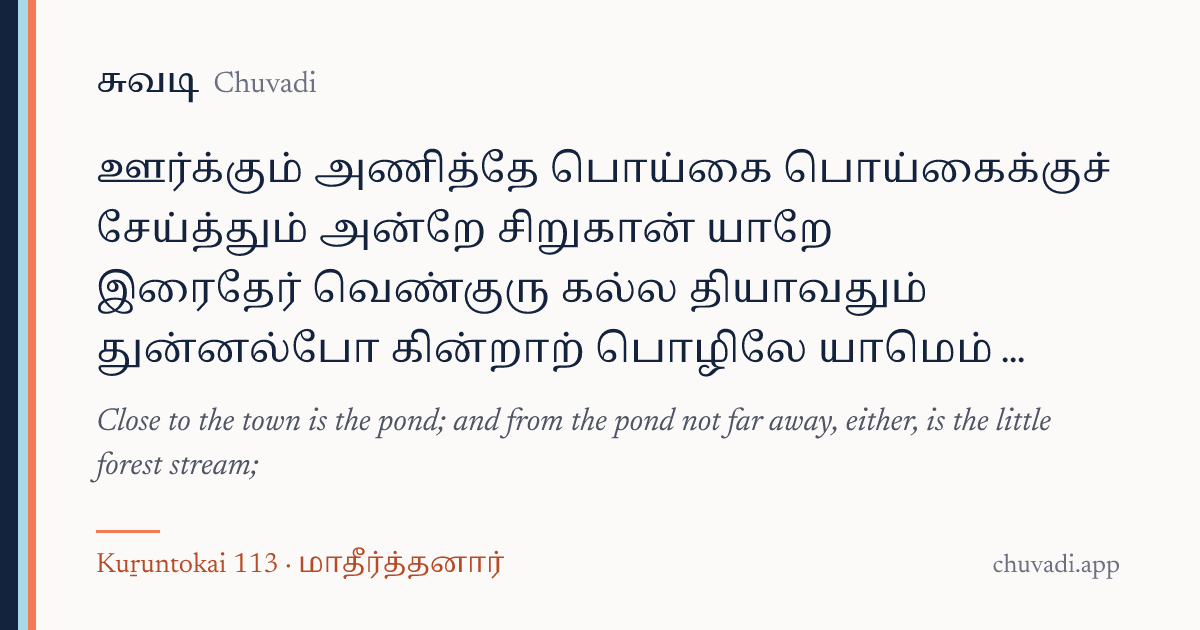

குறுந்தொகை 113
பாடல் · The poem
Tap a word to see where else it occurs.
பொருள் · Meaning in TamilAI
ஊருக்கு அருகிலேயே ஒரு பொய்கை இருக்கிறது; அந்தப் பொய்கைக்கு அதிகத் தொலைவில்லாமல் ஒரு சிறிய காட்டாறு ஓடுகிறது. இரை தேடும் வெள்ளைக் கொக்குகளைத் தவிர வேறு எதுவும் அந்தச் சோலையை நெருங்குவதில்லை. நாங்கள் எங்கள் கூந்தலுக்கு இடும் களிமண்ணைக் கொண்டுவர அங்கே போகிறோம்; அந்தப் பெரிய பேதைப் பெண்ணும் அங்கே வரக்கூடும்.
மருதத் திணை; தோழி கூற்று. தலைவனிடம் இயல்பாகப் பேசுவது போலத் தலைவியைச் சந்திக்கும் இடத்தையும் நேரத்தையும் தோழி குறிப்பால் உணர்த்துகிறாள். கொக்குகள் மட்டுமே வரும் சோலை, யாரும் காணாத மறைவிடம் என்பதைக் காட்டுகிறது. "பெரும்பேதை" என்பது தலைவியைப் பற்றிய அன்பான கேலிச்சொல்.
ஆங்கிலம் · English translationAI
Translation
- Close to the town is the pond; and from the pond
- not far away, either, is the little forest stream;
- apart from white herons hunting for food, nothing at all
- comes near the grove. We are going
- to fetch clay to wash our hair — we will be going there;
- and she may come there too, that great innocent girl.
What the poem says
The friend speaks to the hero and, in a few casual sentences, tells him where he can meet the heroine. The pond, the stream and a quiet grove nearby are all within reach of the village, yet hidden: only herons go there.
The pretext is a girls' errand. Young women went to the water to collect fine clay (eru-maṇ) used for washing and softening the hair, and the heroine, whom the friend calls with affectionate irony 'the great simpleton', might happen to come along too.
Although the meeting itself belongs to kuṟiñci, the setting of town, pond and fields places it in marutam, as the tradition records. The poet's name is given as Mātīrttaṉār.