




குறுந்தொகை 117
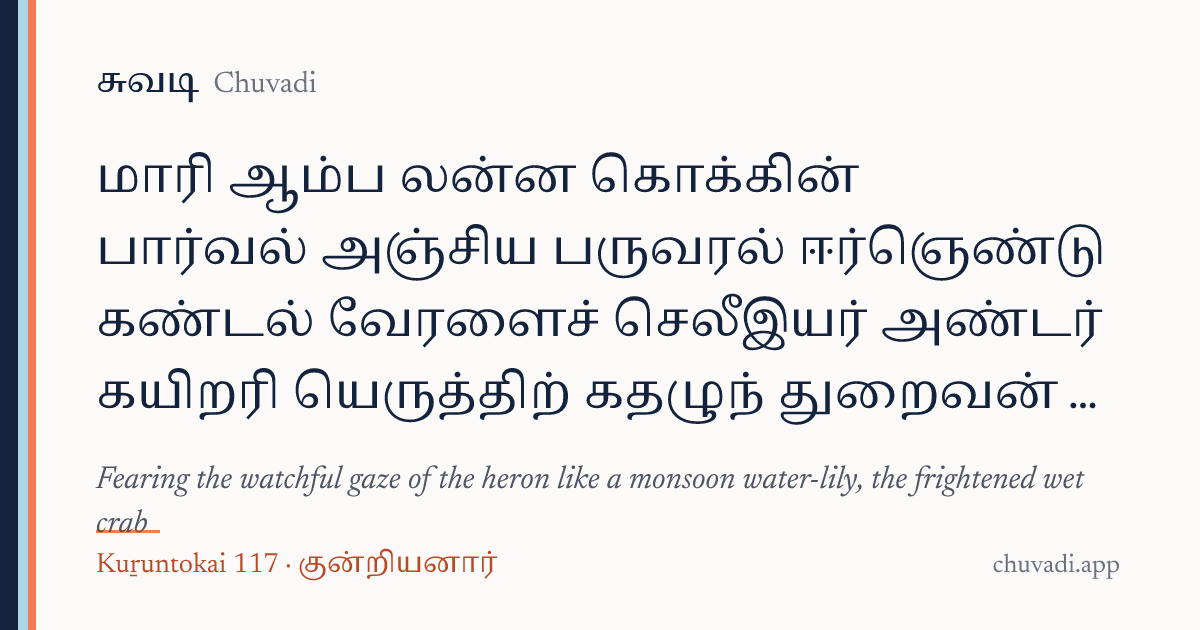
பாடல் · The poem
Tap a word to see where else it occurs.
பொருள் · Meaning in TamilAI
கார்காலத்து வெள்ளாம்பல் மலர் போன்ற கொக்கின் கூர்ந்த பார்வைக்கு அஞ்சிய, நடுங்கும் ஈரமான நண்டு, கண்டல் மரத்தின் வேரடியில் உள்ள வளைக்குள் புகுவதற்காக, இடையர்கள் கயிற்றை அறுத்துவிட்ட காளையைப் போல விரைந்து ஓடுகிறது. அத்தகைய கடற்கரைத் தலைவன் வராமல் இருந்துவிட்டால் இருக்கட்டும்; வளையல் விற்பவர் கையில் இதைவிடச் சிறிய வளையல்களும் இங்கே உண்டு.
நெய்தல் திணை; தோழி கூற்று. தலைவன் வராததால் தலைவி மெலிந்து, அவள் கை வளையல்கள் கழன்று விழுகின்றன. "இன்னும் சிறிய வளையல் வாங்கிக்கொள்ளலாம்" என்ற கசப்பான நகைச்சொல், அவள் மேலும் மெலிவாள் என்று தலைவன் கேட்கும்படி சொல்லும் குற்றச்சாட்டு. கொக்குக்கு அஞ்சி வளைக்குள் ஓடும் நண்டு, பொறுப்புக்கு அஞ்சி விலகிச் செல்லும் தலைவனைக் குறிக்கலாம்.
ஆங்கிலம் · English translationAI
Translation
- Fearing the watchful gaze of the heron
- like a monsoon water-lily, the frightened wet crab
- runs for its burrow among the kaṇṭal roots, as herdsmen's
- bulls dash off when their ropes are cut — that lord of the shore:
- if he stays away and does not come, let it be so;
- there are smaller ones here too, bangles in the sellers' hands.
What the poem says
The friend speaks with sharp irony. The hero of the seashore has stopped coming, and the heroine is wasting away so much that her bangles slip from her thinning wrists, the classic sign of grief in love.
The opening scene is lively: a heron, pale like a white water-lily of the rainy season, watches the mudflat, and a crab bolts for its hole among the mangrove (kaṇṭal) roots, as fast as a bull let loose. The suggestion is perhaps that the hero, too, has fled from responsibility as quickly as the crab.
The last line is the sting. If he will not come, never mind: the bangle-sellers have smaller sizes. The friend means that the heroine will keep shrinking, and the joke is a bitter accusation meant for the hero's ears.