




குறுந்தொகை 12
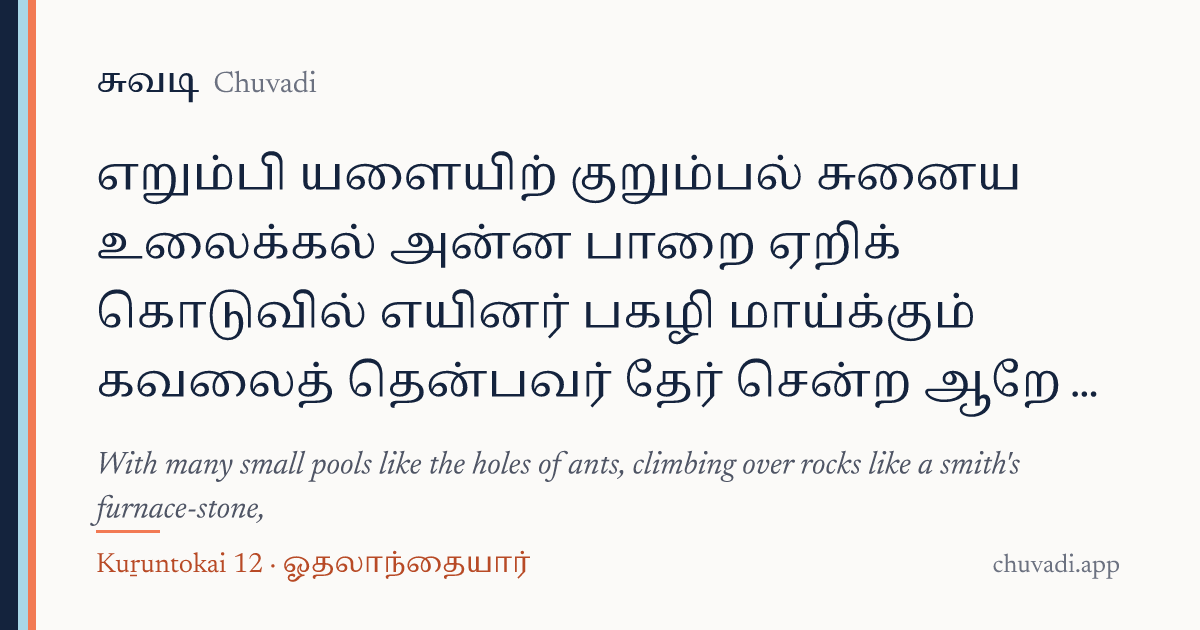
பாடல் · The poem
Tap a word to see where else it occurs.
பொருள் · Meaning in TamilAI
எறும்பின் வளைகளைப் போன்ற சிறிய பல சுனைகளை உடையதாய், கொல்லனின் உலைக்கல்லைப் போலக் கொதிக்கும் பாறைகளின் மேல் ஏறிச் சென்று, வளைந்த வில்லையுடைய எயினர்கள் தம் அம்புகளைத் தீட்டும், பல கிளைகளாகப் பிரியும் கடுமையான வழி — அதுதான் அவர் தேர் சென்ற வழி என்கிறார்கள். அதை எண்ணி நான் படும் துயரத்தை உணராமல், ஆரவாரம் மிக்க இந்த ஊர், தொடர்பில்லாத வேறொன்றைச் சொல்லி என்னைப் பழிக்கிறது.
பாலைத் திணை; தலைவி கூற்று. பிரிந்து சென்ற தலைவனின் வழியின் கொடுமையைக் கேள்விப்பட்டு அஞ்சும் அவளுக்கு, ஊர் தூற்றுவது மேலும் வருத்தம் தருகிறது. எயினர் பாலை நிலத்தில் வாழ்ந்த வில்வீரர்கள்; அவர்கள் வழிக்கு அச்சத்தைக் கூட்டுகிறார்கள். "நொதுமல்" என்ற சொல்லின் சரியான பொருள் உறுதியாகத் தெரியவில்லை; அயலானது, தொடர்பற்றது என்று கொள்ளப்படுகிறது.
ஆங்கிலம் · English translationAI
Translation
- With many small pools like the holes of ants,
- climbing over rocks like a smith's furnace-stone,
- where Eyiṉar with curved bows whet their arrows,
- forked and branching, they say, is the road his chariot took;
- yet without feeling that grief,
- this clamorous town scolds me over idle things.
What the poem says
The heroine speaks in the wasteland (pālai), the landscape of separation. Her lover has gone off by chariot on a terrible road. Its pools are no bigger than ant-holes, its rocks are as hot as the stone in a smith's furnace, and Eyiṉar, hunters of the dry country, sharpen their arrows beside it. She has only heard of it ('they say'), which makes her fear worse.
What hurts her most is the town. Instead of sharing her anxiety for him, the gossiping village finds fault with her over something else. The word translated 'idle things' (notumal) means something unrelated or indifferent, and commentators explain it in slightly different ways. The general sense is clear: the town scolds her without understanding.
The Eyiṉar appear often in Sangam poetry as fierce bowmen of the arid tracts, and they add danger to the picture of the journey.