




குறுந்தொகை 122
பாடல் · The poem
Tap a word to see where else it occurs.
பொருள் · Meaning in TamilAI
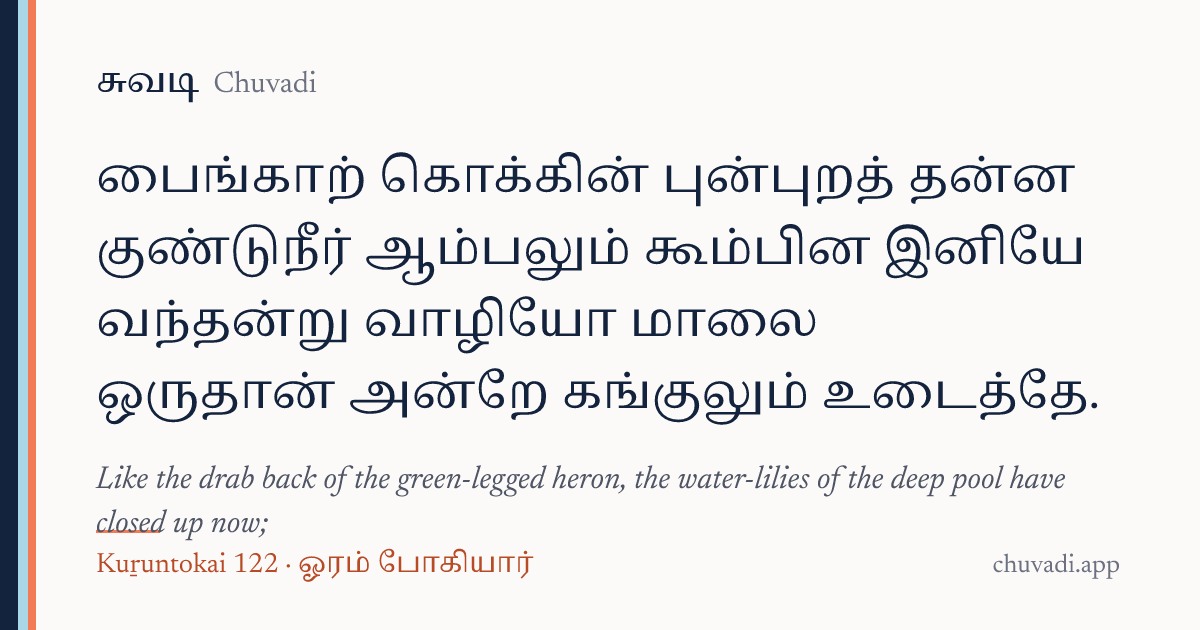
பசிய கால்களையுடைய கொக்கின் மங்கிய முதுகைப் போல, ஆழமான நீர்நிலையில் உள்ள ஆம்பல் மலர்களும் இப்பொழுது குவிந்துவிட்டன. மாலைப்பொழுது வந்துவிட்டது; அது வாழ்க! அது தனியாக வரவில்லை; இரவையும் தன்னோடு கொண்டுவந்திருக்கிறது.
நெய்தல் திணை; தலைவி கூற்று. தலைவன் பிரிந்திருக்கும்போது மாலைப்பொழுது அவளுக்குக் கொடியது; "வாழியோ மாலை" என்பது கசப்பான வஞ்சப்புகழ்ச்சி. மாலையைக்கூடப் பொறுத்துக்கொள்ளலாம், ஆனால் அதைத் தொடர்ந்து தனியே கழிக்கவேண்டிய நீண்ட இரவும் வருகிறதே என்பதே அவள் துயரம். ஆம்பல் மலர்கள் குவிவதே பகல் முடிந்து தனிமை தொடங்குவதன் அடையாளம்.
ஆங்கிலம் · English translationAI
Translation
- Like the drab back of the green-legged heron,
- the water-lilies of the deep pool have closed up now;
- it has come — may it fare well! — the evening;
- and it is not alone: it has brought the night with it too.
What the poem says
The heroine speaks at dusk on the coast, the neytal country of lonely waiting. The water-lilies (āmpal) fold their petals at evening, and in their closed state their dull colour resembles a heron's back.
Her blessing on the evening, 'may it live', is bitterly ironic: evening is the hardest time for a woman whose lover is away. The final line adds the real weight. Evening by itself might be endured, but it is only the start of a whole night she must pass alone.
The poet's name, Ōrampōkiyār, is shared by the poet of several marutam poems in the anthology.