



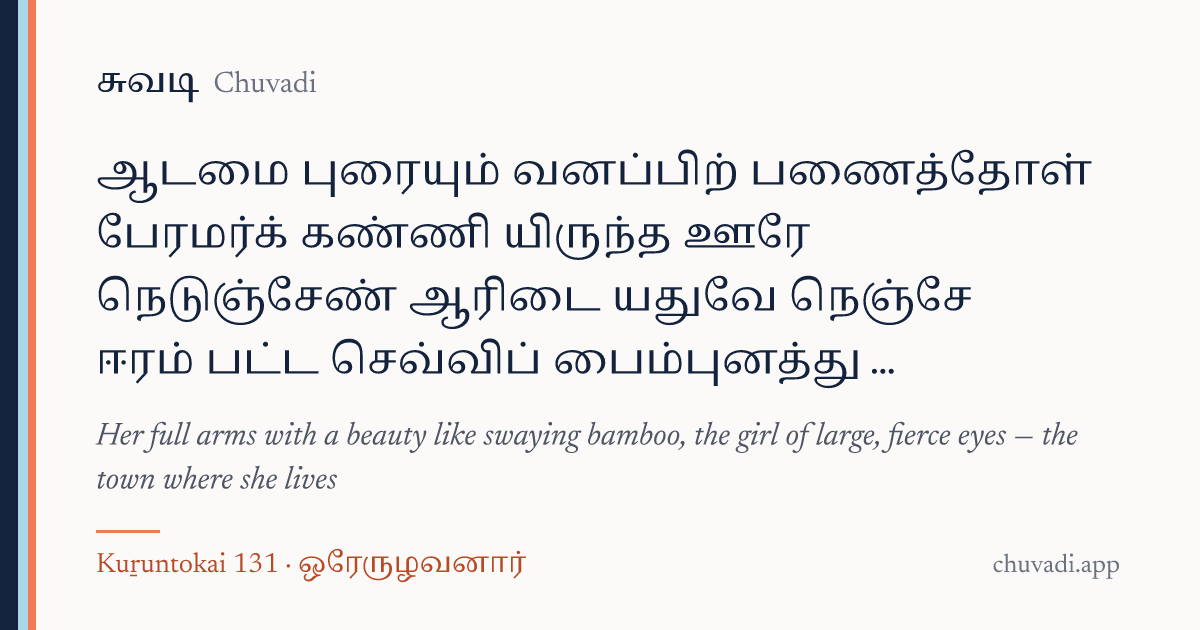

குறுந்தொகை 131
பாடல் · The poem
Tap a word to see where else it occurs.
பொருள் · Meaning in TamilAI
அசையும் மூங்கிலைப் போன்ற அழகிய பருத்த தோள்களும், பெரிய போர்புரியும் கண்களும் உடையவள் இருக்கும் ஊர், மிக நீண்ட தொலைவில் கடத்தற்கரிய வழிக்கு அப்பால் இருக்கிறது. நெஞ்சே! ஈரம் கொண்டு உழுவதற்குப் பக்குவமான பசிய புனத்தில், ஒரே ஒரு ஏர் உடைய உழவன் விரைவதைப் போல நீ பெரும் பரபரப்பு கொண்டுவிட்டாய்; உன்னை நினைத்து நான் வருந்துகிறேன்.
பாலைத் திணை; பிரிந்திருக்கும் தலைவன் தன் நெஞ்சுக்குக் கூறுவது. மழை பெய்த பின் ஈரம் காய்வதற்குள் உழ வேண்டிய நிலத்தை ஒற்றை ஏருடைய உழவன் பதற்றத்தோடு உழுவதுபோல, அவன் நெஞ்சு அவளை அடைய விரைகிறது. இந்த உவமையாலேயே புலவர் "ஓரேருழவனார்" எனப் பெயர் பெற்றார். "பேரமர்க் கண்" என்பது போரிடுவது போன்ற கண்கள் எனப் புகழும் வழக்கு.
ஆங்கிலம் · English translationAI
Translation
- Her full arms with a beauty like swaying bamboo,
- the girl of large, fierce eyes — the town where she lives
- lies very far away, across a hard road, my heart;
- and as, in a green field moist and just ready from the rain,
- a farmer who has only one plough
- you are seized with great haste — how I grieve for you!
What the poem says
The hero speaks to his heart while he is far from home on business, in the pālai mode of separation. He has finished his work, or the season for return has come, and his heart rushes ahead of him to his wife.
The comparison gives the poet his name, Ōrēruḻavaṉār, 'the poet of the farmer with one plough'. After rain, a field must be ploughed while the soil is moist and in perfect condition. A rich farmer can send many ploughs; a man with a single plough has to race to cover his land before the moment passes. The heart is just as frantic, with only one way to reach her and the distance so great.
Her eyes are called 'large and warring', a common Sangam praise: eyes so striking they seem to do battle.