




குறுந்தொகை 133
பாடல் · The poem
Tap a word to see where else it occurs.
பொருள் · Meaning in TamilAI
மலைநாட்டுக் குறவனின் தோட்டத்தில் பொன்போல் விளைந்த சிறுதினையின் கதிர்களைக் கிளிகள் கொய்து தின்றுவிட்டன; எஞ்சிய மொட்டையான தாள்கள், பெருமழை பெய்ததால் மீண்டும் இலைகளைத் தழைக்கின்றன. அதைப் போல, தோழி, என் வலிமை அழிந்தபோதும் நான் இன்னும் உயிரோடு இருக்கிறேன் — என் அழகைப் புதிதாக நுகர்ந்தவர் விட்டுச்சென்ற தனிமையிலும்.
குறிஞ்சித் திணை; தலைவி தோழியிடம் கூறுவது. கதிர் இழந்த தினைத்தாள் மழையில் தழைத்தாலும் மீண்டும் விளைவு தருவதில்லை; அதுபோல அவள் உயிர் வாழ்ந்தாலும் முன்னைய நலம் இல்லை. இறுதி வரியின் பொருள் உறுதியாகத் தெரியவில்லை: அவன் விட்டுச்சென்ற தனிமையில் வாழ்கிறேன் என்றோ, அவன் அண்மையில் தந்த அன்பின் நினைவே மழைபோல் என்னை வாழவைக்கிறது என்றோ கொள்ளலாம்.
ஆங்கிலம் · English translationAI
Translation
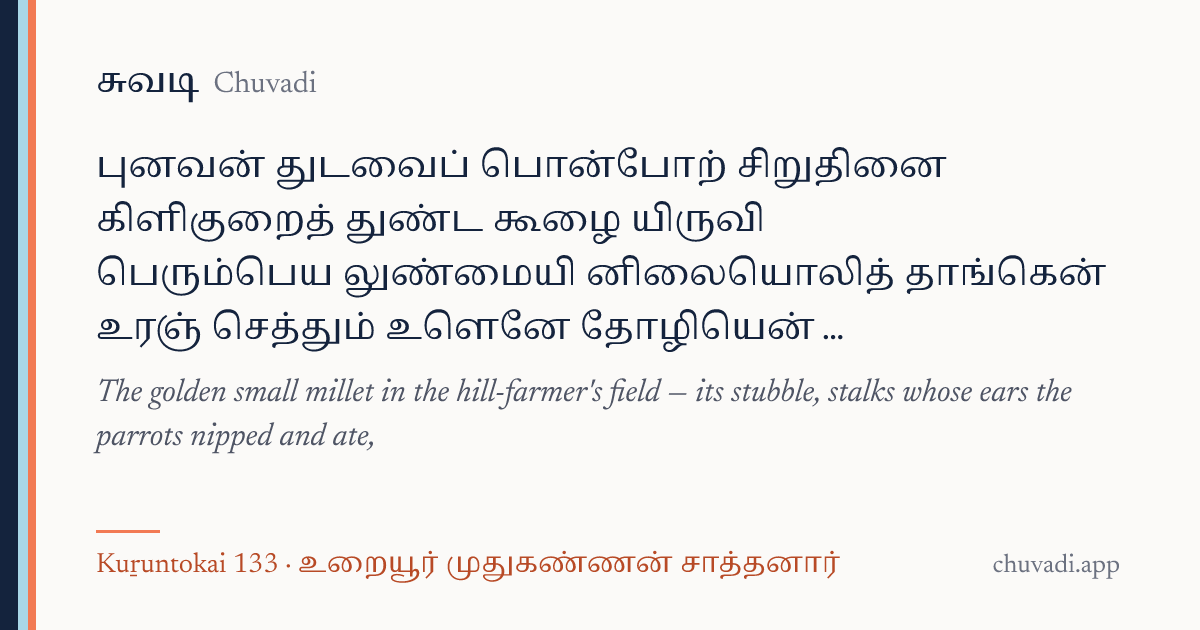
- The golden small millet in the hill-farmer's field —
- its stubble, stalks whose ears the parrots nipped and ate,
- when heavy rain comes, sprouts thick with leaves again; so I,
- though my strength is dead, am still alive, my friend,
- in the loneliness left by the one who freshly enjoyed my beauty.
What the poem says
The heroine speaks to her friend. The hero has enjoyed her love and gone away, and she survives only in a weakened state.
The image is drawn from the kuṟiñci millet fields. Parrots have bitten off the ripe ears, leaving bare stalks; yet when the rains fall, the stubble pushes out leaves again. It is alive, but it will never bear grain. In the same way she has lost the best of herself and is still, somehow, living.
The last line is compressed, and its sense is not quite certain. It may mean that she lives on in loneliness after him, or that it is the memory of his recent love that keeps her alive, like rain on the stubble. The poet is Uṟaiyūr Mutukaṇṇaṉ Cāttaṉār, named after the Cōḻa town of Uṟaiyūr.