




குறுந்தொகை 139
பாடல் · The poem
Tap a word to see where else it occurs.
பொருள் · Meaning in TamilAI
வீட்டில் வாழும் குட்டைக்கால் பெட்டைக்கோழி, மாலையில் வேலியிலிருந்து காட்டுப்பூனைகள் தாக்க வர, ஒளிய இடம் தெரியாமல், நடுங்கும் தன் குஞ்சுக் கூட்டத்தை ஒன்றாகக் கூட்டி அழைத்துக் கதறுவதைப் போல, கொடுமையாக ஒலிக்கும் அலர்ப்பேச்சோடு, ஐயனே, எங்கள் தெருவுக்கு வராதே; நீ வாழ்க!
மருதத் திணை; தோழி தலைவனிடம் கூறுவது (ஒக்கூர் மாசாத்தியார் பாடல்). அவன் ஒவ்வொரு வருகையும் ஊரில் அலரை எழுப்புகிறது. பூனைக்கு அஞ்சிக் கதறும் கோழியின் ஒலி, தெருவில் எழும் பதற்றமான அலருக்கு உவமை. இது களவுக்காலத்தில் வெளிப்படையாக மணமகனாக வா என்று சொல்வதாகவும், பரத்தையிடமிருந்து திரும்பும் கணவனைத் தடுப்பதாகவும் கொள்ள இடமுண்டு.
ஆங்கிலம் · English translationAI
Translation
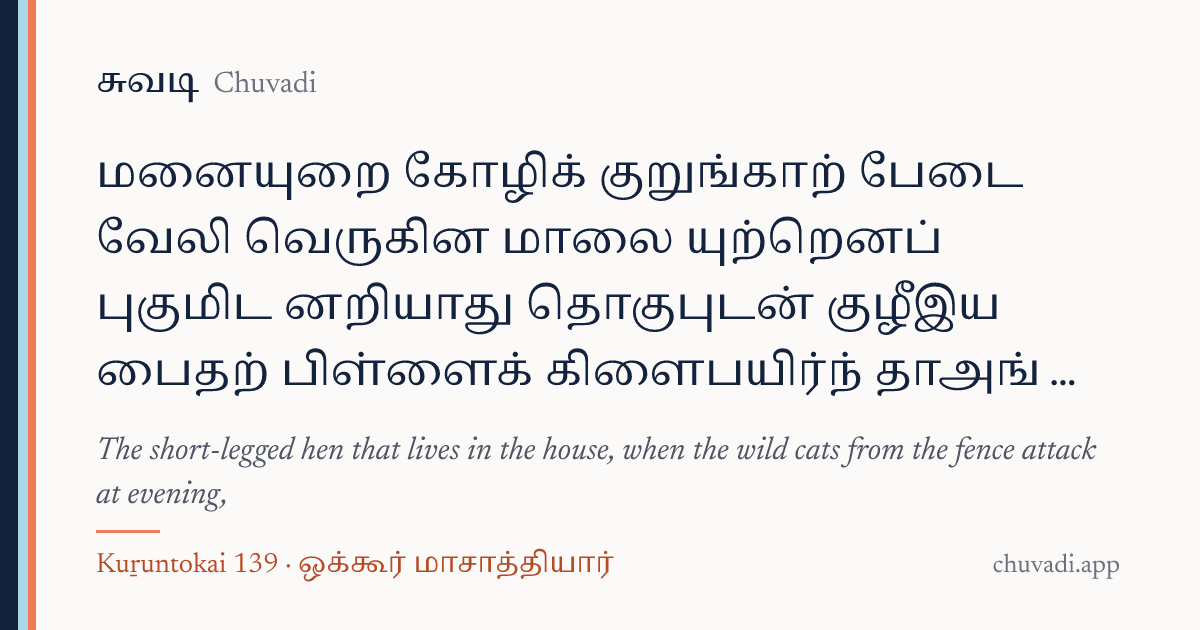
- The short-legged hen that lives in the house,
- when the wild cats from the fence attack at evening,
- not knowing where to shelter, gathers close together
- her frightened brood of chicks, and cries out — just so,
- with the gossip that clamours so cruelly,
- do not come, may you live long, sir, into our street.
What the poem says
The friend speaks to the hero and asks him not to come. Each of his visits sets the neighbourhood talking, and the gossip (ampal) is spreading.
The image is a domestic one. At dusk, wild cats come out of the hedge, and the mother hen, with nowhere to hide, calls her chicks to her in panic. The gossip of the street rises with that same anxious clamour, and the heroine's family is perhaps the frightened brood.
The poem, by Okkūr Mācāttiyār, is classed as marutam. It may belong to the secret courtship, with the friend urging the hero to come openly as a bridegroom, or to married life, where a husband returning from other women is turned away; the wording fits either reading.