




குறுந்தொகை 143
பாடல் · The poem
Tap a word to see where else it occurs.
பொருள் · Meaning in TamilAI
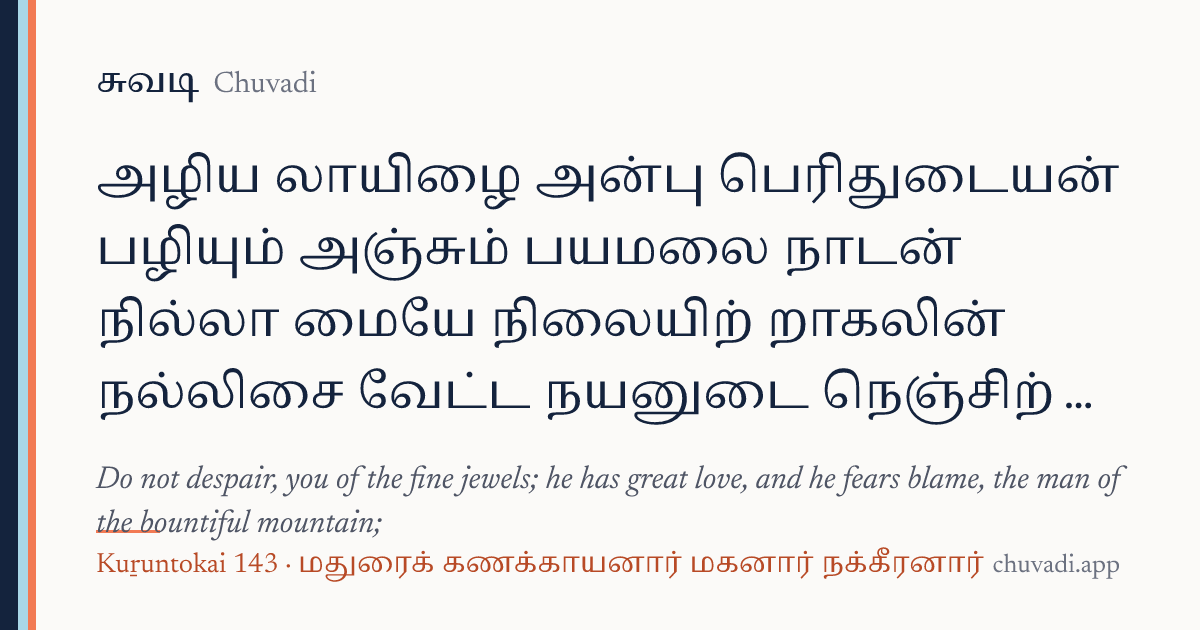
அழகிய அணிகலன்களை அணிந்தவளே, வருந்தாதே! வளம் மிக்க மலைநாட்டுத் தலைவன் உன்மேல் மிகுந்த அன்புடையவன்; பழிக்கும் அஞ்சுபவன். இவ்வுலகில் நிலையாமை ஒன்றே நிலையானது. நல்ல புகழை விரும்பும் அன்புள்ளம் கொண்ட, கடமை தவறாத ஒருவனிடம் உள்ள செல்வம் தங்காமல் போவதைப் போல, உன் அழகிய ஒளிரும் மேனியில் படர்ந்த இந்தப் பசலையும் தங்கியிருக்கக் கூடியது அன்று.
குறிஞ்சித் திணை; தோழி தலைவியைத் தேற்றுவது. மணம் தாமதமாவதால் பசலை படர்ந்த தலைவியிடம், தலைவனின் அன்பையும் பழிக்கு அஞ்சும் பண்பையும் சுட்டி, அவன் கைவிடமாட்டான் என்கிறாள். கொடையாளனிடம் வந்த செல்வம் உடனே இல்லார்க்குப் போய்விடுவதுபோல, தலைவன் வந்ததும் பசலையும் நீங்கிவிடும் என்பது உவமையின் கருத்து.
ஆங்கிலம் · English translationAI
Translation
- Do not despair, you of the fine jewels; he has great love,
- and he fears blame, the man of the bountiful mountain;
- since impermanence alone is what endures,
- just as, longing for good fame, with a kindly heart,
- a man devoted to duty does not keep the wealth he has,
- it is not the kind that stays — this, on your
- lovely, glowing body, the pallor that has spread.
What the poem says
The friend reassures the heroine, who is pale and wasting because the hero has not yet come to marry her. The poet is Nakkīraṉār, son of Maturaik Kaṇakkāyaṉār, the great poet of Maturai.
The friend's first argument is the hero's character: he loves deeply and fears disgrace, so he will not abandon her. Her second is a piece of reflection. In this world only impermanence is permanent, and the pallor (pacalai) of love-sickness is no exception.
The comparison is an ethical one. A generous man who seeks honour does not hold on to his wealth; it flows out to those in need almost as soon as it comes. The heroine's pallor will leave her just as quickly, once the hero comes to claim her.