




குறுந்தொகை 145
பாடல் · The poem
Tap a word to see where else it occurs.
பொருள் · Meaning in TamilAI
இது வாழ்வதற்குரிய ஊர் அன்று, துறையருகே உள்ள இந்தச் சிற்றூர். கடற்கரைச் சோலைகளை உடைய தலைவனின் கொடுமையைச் சுமந்து, தீராத துயரத்தோடு நான் வருந்திக்கொண்டிருக்கிறேன். நள்ளிரவில் தூங்காமல் விழித்திருப்பவரை இந்த ஊர் "என்ன ஆயிற்று?" என்று கேட்பதில்லை; தூங்கும் கண்களையுடைய மக்களோடு இது நீண்ட இரவுகளை உடையதாக இருக்கிறது.
நெய்தல் திணை; தலைவி கூற்று. தலைவன் கொடுமையால் இரவெல்லாம் விழித்திருக்கும் அவள், எல்லாரும் ஆழ்ந்து தூங்கும் ஊரில் தன் துயரைக் கேட்பார் யாரும் இல்லையே என்று வருந்துகிறாள். முதல் தொடரை "இது நம் சொந்த ஊர் அன்று" என்றும் கொள்ளலாம்; அப்படியானால் அவள் இந்த மீனவச் சிற்றூரில் அயலவள்.
ஆங்கிலம் · English translationAI
Translation
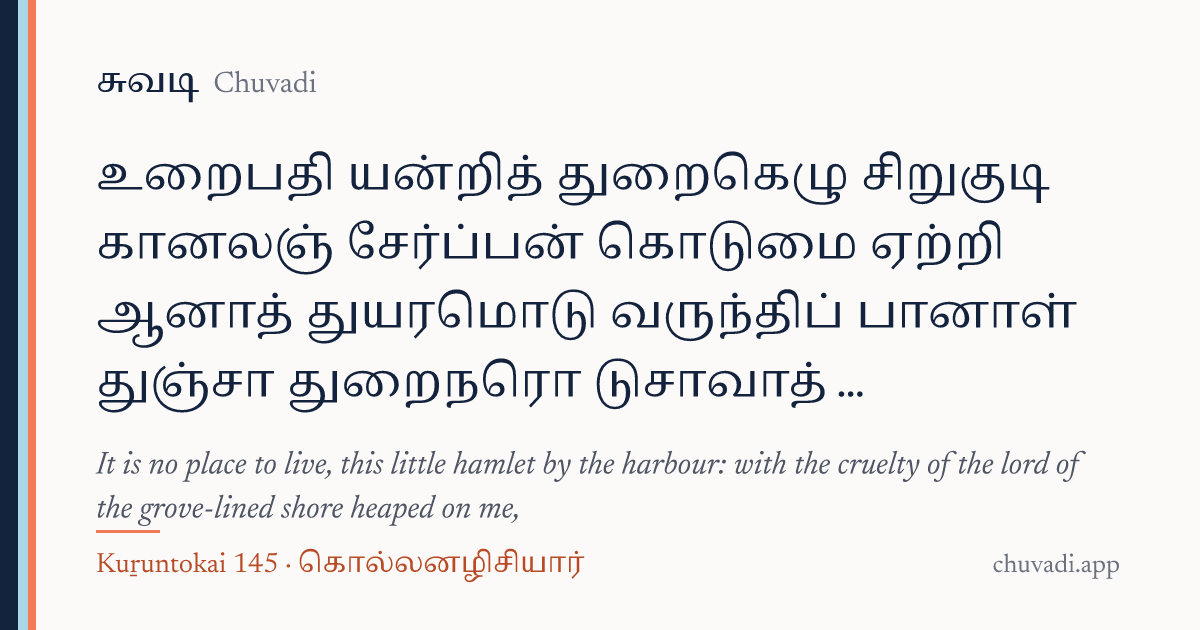
- It is no place to live, this little hamlet by the harbour:
- with the cruelty of the lord of the grove-lined shore heaped on me,
- as I suffer an unceasing sorrow, at midnight
- it does not ask after those who lie awake;
- with its people of sleeping eyes, it has long nights.
What the poem says
The heroine speaks of her loneliness on the shore, in the neytal mode of pining. The hero, the lord of the coastal groves, has been unkind and stays away.
Her complaint is against the village itself. In the middle of the night she lies awake with her grief, and everyone around her is sound asleep. No one asks how she is. The town, she says, is not a fit place to live: it has long nights and people who sleep through them.
The opening phrase can also be understood as 'this is not our own home town', perhaps a fishing hamlet where she is a stranger. The poet is named Kollaṉaḻiciyār, a variant of the name of the poet of poem 138.