



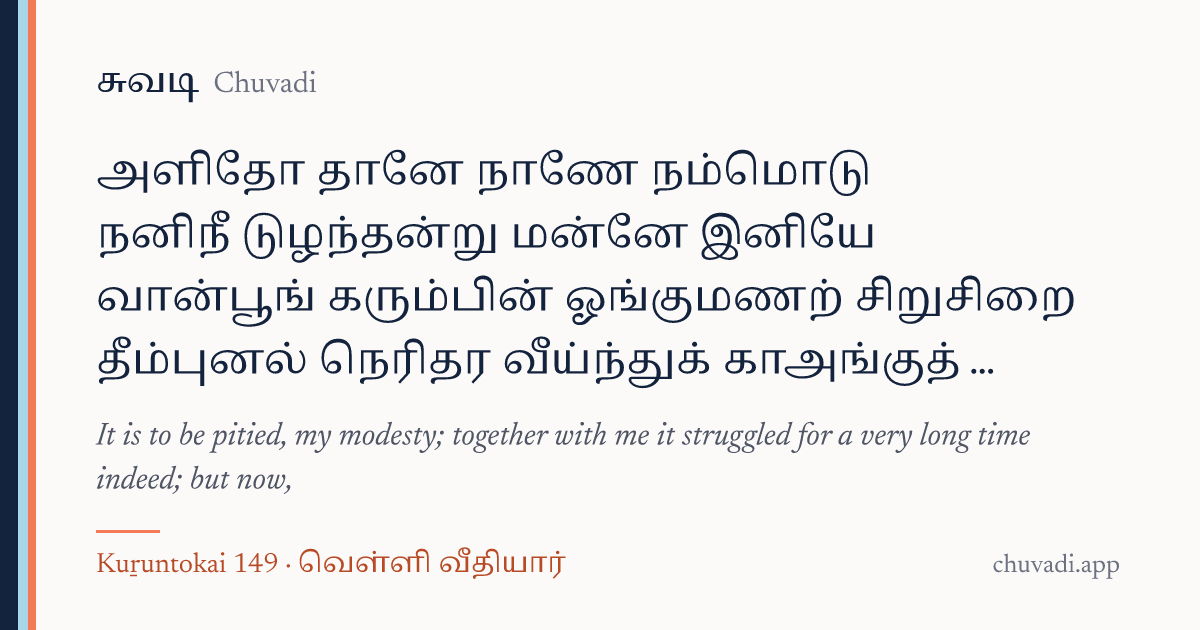

குறுந்தொகை 149
பாடல் · The poem
Tap a word to see where else it occurs.
பொருள் · Meaning in TamilAI
என் நாணம் இரங்கத்தக்கது. நீண்ட காலம் அது என்னோடு சேர்ந்து போராடியது. ஆனால் இப்பொழுது, வெண்ணிறப் பூக்களையுடைய நாணல் வளர்ந்த உயர்ந்த மணல் கரையாகிய சிறிய அணையை இனிய நீர்ப்பெருக்கு நெருக்கி உடைத்து அழித்துவிடுவதைப் போல, தாங்கக்கூடிய அளவு வரை தாங்கிவிட்டு, இப்போது காமம் நெருக்குவதால் என் கைக்குள் நிற்க மறுக்கிறது.
பாலைத் திணை; தலைவி கூற்று (வெள்ளி வீதியார் பாடல்). காதலை வெளிக்காட்டாமல் தடுத்து நின்ற நாணம், பெருகும் காமத்தின் முன் உடைந்துவிட்டது. மணல் அணை நாணத்துக்கும், அதை உடைக்கும் நீர்ப்பெருக்கு காமத்துக்கும் உவமை. தலைவனோடு உடன்போக்கில் செல்ல அவள் முடிவெடுக்கும் நிலையாக இது கொள்ளப்படுகிறது.
ஆங்கிலம் · English translationAI
Translation
- It is to be pitied, my modesty; together with me
- it struggled for a very long time indeed; but now,
- like the small dam of high-heaped sand, with white-flowered reeds,
- that the sweet stream crushes until it gives way and falls,
- it has held as long as it could hold,
- and now that desire presses on it, it will not stay in my hands.
What the poem says
The heroine speaks, and she is making a decision. For a long time her modesty (nāṇ), the virtue that keeps a young woman from showing her love, has stood firm. Now it can resist no longer.
The comparison is a little sand bank, overgrown with tall reeds in white flower, holding back a stream. It stands as long as it can, but the sweet water keeps rising and at last breaks it down. Modesty is the dam, and desire is the water.
The tiṇai is pālai, and the poem is often understood as the moment before she decides to elope with the hero. The poet is Veḷḷivītiyār, a woman poet whose voice is known for its intensity.