



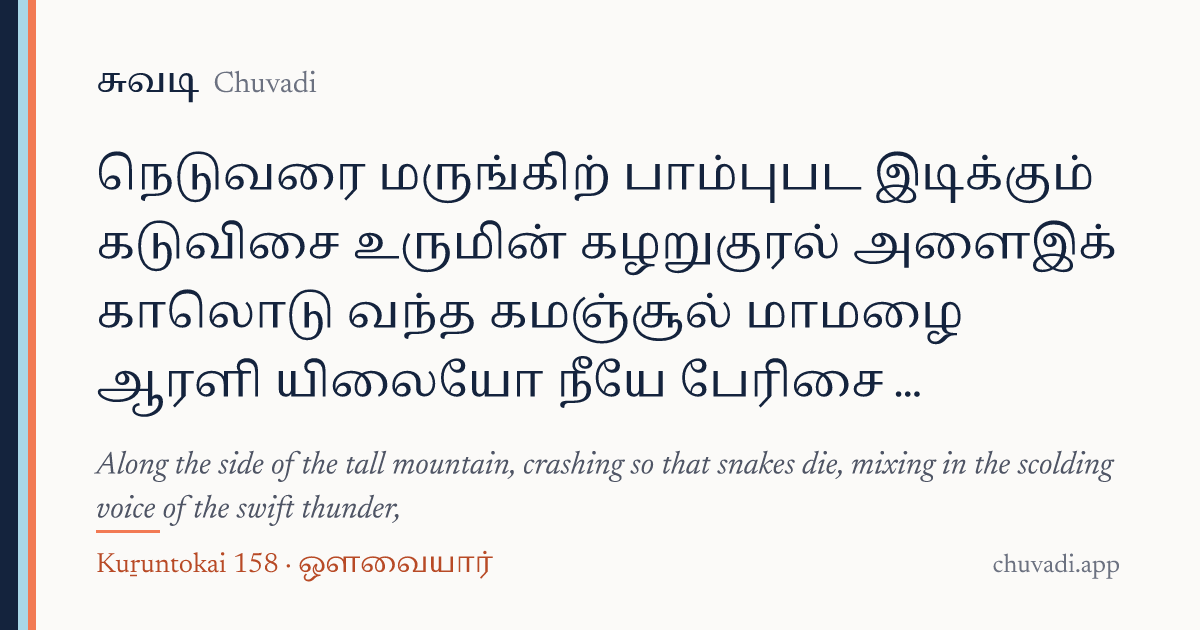

குறுந்தொகை 158
பாடல் · The poem
Tap a word to see where else it occurs.
பொருள் · Meaning in TamilAI
நீண்ட மலையின் பக்கத்தில் பாம்புகள் சாகும்படி இடிக்கும், கடுவேகமுடைய இடியின் அதட்டும் குரலோடு கலந்து, காற்றோடு வந்த, நீர் நிறைந்த கருவுடைய பெரிய கரிய மேகமே! உனக்குச் சிறிதும் இரக்கம் இல்லையோ? பெரும் புகழுடைய இமயமலையையும் நடுங்கச் செய்யும் வலிமை உடையாய் நீ; துணையில்லாத பெண்கள் இரங்கத்தக்கவர்கள் அல்லரோ? இது என்ன கொடுமை?
குறிஞ்சித் திணை; தலைவி கூற்று (ஔவையார் பாடல்). இடியோசை பாம்புகளைக் கொல்லும் என்பது பழைய நம்பிக்கை. மேலோட்டமாகத் தனித்திருக்கும் தன் அச்சத்தைச் சொன்னாலும், இந்தப் புயலில் இரவில் மலைவழியே தலைவன் வருகிறானோ என்ற கவலையும் உள்ளே இருக்கிறது. இதைக் கேட்கும் தோழி, இரவுக்குறி ஆபத்தானது, மணம் தாமதிக்கக்கூடாது என்று உணர்வாள்.
ஆங்கிலம் · English translationAI
Translation
- Along the side of the tall mountain, crashing so that snakes die,
- mixing in the scolding voice of the swift thunder,
- you great dark cloud, heavy with rain, that came with the wind,
- have you no kindness in you at all? You, of great renown,
- whose nature is to shake even the Himalaya —
- are women without a companion not to be pitied? What is this?
What the poem says
The heroine speaks to a storm cloud on a night of heavy rain in the hills. Thunder crashes along the mountainside, and in Tamil poetry thunder is believed to strike and kill snakes. The cloud comes on with the wind, swollen with rain like a pregnant belly.
She reproaches the cloud. It is mighty enough to make the Himalaya tremble, so why should it use that might to frighten women who are alone? On the surface she complains of her own fear at being left without her lover. Underneath lies a second worry, which a listener would catch: her lover may be out on the mountain paths in this storm, coming to meet her in secret. The friend who hears this is meant to realise that these night meetings are dangerous and that marriage should not wait.
The poem is by Auvaiyār, one of the best-known poets of the anthology.