



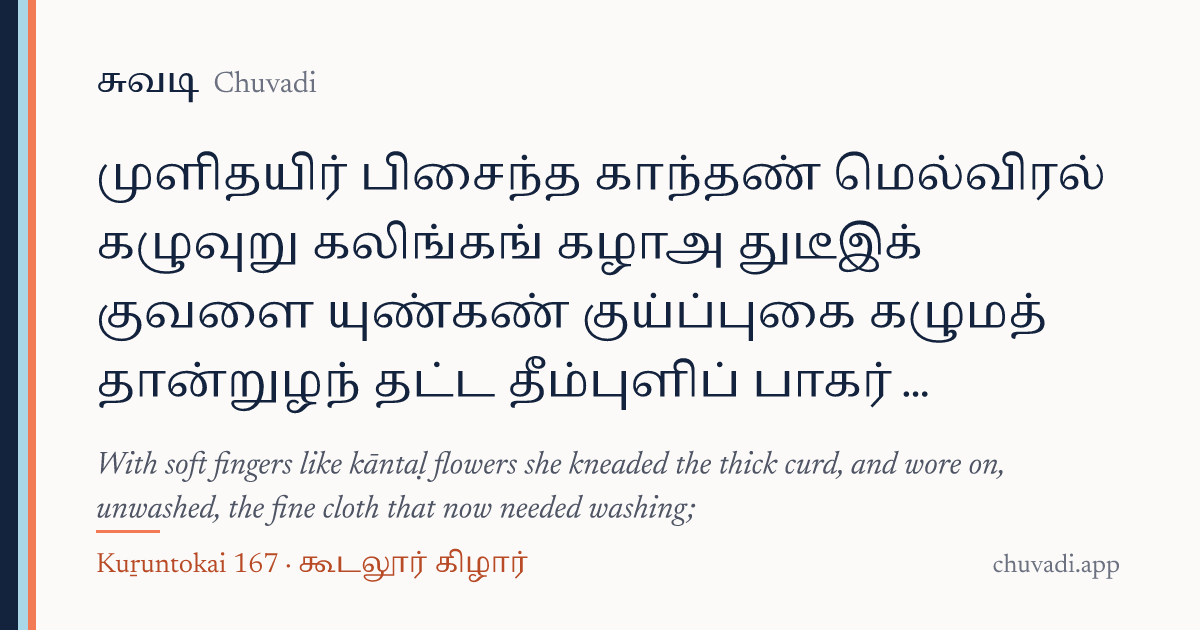

குறுந்தொகை 167
பாடல் · The poem
Tap a word to see where else it occurs.
பொருள் · Meaning in TamilAI
முற்றிய கெட்டித் தயிரைக் காந்தள் மலர் போன்ற மென்மையான விரல்களால் பிசைந்தாள்; அந்த விரல்களைத் துடைத்துக்கொண்ட நல்ல ஆடையைத் துவைக்காமலேயே உடுத்திக்கொண்டாள். குவளை மலர் போன்ற மையுண்ட கண்களில் தாளிப்புப் புகை நிறைய, தானே துழாவிச் சமைத்த இனிய புளிக்குழம்பைக் கணவன் "இனிது" என்று சொல்லி உண்டதால், ஒளிரும் நெற்றியுடைய அவள் முகம் நுட்பமாக மகிழ்ந்து மலர்ந்தது.
முல்லைத் திணை; செவிலித்தாய் கூற்று. மணமான தலைவியின் புது இல்லத்துக்குச் சென்று வந்த செவிலி, கண்டதை நற்றாயிடம் சொல்கிறாள். முதன்முறையாகச் சமைக்கும் இளம் மனைவியின் சிறு செயல்கள் நுட்பமாகக் காட்டப்படுகின்றன. அவள் மகிழ்ச்சியாக இருக்கிறாள் என்று செவிலி நேரடியாகச் சொல்லாமல், அவள் முகத்தை மட்டுமே காட்டுவது பாடலின் அழகு.
ஆங்கிலம் · English translationAI
Translation
- With soft fingers like kāntaḷ flowers she kneaded the thick curd,
- and wore on, unwashed, the fine cloth that now needed washing;
- while the seasoning smoke filled her kohl-lined, kuvaḷai-like eyes,
- the sweet and tangy stew she stirred and cooked with her own hands
- her husband ate, saying 'It is good', and at that
- her bright-browed face lit up with a quiet joy.
What the poem says
The foster-mother (cevili), who raised the heroine, has gone to visit her in her husband's home after the marriage. She comes back and tells the girl's mother what she saw. The poem is set in mullai, the landscape of married domestic life and faithful waiting.
The picture is of a young wife cooking for the first time. She mixes the curd with fingers soft as the kāntaḷ (glory lily), wipes them on her good cloth and does not stop to change it, and lets the smoke of the spices sting her lovely eyes, which are compared to the kuvaḷai (blue water lily). All this effort ends in one moment: her husband tastes the tangy stew and says it is good, and her face lights up.
The poem is loved for its small domestic details and for its restraint. The foster-mother never says that the girl is happy. She simply describes the face. The poet is Kūṭalūr Kiḻār.