




குறுந்தொகை 17
பாடல் · The poem
Tap a word to see where else it occurs.
பொருள் · Meaning in TamilAI
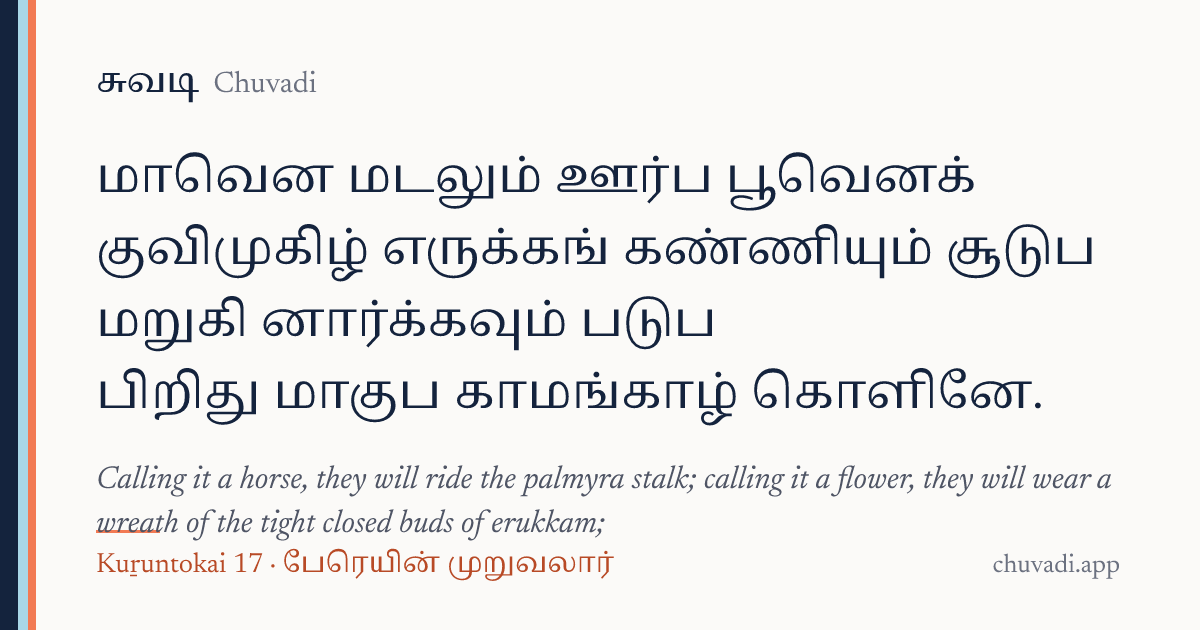
காமம் முற்றி, மரத்தில் வயிரம் பாய்ந்ததுபோல உறுதிப்பட்டுவிட்டால், ஆடவர் பனைமடலைக் குதிரை என்று சொல்லி அதன்மேல் ஏறுவர்; குவிந்த மொட்டுகளையுடைய எருக்கம்பூ மாலையைப் பூமாலை என்று சூடுவர்; தெருவில் பலர் ஆரவாரித்து எள்ளி நகைக்கும்படி நிற்பர்; இன்னும் வேறு செயல்களிலும் இறங்குவர்.
குறிஞ்சித் திணை; தலைவன் கூற்று. தலைவியைக் காண உதவ மறுக்கும் தோழியிடம், தான் மடலேறவும் தயங்கமாட்டேன் என்று அவன் எச்சரிக்கிறான். மடலேறுதல் என்பது, காதலை மறுக்கப்பட்ட ஆடவன் ஊரறியத் தன்னை இழிவுபடுத்திக்கொண்டு பெண்ணின் வீட்டாரை இணங்கவைக்கும் செயல். "வேறு செயல்" என்பது வேண்டுமென்றே தெளிவில்லாமல் விடப்பட்டுள்ளது; இறப்பு வரை செல்வதைக் குறிப்பதாகக் கொள்வர்.
ஆங்கிலம் · English translationAI
Translation
- Calling it a horse, they will ride the palmyra stalk; calling it a flower,
- they will wear a wreath of the tight closed buds of erukkam;
- they will even be jeered at in the streets;
- and they will turn to other things too, once desire grows hard as heartwood.
What the poem says
The hero speaks in the hill country (kuṟiñci), probably to the heroine's friend, as a warning. If his love is refused, he will do what desperate lovers do. He will ride the maṭal, a 'horse' made of palmyra stalks, through the streets, wearing a garland of erukkam (a lowly wayside plant) as if it were flowers, and let people mock him.
Riding the maṭal was a recognised public act in Tamil poetry. By shaming himself in the open, the lover forced the girl's family to face his claim. It is mentioned as a threat far more often than it is shown being carried out.
'Other things too' is left vague on purpose and is usually taken to hint at worse, even death. The final image compares love to a tree whose wood has hardened into its core (kāḻ). Once love reaches that point it cannot be bent back.