



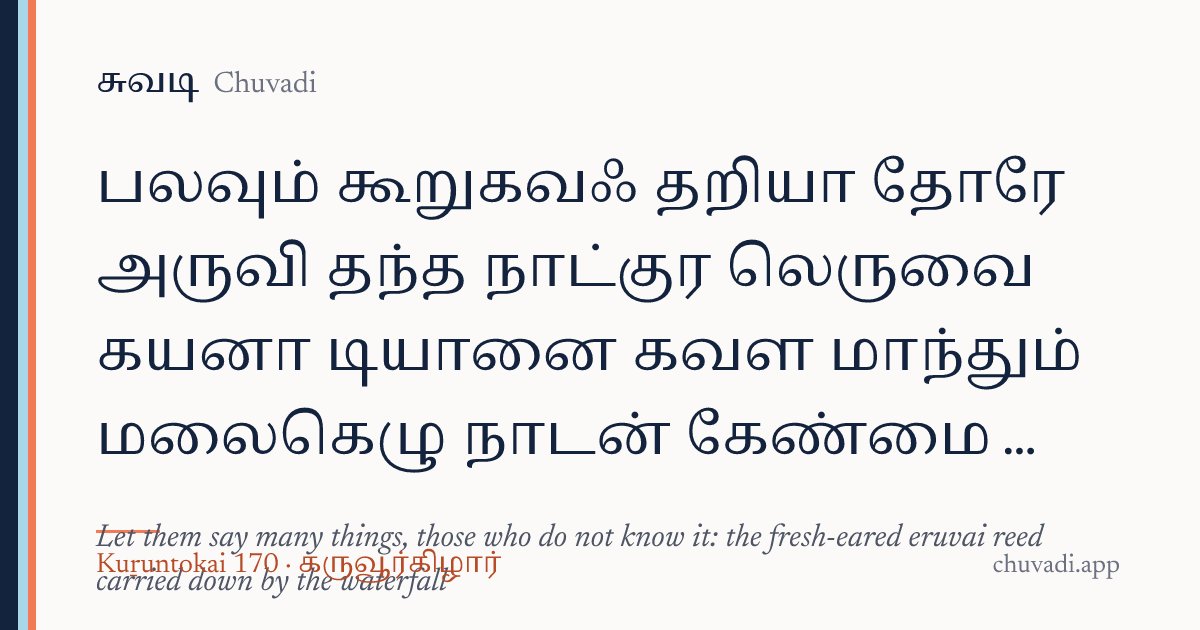

குறுந்தொகை 170
பாடல் · The poem
Tap a word to see where else it occurs.
பொருள் · Meaning in TamilAI
இதை அறியாதவர்கள் பலவும் பேசட்டும். அருவி அடித்துக்கொண்டுவந்த புதிய கதிர்களையுடைய எருவைக் கோரையை, சுனையில் நீராடும் யானை வாய்நிறைய உண்ணும் மலைநாட்டுத் தலைவனோடு நான் கொண்ட நட்பு அழியாது என்பதை நான் நன்றாக அறிவேன்.
குறிஞ்சித் திணை; தலைவி கூற்று, அலருக்கும் தோழியின் கவலைக்கும் மறுமொழியாக. அருவி கொண்டுவந்து தரும் உணவை யானை முயற்சியின்றி உண்ணும் வளமான நாட்டைப் போல, அவன் வாக்கும் தவறாமல் நிறைவேறும் என்பது குறிப்பு. அவளுடைய காதலை அவன் எளிதில் பெற்றதால் அதை அவன் போற்றவேண்டும் என்ற குறிப்பையும் சிலர் காண்பர். "தலைபோகாமை" என்ற சொல்லின் சரியான பொருள் சற்று ஐயத்துக்குரியது.
ஆங்கிலம் · English translationAI
Translation
- Let them say many things, those who do not know it:
- the fresh-eared eruvai reed carried down by the waterfall
- the elephant bathing in the pool takes in as its mouthful —
- with the man of that mountain country, our friendship
- will not fail; this I know full well.
What the poem says
The heroine speaks, perhaps in answer to gossip or to her friend's worry that the hero will not keep faith. Let people talk, she says. She knows her bond with him will hold.
The landscape is kuṟiñci, the hills of lovers' union. In the hero's country a waterfall carries down fresh reeds (eruvai), and an elephant standing in the pool below eats them as they arrive, with no effort. The picture of plenty is meant to say something about him and his land. In such a generous country, what is promised comes as surely as the stream brings the reeds. Some readers see a further hint: the hero has gained her love as easily as the elephant gets its food, and so he has reason to treasure it.
The phrase talaipōkāmai in the last line is read here as 'will not fail'. Its exact force is not quite certain.