



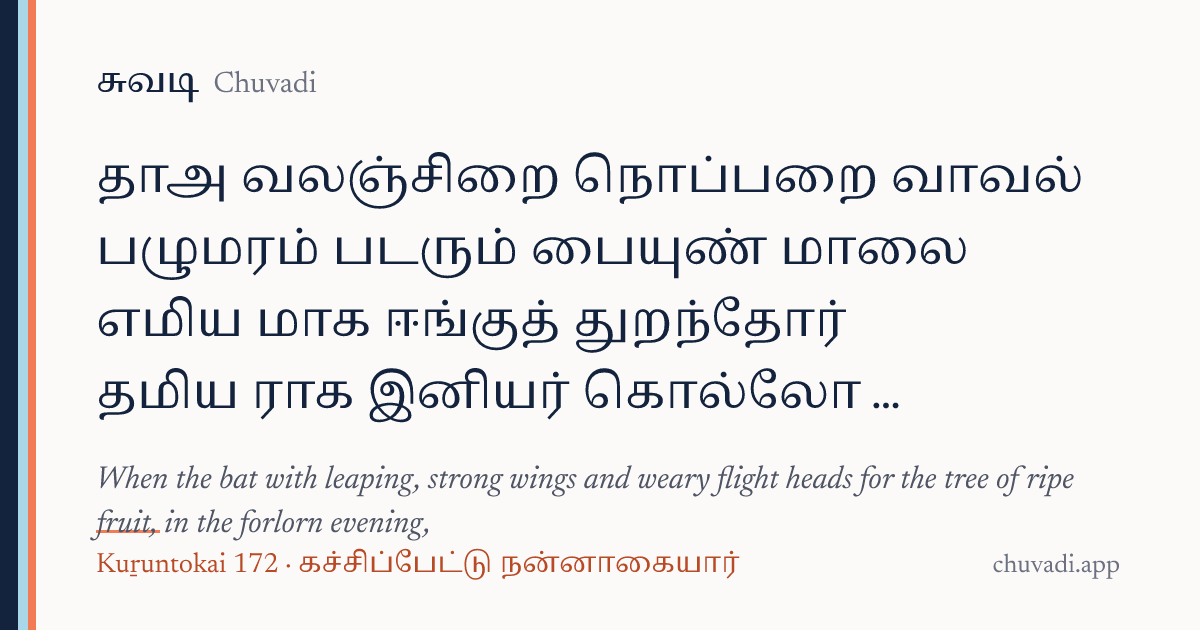

குறுந்தொகை 172
பாடல் · The poem
Tap a word to see where else it occurs.
பொருள் · Meaning in TamilAI
தாவிப் பறக்கும் வலிய சிறகுகளும் சோர்ந்த பறப்பும் உடைய வௌவால், பழுத்த மரத்தை நோக்கிச் செல்லும் துயரமான மாலைப்பொழுதில், என்னை இங்கே தனியாக விட்டுச் சென்றவர், தாமும் தனியாக இருந்து இனிதாக வாழ்கிறாரோ? ஏழு ஊர்களின் பொதுவான வேலைக்காக ஒரே ஊரில் கட்டிவைத்த, உலையில் காற்று ஊதும் மிதிதோல் துருத்தியைப் போல, என் நெஞ்சு முடிவு அறியாமல் வருந்துகிறது.
நெய்தல் திணை; தலைவி கூற்று (கச்சிப்பேட்டு நன்னாகையார் பாடல்). மாலையில் தனிமையால் வருந்தும் அவள், தன்னைவிட்டுச் சென்றவர் தாமும் தனியே மகிழ்வாக இருக்க முடியுமா என்று கேட்கிறாள். ஏழு ஊருக்கும் பொதுவான ஒரே உலைத் துருத்தி ஓய்வின்றி மிதிக்கப்படுவதுபோல அவள் நெஞ்சு இடைவிடாது வருந்துகிறது; உலைத்தீ போல அவள் ஏக்கம் விசிறப்படுவதையும் இது குறிக்கிறது.
ஆங்கிலம் · English translationAI
Translation
- When the bat with leaping, strong wings and weary flight
- heads for the tree of ripe fruit, in the forlorn evening,
- he who left me here alone —
- can he be happy, being alone himself?
- Like the bellows set up in one village for the common work of seven,
- the trodden leather that draws the forge's breath,
- my heart suffers without knowing an end.
What the poem says
The heroine speaks at dusk, the hour of loneliness in neytal poems. Bats fly out toward the fruiting trees to feed. She asks whether the man who left her can really be happy, alone as he is too. The question carries both reproach and longing.
The final simile is memorable. A smithy shared by seven villages has a single pair of foot-bellows, worked constantly because everyone's tools must be made and mended there. The leather is trodden without rest. Her heart is like that hide, pressed and pumped without a moment's pause and with no end to its labour. The picture also hints at the heat of her longing, which is fanned like a fire in a forge.
The poet, Kaccippēṭṭu Naṉṉākaiyār, is named from Kacci (Kāñcipuram), and is one of several women poets in the anthology.