




குறுந்தொகை 175
பாடல் · The poem
Tap a word to see where else it occurs.
பொருள் · Meaning in TamilAI
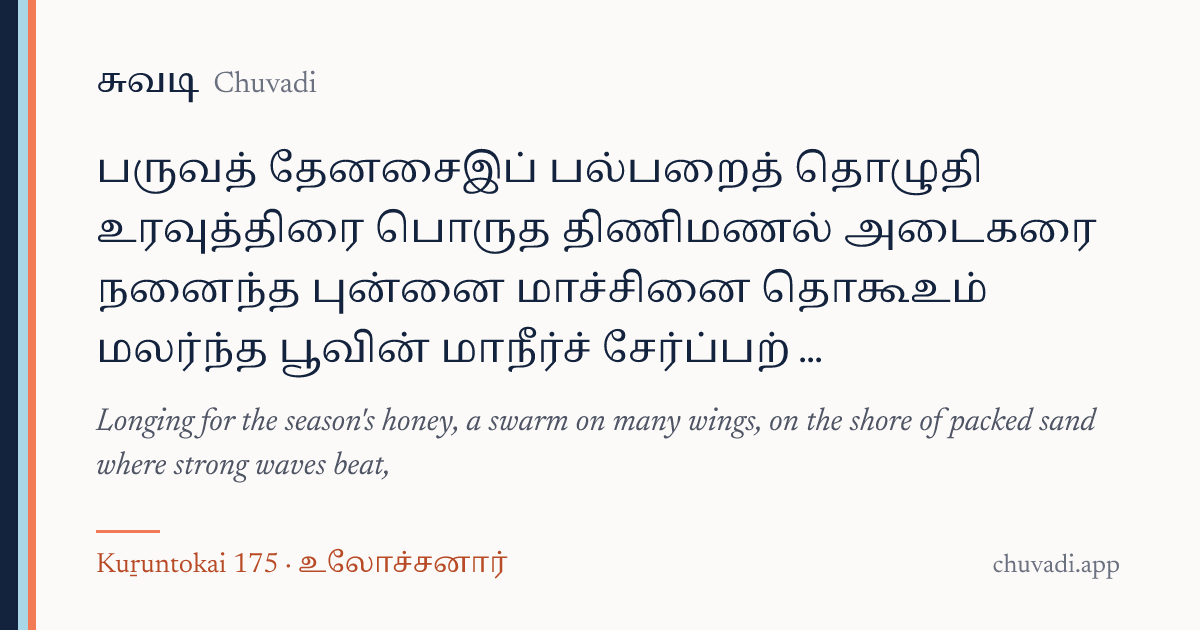
பருவத்துத் தேனை விரும்பி, பல சிறகுகளையுடைய வண்டுக்கூட்டம், வலிய அலைகள் மோதும் இறுகிய மணல் கரையில் மொட்டுவிட்ட புன்னையின் கரிய கிளைகளில் வந்து மொய்க்கும். மலர்ந்த பூக்களையுடைய பெருங்கடற்கரைத் தலைவனுக்காக "நான் வருந்தவில்லை தோழி; இங்கே எனக்கு என்ன குறை?" என்று பிறர் பிறர் அறியும்படி சொல்லிக்கொண்டிருக்க வேண்டாம். நடப்பது நடந்தபடியே இருக்கட்டும்; அந்த அலர்ப்பேச்சால் என்ன ஆகப் போகிறது?
நெய்தல் திணை; தலைவி தோழியிடம் கூறுவது. ஊரில் அலர் எழுந்துள்ள நிலையில், காதலை எல்லாரிடமும் மறுத்துப் பேசுவது கதையை மேலும் பரப்பும் என்பதால், அலரைப் பொருட்படுத்தாமல் விட்டுவிடலாம் என்கிறாள். தேனை நாடி மொய்க்கும் வண்டுகள், அவளை நாடி வந்த தலைவனையும், அவர்களைச் சுற்றி எழும் ஆரவாரமான அலரையும் குறிக்கலாம். ஐந்து முதல் ஏழு வரிகளின் அமைப்பு உறுதியாகத் தெரியவில்லை; கூற்றைப் பிரிப்பதில் வேறுபாடுகள் உண்டு.
ஆங்கிலம் · English translationAI
Translation
- Longing for the season's honey, a swarm on many wings,
- on the shore of packed sand where strong waves beat,
- gathers on the dark boughs of the budding puṉṉai;
- for the lord of that shore of deep waters and open flowers
- 'I do not pine, friend — why should I, here?' —
- to say that, so that one and another come to know of it —
- let it be as it is; what does the gossip matter?
What the poem says
The heroine speaks to her friend in the seaside landscape of neytal. The village has begun to whisper about her and the hero. Her words are hard to construe exactly. The likely sense is that she will not make a public show of denying her love for him, since saying 'I do not grieve for him' to all and sundry would only spread the story further. Let things be as they are; the rumour (ampal) does not trouble her.
The opening image belongs to the hero's coast. Bees swarm to the puṉṉai trees, which are in bud on the sand where the waves pound, drawn by the honey of the season. An implied meaning is often seen here. The hero, like the bees, has been drawn to her, and the gossip surrounding them is as noisy as the swarm.
The syntax of lines five to seven is uncertain, and readers divide the speech in different places. The rendering follows the most straightforward division.