



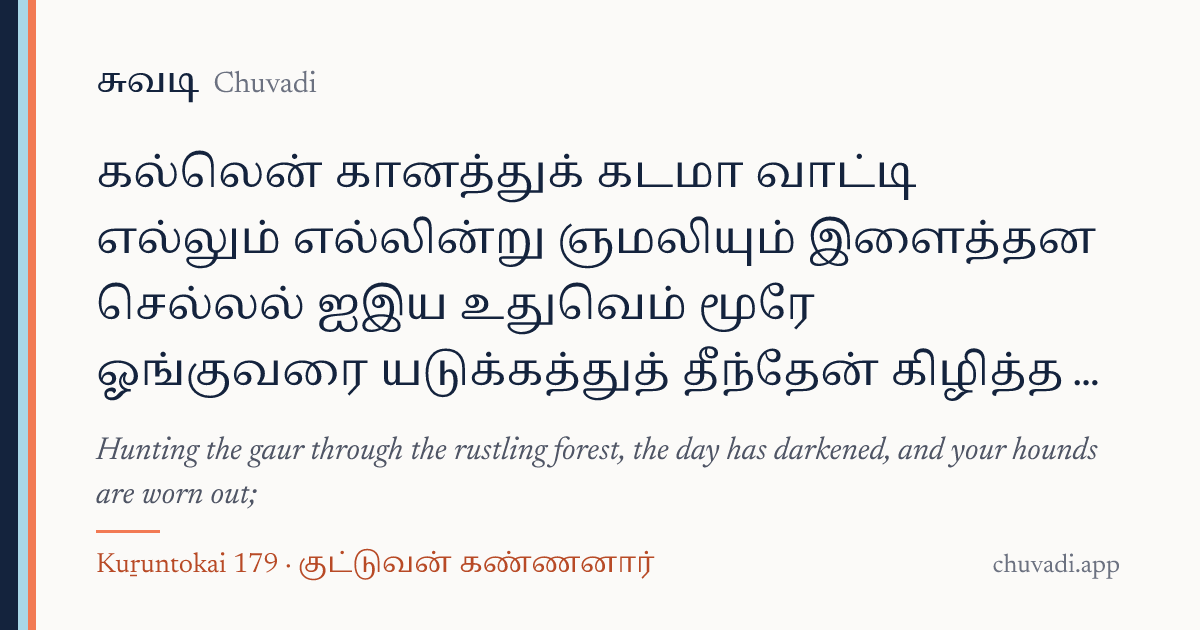

குறுந்தொகை 179
பாடல் · The poem
Tap a word to see where else it occurs.
பொருள் · Meaning in TamilAI
ஒலி நிறைந்த காட்டில் காட்டெருதை விரட்டி வேட்டையாடியதில் பொழுதும் இருண்டுவிட்டது; உம் வேட்டைநாய்களும் களைத்துவிட்டன. ஐயா, மேலே போகாதீர்; அதோ தெரிகிறது எம் ஊர். உயர்ந்த மலைச்சரிவில், இனிய தேனடையைக் கிழித்துக்கொண்டு வளர்ந்த கொத்தான பசிய கரும்பை, மென்மையான வாயுடைய இளம் பேதை யானை தின்று சுவைத்த, குட்டை மூங்கில்கள் நிறைந்த முகடுகளுக்கு இடையே அது இருக்கிறது.
குறிஞ்சித் திணை; தோழி கூற்று, வேட்டைக்கு வந்த தலைவனிடம். இரவில் தங்கள் ஊரில் தங்குமாறு அழைப்பது விருந்தோம்பல் போலத் தோன்றினாலும், வெளிப்படையாக வந்து மணம் கேட்கத் தூண்டும் குறிப்பு இதில் உள்ளது. தேனில் தோய்ந்த கரும்பை எளிதில் சுவைக்கும் இளம் யானை, இந்த நாட்டில் இன்பம் அருகிலேயே இருக்கிறது, முறைப்படி அவனும் பெறலாம் என்பதைக் குறிக்கும் இறைச்சி. "கடமா" என்பதைக் காட்டெருது என்றும் பெரிய மான் என்றும் கொள்வர்.
ஆங்கிலம் · English translationAI
Translation
- Hunting the gaur through the rustling forest,
- the day has darkened, and your hounds are worn out;
- do not go on, sir; over there is our village,
- on the high mountain's ridge, where, tearing through the sweet honeycomb,
- the clustered green cane was eaten by the soft-mouthed
- simple young elephant, which chewed it,
- amid the peaks of stunted bamboo — there it lies.
What the poem says
The heroine's friend speaks to the hero, who has come hunting in the hills of kuṟiñci. The day is over and his dogs are exhausted from chasing a gaur (kaṭamā, the wild ox; some take it as a large deer). She invites him not to go further but to stay in their village, which lies just over there among the bamboo-covered peaks.
On the surface this is hospitality. The real point is that a man who stays openly in the girl's village is close to declaring himself, and the friend is nudging him toward marriage. The picture of the place hides a further suggestion (iṟaicci). A young elephant has eaten green cane that had pierced a honeycomb and chews the sweetened stalk. Pleasure in this country is close at hand and easily taken, and he could have it too, in proper form.
The poet's name, Kuṭṭuvaṉ Kaṇṇaṉār, includes Kuṭṭuvaṉ, a title associated with the Cēra kings.