




குறுந்தொகை 186
பாடல் · The poem
Tap a word to see where else it occurs.
பொருள் · Meaning in TamilAI
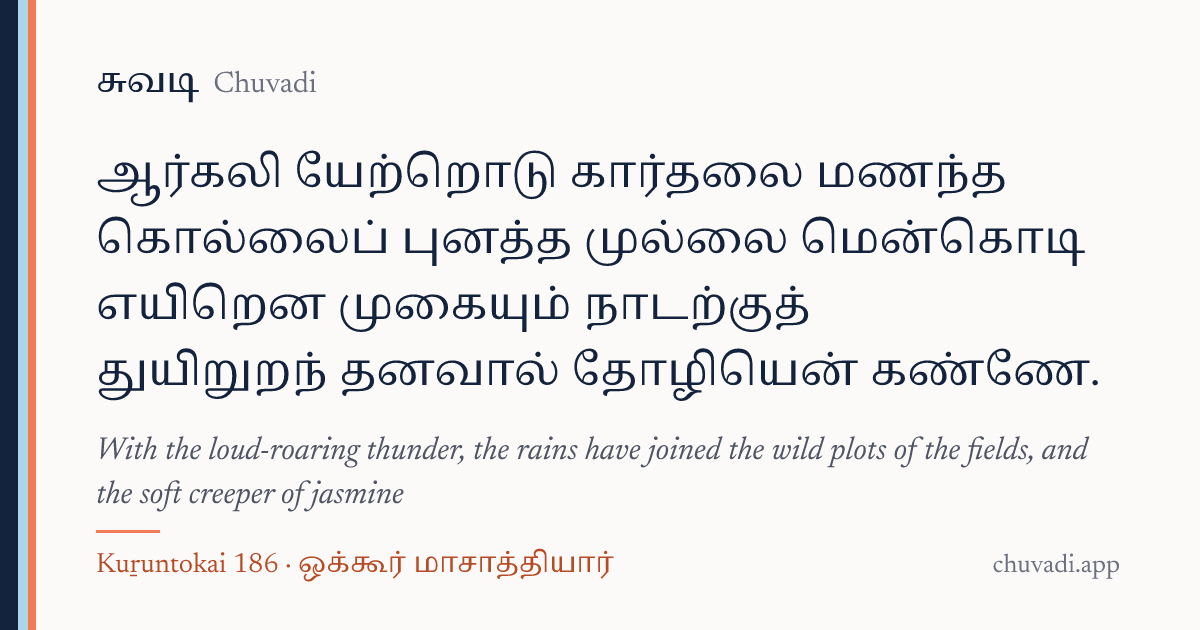
பேரொலியுடைய இடியோடு கார்மழை வந்து தழுவிய கொல்லைப் புனங்களில், முல்லையின் மென்மையான கொடி பற்களைப் போல மொட்டுவிடுகிறது. அத்தகைய நாட்டுத் தலைவனுக்காக, தோழி, என் கண்கள் உறக்கத்தையே கைவிட்டுவிட்டன.
முல்லைத் திணை; தலைவி தோழியிடம் கூறுவது (ஒக்கூர் மாசாத்தியார் பாடல்). தலைவன் திரும்புவதாக வாக்களித்த கார்காலம் வந்துவிட்டது; அவன் வரவில்லை. பற்கள் போன்ற முல்லை மொட்டுகள், அவளால் பங்குகொள்ள முடியாத புன்னகையைக் குறிக்கின்றன. ஆரவாரமான வளம் நிறைந்த காட்சியிலிருந்து தூக்கமின்மை என்ற எளிய கூற்றுக்குத் திடீரெனத் திரும்புவதே பாடலின் வலிமை.
ஆங்கிலம் · English translationAI
Translation
- With the loud-roaring thunder, the rains have joined
- the wild plots of the fields, and the soft creeper of jasmine
- puts out buds like teeth: for the man of that land
- my eyes have given up sleep, friend.
What the poem says
The heroine speaks to her friend at the start of the rainy season. This is mullai, the forest and pasture land of patient waiting. The first storms have come with thunder, the clouds seem to embrace the fields, and the jasmine has begun to bud.
Jasmine buds are often compared in Tamil poetry to the white teeth of a smiling woman. Here the buds suggest a smile that the heroine cannot share. The rains were the season by which the hero promised to come back. Every sign of the season reminds her that he has not, and she cannot sleep.
The poem is one of the shortest in the anthology. Its effect comes from the quick turn from the noisy, fertile scene of the first three lines to the plain statement of sleeplessness in the fourth. The poet is Okkūr Mācāttiyār, a woman poet.