




குறுந்தொகை 188
பாடல் · The poem
Tap a word to see where else it occurs.
பொருள் · Meaning in TamilAI
முல்லையில் மொட்டுகள் முற்றி நிறைந்துவிட்டன; முல்லையோடு சேர்ந்து குளிர்ந்த கார்மழை பெய்த அகன்ற புனங்களும் அழகு நிறைந்துவிட்டன. என் தூய வளையல்களைக் கழலச் செய்தவர் வரவில்லை; மாலைப்பொழுதோ என் சிறந்த அழகைக் குறிவைத்து வந்துவிட்டது.
முல்லைத் திணை; தலைவி கூற்று. கார்காலத்து மாலையில் எல்லாம் நிறைவு பெற்றிருக்க, வருவதாகச் சொன்னவன் மட்டும் வரவில்லை. "வளை நெகிழ்த்தோர்" என்பது, பிரிவால் மெலிந்து வளை கழலச் செய்த காதலனைக் குறிக்கும் வழக்கு. தனிமை கூர்மையாகும் மாலைப்பொழுது, அவள் அழகை அழிக்க வரும் பகைவனைப் போலக் காட்டப்படுகிறது.
ஆங்கிலம் · English translationAI
Translation
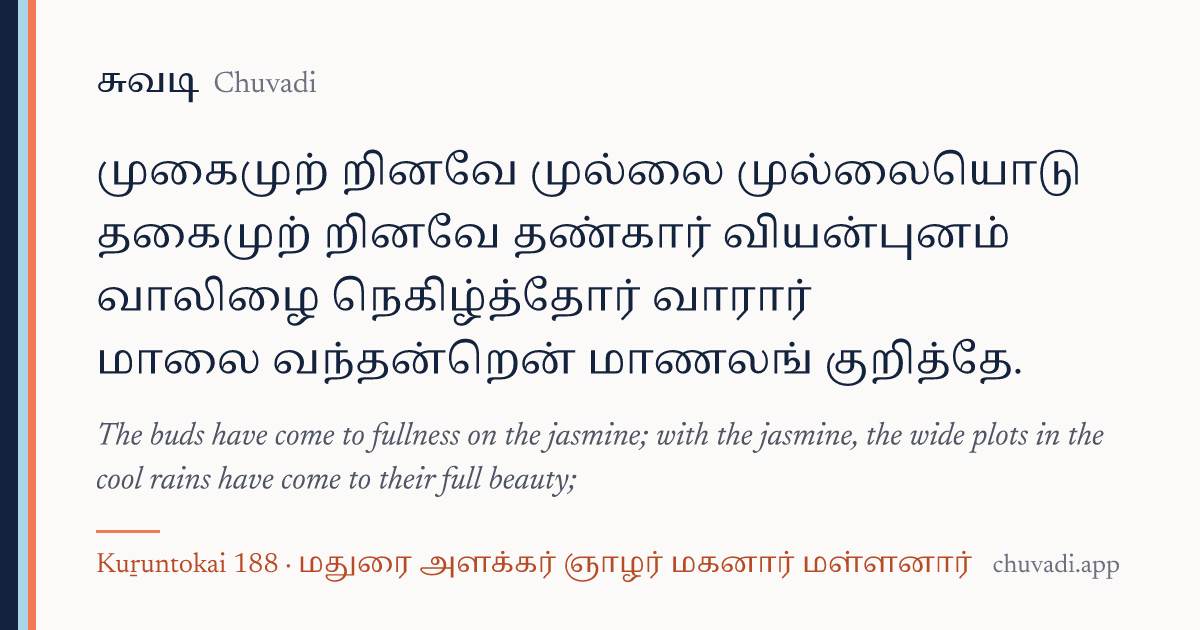
- The buds have come to fullness on the jasmine; with the jasmine,
- the wide plots in the cool rains have come to their full beauty;
- he who loosened my bright bangles does not come;
- evening has come, taking aim at my fine beauty.
What the poem says
The heroine speaks in mullai, the landscape of waiting, as evening falls in the rainy season. Everything around her has come to fullness. The jasmine buds are full and the fields, fed by the rain, are at their loveliest. Only the man who promised to return by this time has not come.
'He who loosened my bright bangles' is a common way of naming the absent lover. Grief makes the woman so thin that her bangles slide off. The evening is pictured almost as an enemy that comes with her beauty as its target, because the dusk hour is when loneliness is sharpest and when her looks begin to fade from grief.
The repetition of muṟṟiṉavē, 'have come to fullness', in the first two lines gives the poem a pattern that the last two lines break.