



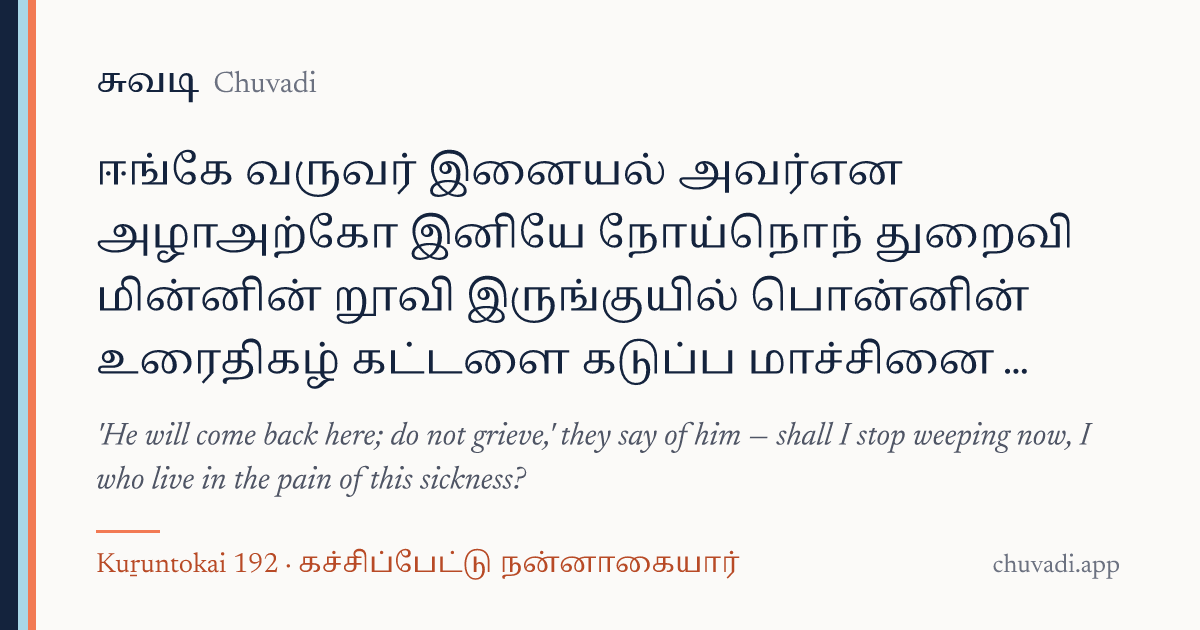

குறுந்தொகை 192
பாடல் · The poem
Tap a word to see where else it occurs.
பொருள் · Meaning in TamilAI
"அவர் இங்கே விரைவில் வருவார்; வருந்தாதே" என்று சொல்கிறார்கள்; நோயால் நொந்து வாழும் நான் இனி அழாமல் இருப்பதா? மின்னும் இறகுகளையுடைய கரிய குயில், பொன்னை உரைத்த கோடுகள் ஒளிரும் உரைகல்லைப் போல, மாமரத்தின் கரிய கிளையில் நறுமணமுள்ள பூந்தாதைக் கிளறும் இந்தப் பருவத்திலும், பூ இல்லாத வெறுங்கூந்தலைத் தடவிக்கொண்டிருக்கிறேன்.
பாலைத் திணை; தலைவி தோழியிடம் கூறுவது (கச்சிப்பேட்டு நன்னாகையார் பாடல்). தலைவன் திரும்புவதாகச் சொன்ன இளவேனிற்காலம் வந்தும் அவன் வரவில்லை. மாம்பூந்தாது படிந்த கரிய குயில், பொன் உரைத்த கோடுகளுடைய கரிய உரைகல்லுக்கு உவமை. கணவனுக்காகப் பெண்கள் பூச்சூடும் பருவத்தில், அவள் பூவற்ற கூந்தலைத் தடவுவது அவள் தனிமையைக் காட்டுகிறது.
ஆங்கிலம் · English translationAI
Translation
- 'He will come back here; do not grieve,' they say of him —
- shall I stop weeping now, I who live in the pain of this sickness?
- Even when the dark koel with gleaming plumes, like the touchstone
- that shines with streaks of rubbed gold, on the dark mango bough
- scatters the fragrant pollen — even at that season
- I stroke my bare hair, with no flowers in it.
What the poem says
The heroine speaks to her friend, who has been comforting her with the promise that the hero will soon return. How can she stop weeping, she asks. Spring has come, the season of his promised return, and he is not here.
The image of spring is exact and lovely. A black koel, dusted with yellow pollen as it pecks among mango blossoms, looks like a jeweller's black touchstone streaked with the gold rubbed on it to test its purity. In this season of flowers, women deck their hair with blossoms for their husbands. The heroine has none to wear, and can only stroke her plain hair.
The poem is classed as pālai, the tiṇai of separation, though its scene is the heroine at home in spring. It is one of several in this part of the anthology attributed to Kaccippēṭṭu Naṉṉākaiyār.