



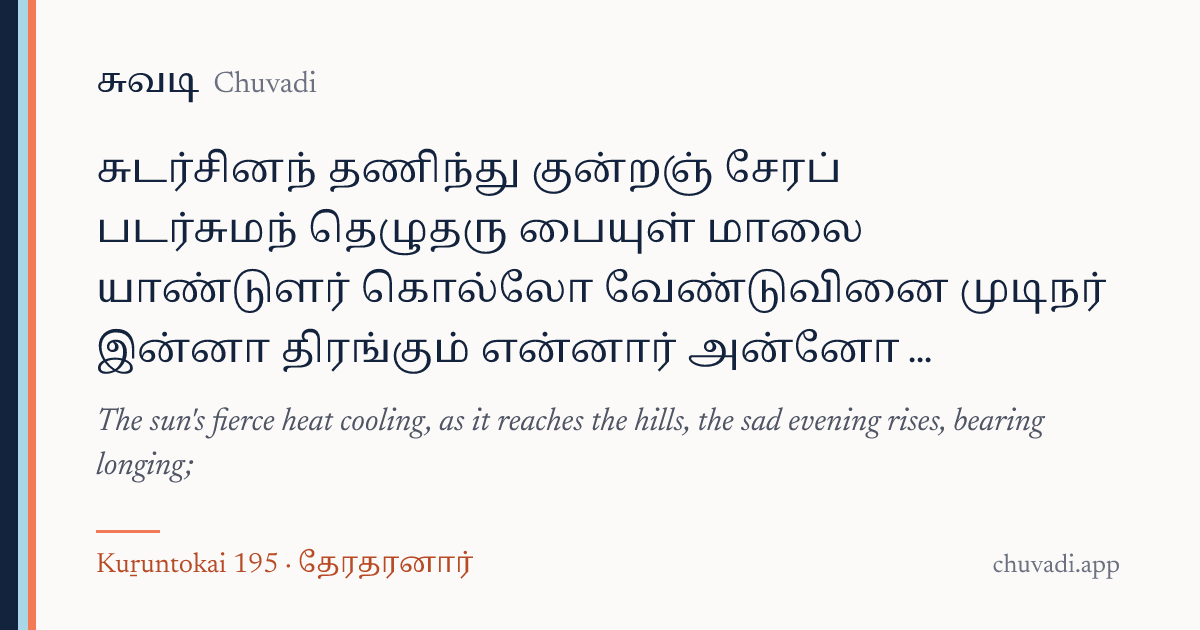

குறுந்தொகை 195
பாடல் · The poem
Tap a word to see where else it occurs.
பொருள் · Meaning in TamilAI
கதிரவனின் கடும்வெப்பம் தணிந்து அது மலையை அடைய, ஏக்கத்தைச் சுமந்துகொண்டு துயரமான மாலைப்பொழுது எழுகிறது. தாம் விரும்பிய வினையை முடிக்கச் சென்றவர் இப்போது எங்கே இருக்கிறாரோ? "இவள் துன்பமுற்று வருந்துவாள்" என்று அவர் எண்ணவில்லை. அந்தோ! தடவிக்கொடுப்பது போல அசையும் காற்று உடலெங்கும் பாய்ந்து பரவ, செய்து வைத்த பாவை போன்ற என் உடல் வேறொன்றாக மாறிக்கொண்டிருப்பதை அவர் அறியவில்லை.
நெய்தல் திணை; தலைவி கூற்று. வினைக்காகப் பிரிந்த தலைவனை மாலைப்பொழுதில் நினைந்து வருந்துகிறாள். வருடுவது போன்ற மாலைக்காற்று ஆறுதல் தராமல் துயரத்தைப் பெருக்குகிறது. அழகிய பாவைபோல இருந்த அவள் உடல் பசலையால் நிறம் இழந்து மாறுவதே "மெய் பிறிதாகுதல்".
ஆங்கிலம் · English translationAI
Translation
- The sun's fierce heat cooling, as it reaches the hills,
- the sad evening rises, bearing longing;
- where can they be, those who go to finish the work they seek?
- 'She will grieve in pain' — they do not think it. Alas,
- as the swaying breeze strokes and presses on my body,
- that this body of mine, like a crafted doll,
- is turning into something else — they do not know.
What the poem says
The heroine speaks at sunset. The heat of day has eased, the sun is going down behind the hills, and evening comes on with its weight of longing. The hero has gone away to accomplish some task, and she wonders where he is now. He never thought she would suffer, she says. He does not know how her body is changing.
The evening breeze touches her like a caress, but it only deepens her pain. Her body, once like a painted doll (pāvai), lovely and finely made, is losing its colour and becoming something else. The pallor of lovesickness was a standard sign of separation in Tamil poetry.
The poem is classed under neytal, the tiṇai of pining, whose hour is the evening. The phrase 'those who go to finish the work they seek' is a regular way of describing the hero's absence on business or for war. The poet is Tēratharaṉār.