



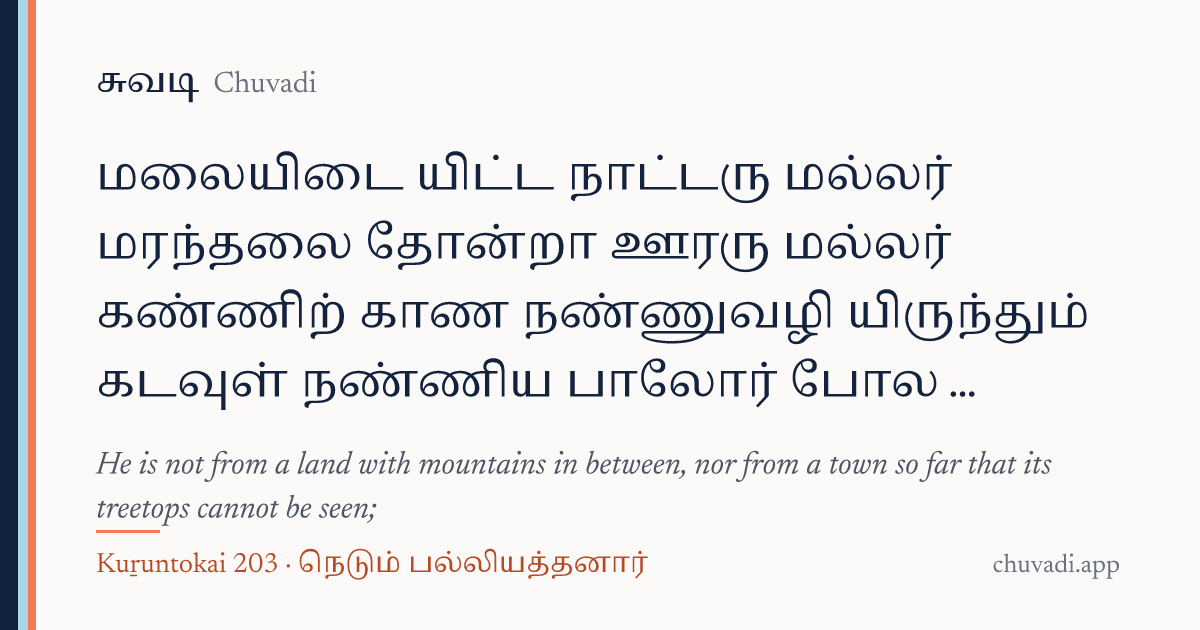

குறுந்தொகை 203
பாடல் · The poem
Tap a word to see where else it occurs.
பொருள் · Meaning in TamilAI
அவர் மலைகள் குறுக்கிட்டுப் பிரிக்கும் தொலைநாட்டவர் அல்லர்; மரங்களின் உச்சிகூடக் கண்ணுக்குத் தெரியாத தூரத்து ஊரவரும் அல்லர். கண்ணால் காணக்கூடிய அளவு அருகிலேயே இருந்தும், கடவுளை அடையும் துறவு வழியை மேற்கொண்டவர்கள் உலகப் பற்றை விட்டு விலகி நிற்பது போல, என்னை விட்டு விலகியே நடக்கிறார் என் தலைவர். முன்பு ஒருகாலத்தில் இவருக்காக நான் இப்படி வருந்தியதே இல்லையே!
மருதத் திணை; தலைவி கூற்று. ஒரே ஊரில் இருந்தும் பரத்தையர் தொடர்பால் தன்னை நெருங்காத கணவனைப் பற்றித் தலைவி வருந்துகிறாள். பற்றற்ற துறவியரின் விலகலோடு அவனது அலட்சியம் ஒப்பிடப்படுகிறது. இறுதி அடி செறிவானது; "முன்பு இப்படி வருந்தவில்லை" என்றும், "முன்பு இவரைப் பெரிதாக நினைக்கவில்லை" என்றும் இருவகையாகப் பொருள் கொள்ள இடமுண்டு.
ஆங்கிலம் · English translationAI
Translation
- He is not from a land with mountains in between,
- nor from a town so far that its treetops cannot be seen;
- though he lives near enough to be seen with the eyes,
- like those who have taken the portion that draws near to the gods,
- he keeps himself apart — for this man of mine
- once, in days gone by, I would not have grieved like this.
What the poem says
The heroine, in the marutam setting of the town, complains that her husband keeps away. He has not gone to some distant country; he lives in the same town, close enough to see, yet he will not come near her, presumably because he is spending his time with other women.
The comparison in line four is with those who have chosen the life of renunciation and live near the gods, apart from ordinary human ties. Her husband behaves with the same cool distance, as if she were nothing to him.
The last line is compressed. It is taken here to mean that once she would never have had cause to grieve for him; it could also be read as her saying that in the past she did not care so much. The poet's name, Neṭum Palliyattaṉār, seems to refer to musical instruments.