



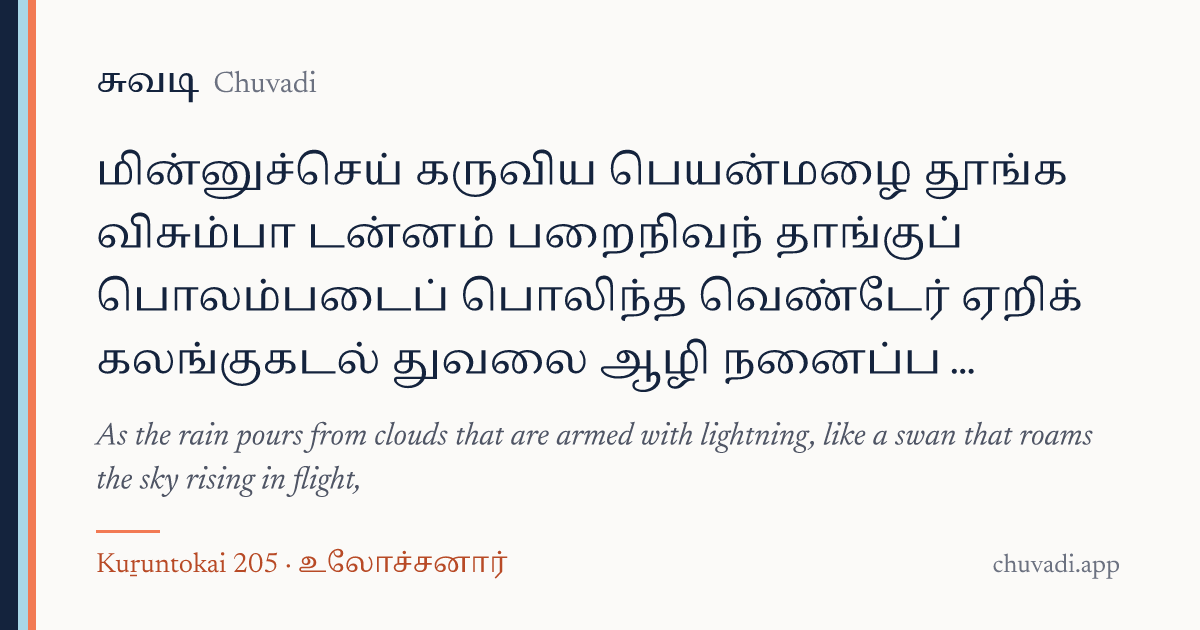

குறுந்தொகை 205
பாடல் · The poem
Tap a word to see where else it occurs.
பொருள் · Meaning in TamilAI
மின்னலைக் கருவியாகக் கொண்ட மேகங்கள் மழையைப் பொழிய, வானத்தில் திரியும் அன்னம் சிறகடித்து எழுவது போல, பொன்னாலான அணிகளால் பொலிந்த வெண்மையான தேரில் ஏறி, கலங்கும் கடலின் நீர்த்துளிகள் சக்கரங்களை நனைக்க, மணல் குவிந்த கடற்கரைத் தலைவன் இப்போதுதான் சென்றான். தோழி! தேன் மணக்கும் என் அழகிய நெற்றியில் படரும் இந்தப் பசலை, அவன் போனதை எப்படித்தான் அறிந்துகொண்டதோ?
நெய்தல் திணை; தலைவி தோழிக்குக் கூறியது. தலைவன் பிரிந்த உடனேயே, பிரிவுத் துயரின் அடையாளமான பசலை (நிறம் வெளிறுதல்) அவள் நெற்றியில் படர்கிறது. மழைவானில் எழும் அன்னம், வெண்தேரின் விரைவுக்கும் ஒளிக்கும் உவமை. பசலையை, தருணம் பார்த்துக் காத்திருந்த உயிருள்ள ஒன்றுபோலக் கேட்பதே பாடலின் நயம்; அவள் சொல்லும் முன்பே உடல் அவள் உள்ளத்தைக் காட்டிவிடுகிறது.
ஆங்கிலம் · English translationAI
Translation
- As the rain pours from clouds that are armed with lightning,
- like a swan that roams the sky rising in flight,
- he mounted his white chariot, splendid with its golden trappings,
- its wheels drenched by the spray of the churning sea,
- and now he has gone, the man of the shore of heaped sand.
- How did it come to know of it, friend, this
- pallor that spreads over my lovely, honey-scented brow?
What the poem says
The heroine speaks to her friend on the seashore, the neytal landscape of pining. Her lover from the coast has just driven off in his chariot, its wheels splashed by the waves, and already the sickly pallor (pacappu) that marks a woman separated from her beloved is spreading over her forehead.
The white chariot is compared to a swan rising into a rainy sky, a picture of speed and brightness. The wit of the poem is in the last lines: she asks how the pallor could know so quickly that he had gone, as if it were a creature that had been waiting for its moment. Her body betrays her feelings before she has spoken them.