




குறுந்தொகை 212
பாடல் · The poem
Tap a word to see where else it occurs.
பொருள் · Meaning in TamilAI
கடற்கரைத் தலைவன் செலுத்திய, வளைந்த கைப்பிடியை உடைய நெடிய தேர், தெளிந்த கடலை அடுத்த கரையில் தெளிந்த மணிகள் ஒலிக்க, இவளைக் காண்பதற்காக வந்து, பின்பு நாணத்தோடு திரும்பிச் செல்கிறது. இந்தக் காதல் இரங்கத்தக்கதே! இப்படியே போனால் இது உறுதியாக அழிந்துவிடும்; அதை எண்ணி நான் வருந்துகிறேன்.
நெய்தல் திணை; தோழி கூற்று. தேரில் அடிக்கடி வந்து தலைவியைக் கண்டுவிட்டு, மணம் பேசாமலே திரும்பும் தலைவன் கேட்கும்படி தோழி இதைச் சொல்கிறாள்; விரைவில் வரைந்துகொள்ள வேண்டும் என்பது குறிப்பு. "நாணப் பெயரும்" என்பது தலைவனின் நாணமா, காணப்படுவதால் தலைவி கொள்ளும் நாணமா என்பது தெளிவாக இல்லை.
ஆங்கிலம் · English translationAI
Translation
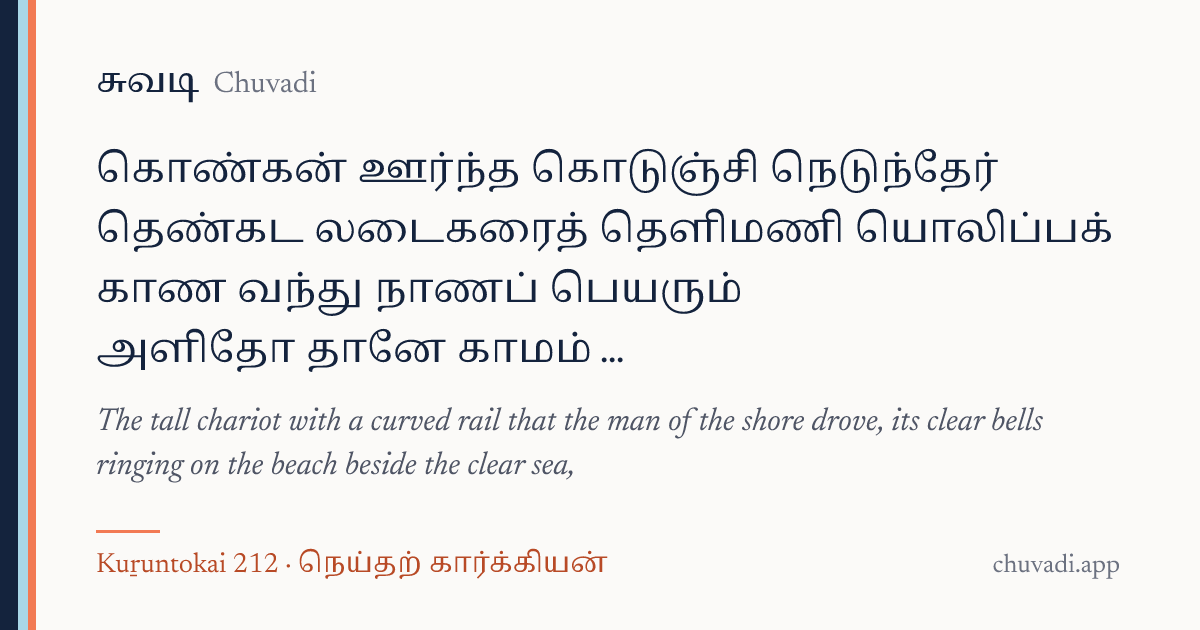
- The tall chariot with a curved rail that the man of the shore drove,
- its clear bells ringing on the beach beside the clear sea,
- comes so he may see her, and goes back in shame;
- pitiable indeed is this love;
- it will surely die away; and I grieve for it.
What the poem says
The friend speaks on the seashore (neytal). The hero comes regularly in his chariot, its bells ringing along the beach, to catch sight of the heroine, and then drives away without doing what he should: asking for her hand.
The friend calls such a love pitiable, and fears it will wither if it goes on like this. Her words are probably spoken within the hero's hearing, so they work as a pointed hint that he must stop hovering and arrange the marriage.
The phrase "goes back in shame" may refer to the hero's embarrassment at not being able to meet her openly, or to the heroine's own shame at being seen; the Tamil leaves the subject open.