



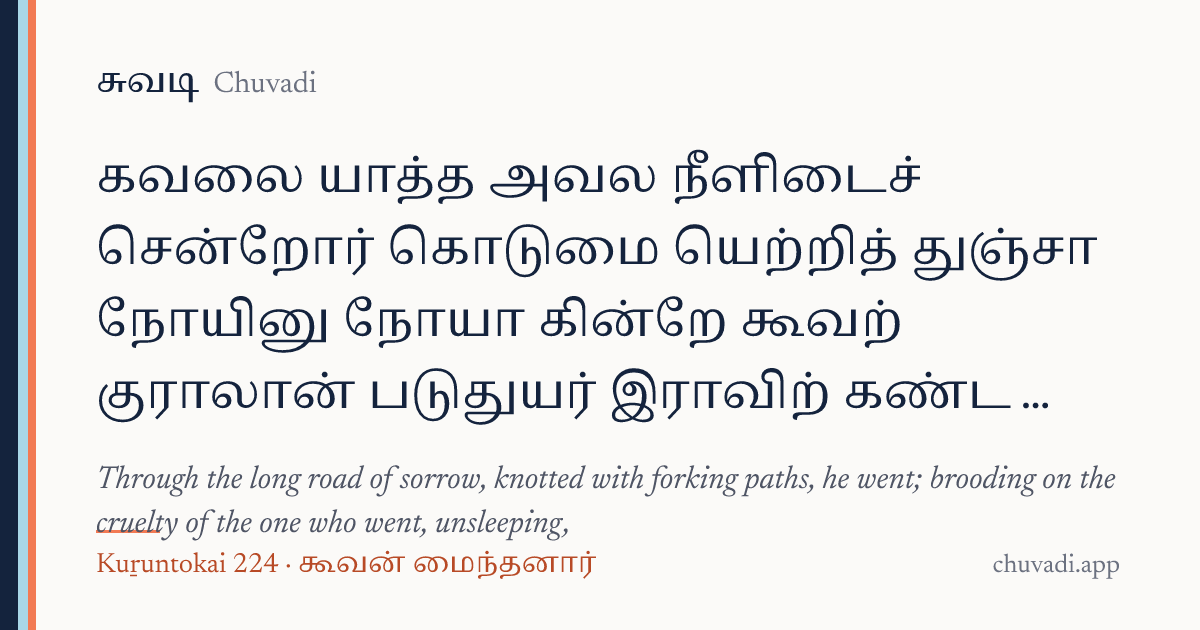

குறுந்தொகை 224
பாடல் · The poem
Tap a word to see where else it occurs.
பொருள் · Meaning in TamilAI
பல பிரிவுகளாகக் கிளைக்கும் வழிகள் பின்னிய, துன்பம் தரும் நெடிய பாலைவழியில் சென்றவரின் கொடுமையை எண்ணி எண்ணி உறங்காமல் இருக்கும் இந்த நோய், எல்லா நோயினும் கொடிய நோயாகிவிட்டது. கிணற்றில் விழுந்த குரால் நிறப் பசு படும் துயரை இரவில் கண்ட, நற்குடியில் பிறந்த ஊமையன், யாரையும் அழைக்க முடியாமல் தவிப்பது போல, தோழி, இந்த நோயால் வரும் துயரை என்னால் பொறுக்க முடியவில்லை.
பாலைத் திணை; தலைவி தோழிக்குக் கூறியது. தலைவன் பிரிந்ததால் உறக்கமின்றி வருந்தும் தலைவி, தன் துயரைப் பிறரிடம் வெளிப்படையாகச் சொல்ல இயலாத நிலையை, கிணற்றில் விழுந்த பசுவைக் கண்டும் கூவி உதவி கேட்க முடியாத ஊமையனுக்கு ஒப்பிடுகிறாள். நற்குடிப் பெண் தன் காதலை மறைக்க வேண்டியவள் என்ற மரபு இதில் புலப்படுகிறது.
ஆங்கிலம் · English translationAI
Translation
- Through the long road of sorrow, knotted with forking paths,
- he went; brooding on the cruelty of the one who went, unsleeping,
- it has become a pain beyond pain; in a well
- a dun cow lies suffering, and at night someone sees it —
- like a mute man of good family,
- I cannot bear my grief, friend, at this pain.
What the poem says
The heroine speaks while her husband is away across the wasteland (pālai), on a long road branching into many paths. She cannot sleep for thinking how cruel he was to leave, and the pain has become worse than any ordinary pain.
The simile is striking and painful. A man of good birth who cannot speak sees at night a cow that has fallen into a well. He knows its suffering and wants to help, but he can call no one. The heroine is in the same state: she feels her grief fully but cannot speak of it openly, because a woman of her class must hide her love.
The poet is known as Kūvaṉ Maintaṉār, a name that seems to echo the well (kūval) of this poem.