



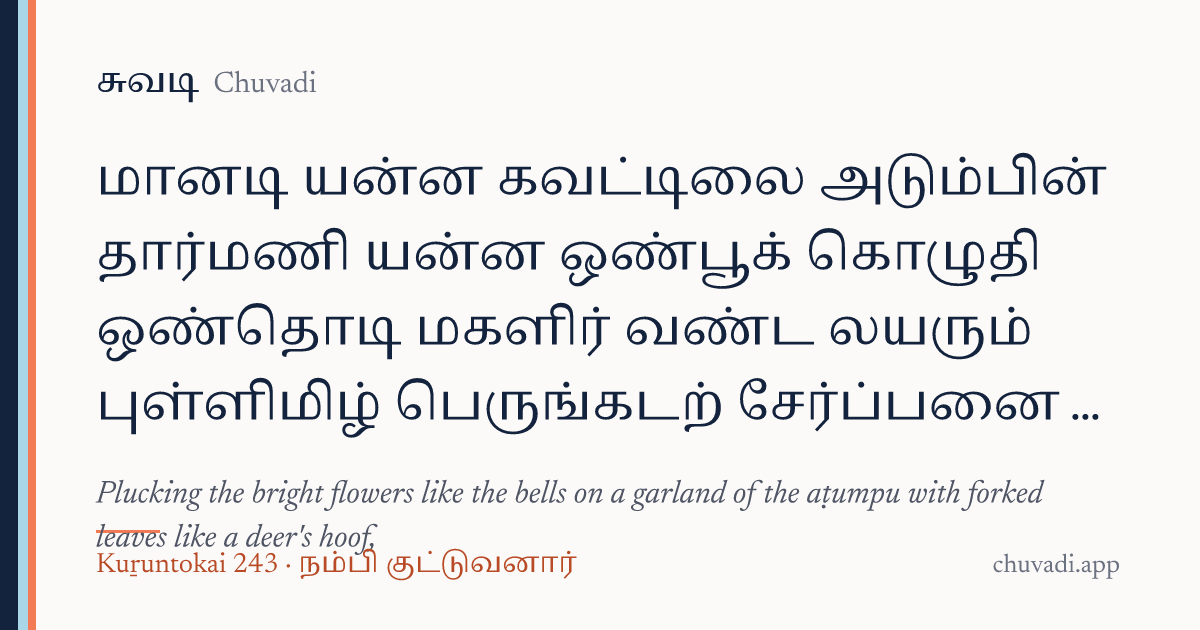

குறுந்தொகை 243
பாடல் · The poem
Tap a word to see where else it occurs.
பொருள் · Meaning in TamilAI
மானின் குளம்பு போலப் பிளவுபட்ட இலைகளை உடைய அடும்புக் கொடியின், மாலையில் கோத்த மணிகள் போன்ற ஒளிரும் மலர்களைக் கொய்து, ஒளிரும் வளையல் அணிந்த சிறுமியர் மணல்வீடு கட்டி விளையாடும், பறவைகள் ஒலிக்கும் பெருங்கடற்கரைத் தலைவனை, தோழி, இனி நான் நினைக்கமாட்டேன்; என் கண்கள் உறங்குவனவாக!
நெய்தல் திணை; தலைவி தோழிக்குக் கூறியது. "அவனை நினையேன்" என்று உறுதி கூறும் அவள், அதே பாடலில் அவன் கடற்கரையின் ஒவ்வொரு அழகையும் நினைத்துப் பேசுவதால், அவள் உறுதியே பொய்யாகிறது; இதுவே பாடலின் நயம். இறுதிச் சொல்லை, அவனைக் கண்ட கண்களைச் சபிப்பதாகவும் கொள்ளலாம்.
ஆங்கிலம் · English translationAI
Translation
- Plucking the bright flowers like the bells on a garland
- of the aṭumpu with forked leaves like a deer's hoof,
- where girls with bright bangles play at building sand houses,
- the man of the great sea shore where the birds cry out —
- I will not think of him, friend; may my eyes find sleep.
What the poem says
The heroine speaks on the seashore (neytal). She describes the hero's shore, where girls pick the bell-like flowers of the beach creeper aṭumpu, whose leaves are split like a deer's hoof, and play at making sand houses while seabirds cry.
Her resolution in the last line, "I will not think of him", is undercut by the poem itself, which has just lingered over every detail of his coast. She hopes that by not thinking of him she will at last be able to sleep.
The final verb could also be read as a curse on her own eyes, which first saw him and now keep her awake; the translation chooses the gentler sense. The poet's name, Nampi Kuṭṭuvaṉār, may link him with the Cēra line, but this is not certain.