




குறுந்தொகை 252
பாடல் · The poem
Tap a word to see where else it occurs.
பொருள் · Meaning in TamilAI
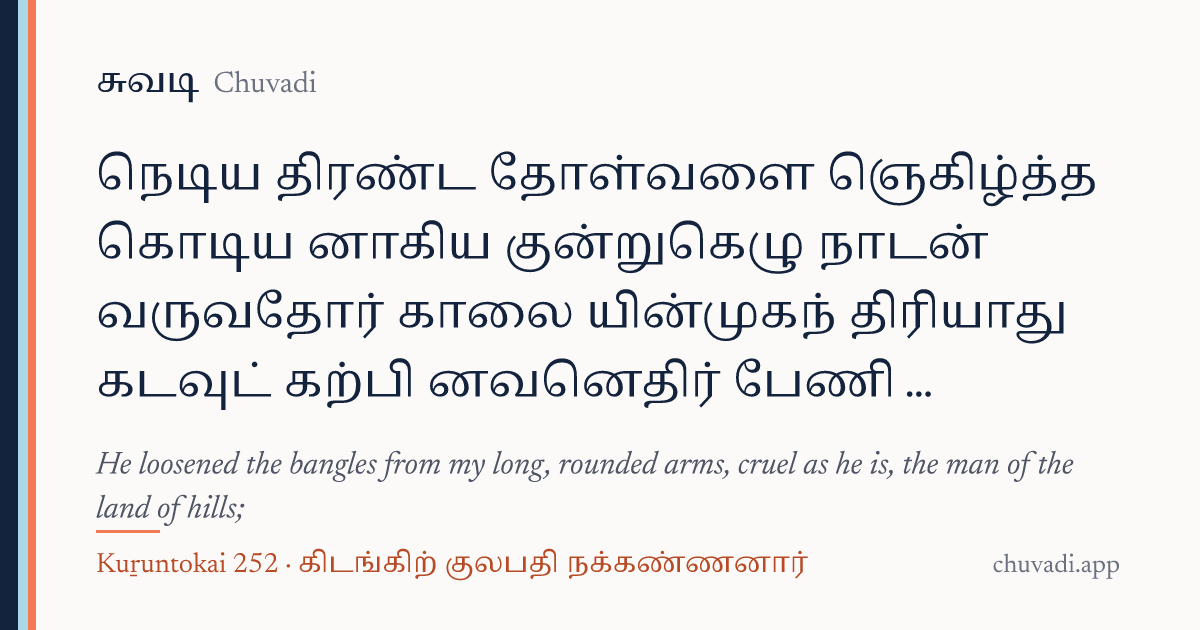
நீண்டு திரண்ட என் தோள்களிலிருந்து வளையல்களை நெகிழச் செய்த கொடியவன் அந்த மலைநாட்டுத் தலைவன். ஆனாலும் அவன் வரும்போதெல்லாம், என் இனிய முகம் மாறாமல், தெய்வத்தன்மை வாய்ந்த கற்பொழுக்கத்தோடு அவனை எதிர்கொண்டு உபசரிக்கிறேன். "நீ உண்மையிலேயே அறியாதவள்" என்று என்னை வற்புறுத்திச் சினக்காதே, தோழி, வாழ்க! ஆராய்ந்து பார்த்தால், சான்றோர் தம்மைப் பிறர் புகழும்போதே நாணுவார்கள்; அவர்கள் பிறரைப் பழித்துப் பேசுவார்களோ?
குறிஞ்சித் திணை; தலைவி தோழிக்குக் கூறியது. தனக்குத் துயர் தந்த தலைவனை மகிழ்ந்து வரவேற்பதற்காகக் கடிந்த தோழிக்கு, அது அறியாமையன்று, நற்பண்பு என்று விடை கூறுகிறாள். வளையல் நெகிழ்வது பிரிவால் மெலிந்ததன் அடையாளம்; அதனாலேயே அவன் "கொடியன்". புகழைக் கேட்கவே நாணும் சான்றோர் பழிச்சொல் பேசார் என்பது அவள் கொள்கை.
ஆங்கிலம் · English translationAI
Translation
- He loosened the bangles from my long, rounded arms,
- cruel as he is, the man of the land of hills;
- yet whenever he comes, without changing my glad face,
- with a chastity worthy of a god I welcome him;
- 'You are truly simple,' you say, pressing me —
- do not be angry, may you live, my friend. The noble
- feel shame even before they are praised;
- would they speak blame, when you think about it?
What the poem says
The heroine answers her friend, who has scolded her for greeting the hero warmly in spite of the suffering his absences cause her. The bangles slipping from her arms are the standard sign of a woman wasting with longing, so the hero is "cruel" in a precise sense: he is the cause of her thinness.
Her reply is a small piece of ethics. She receives him with a "godlike" chastity (kaṟpu), the steady devotion expected of a wife, and will not show him a sullen face. People of real worth, she says, are embarrassed even to hear themselves praised; how could such a person bring herself to utter reproach? Her restraint is a matter of character, not simplicity.
The setting is kuṟiñci, the hill country, and the poem probably belongs to the stage after marriage or near it, when the heroine's conduct is measured against the ideal of the faithful wife. The poet's name links him with a place called Kiṭaṅkil.