



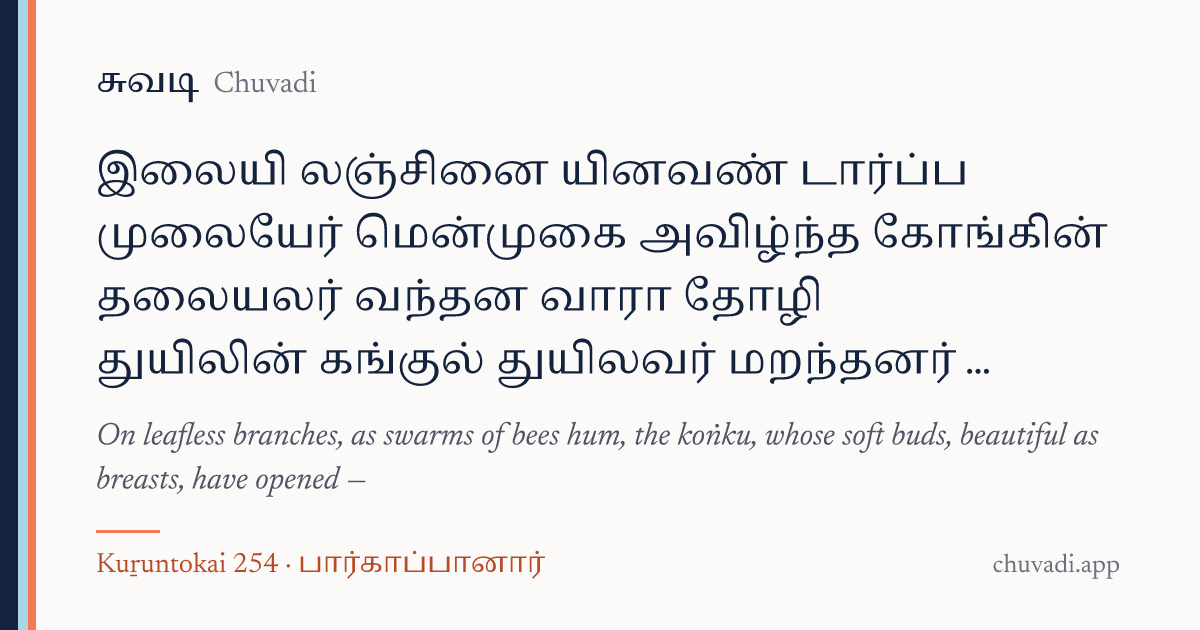

குறுந்தொகை 254
பாடல் · The poem
Tap a word to see where else it occurs.
பொருள் · Meaning in TamilAI
இலையில்லாத அழகிய கிளைகளில் வண்டுக் கூட்டங்கள் ஆரவாரிக்க, முலைபோல் அழகிய மென்மையான அரும்புகள் அவிழ்ந்த கோங்க மரத்தின் முதல் மலர்கள் வந்துவிட்டன; ஆனால் வரவேண்டியது வரவில்லை, தோழி! உறங்குவதற்குரிய இரவுகளில் நாம் ஒன்றாக உறங்கியதை அவர் மறந்துவிட்டார்; அடர்ந்த மணமுடைய என் கூந்தலாகிய படுக்கையையும் நினைக்கவில்லை. தாம் ஈட்டும் பொருளைக் கொண்டுவர விரும்பிச் சென்றவர் "வந்து சேர்ந்துவிட்டார்" என்று சொல்லி வரும் தூதுதான் இன்னும் வரவில்லை.
பாலைத் திணை; தலைவி தோழிக்குக் கூறியது. தலைவன் திரும்புவதாகச் சொன்ன இளவேனிற்காலத்தின் அடையாளமாகக் கோங்கு பூத்துவிட்டது; அவன் வருகையை அறிவிக்கும் தூது மட்டும் வரவில்லை. "வந்தன", "வாரா" என்ற இரு வினைகளின் முரணே பாடலின் மையம்; வாராதது எது என்பதை இறுதி அடிவரை தள்ளிவைத்திருப்பது நயம்.
ஆங்கிலம் · English translationAI
Translation
- On leafless branches, as swarms of bees hum,
- the koṅku, whose soft buds, beautiful as breasts, have opened —
- its first blossoms have come; but they do not come, friend:
- in nights meant for sleeping he has forgotten that sleep,
- nor does he remember the bed of my thick fragrant hair,
- he who went out longing to bring back wealth of his making —
- the messages that would arrive saying, 'He has reached home.'
What the poem says
The heroine speaks to her friend while the hero is away earning wealth. The koṅku tree, which blooms on bare branches in the hot season, has put out its first flowers. That was the season by which he promised to return, and the flowers have come on time while he has not.
The poem turns on a pointed contrast. The blossoms "have come"; what "has not come" is any message announcing his return. Between these two verbs she sets her complaint: he has forgotten the nights they slept together and the pillow of her fragrant hair. The comparison of the opening buds to young breasts ties the season to her own body and her desire.
The word order is unusual even for Sangam verse: the subject of "do not come" is held back until the last line. The English follows the Tamil in this delay.