



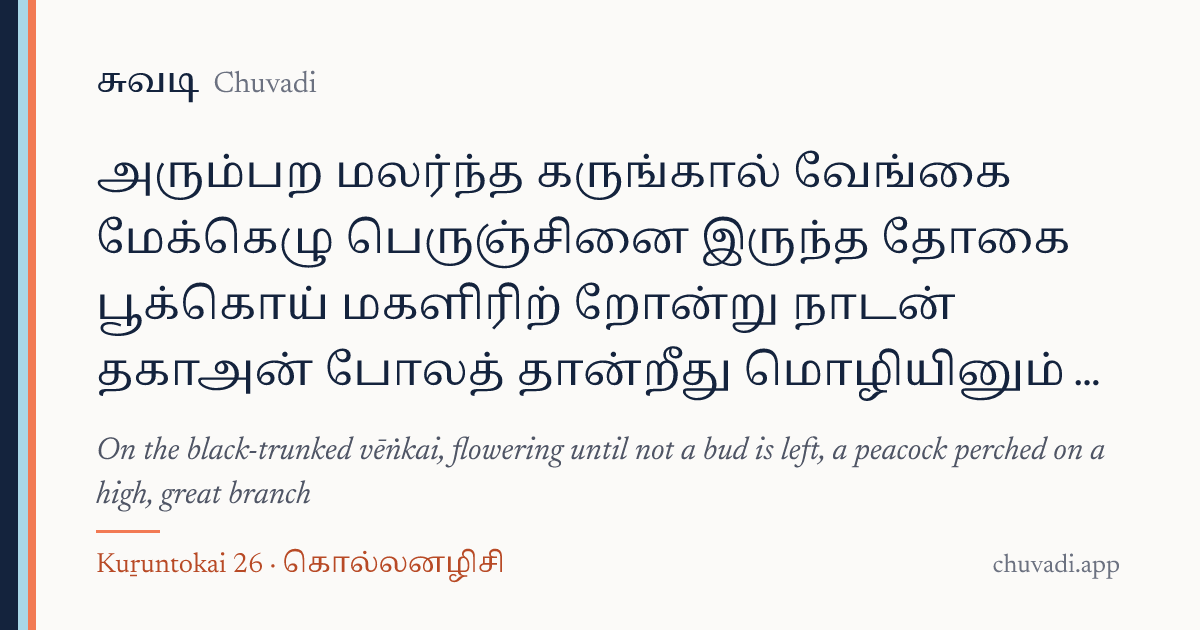

குறுந்தொகை 26
பாடல் · The poem
Tap a word to see where else it occurs.
பொருள் · Meaning in TamilAI
அரும்பு ஒன்றுகூட மிஞ்சாமல் முழுதும் மலர்ந்த கரிய அடிமரத்தையுடைய வேங்கை மரத்தின் மேலே உயர்ந்த பெருங்கிளையில் அமர்ந்திருக்கும் மயில், பூப்பறிக்கும் பெண்ணைப் போலத் தோன்றும் நாட்டை உடையவன் அவன். அவனைத் தகுதியில்லாதவன் போல ஒருத்தி தீங்காகப் பேசினாலும், அவள் தன் கண்ணால் கண்டது பொய்யாகிவிடாது. இனிய மாம்பழத்தை உண்ணும், கூரிய பற்களும் சிவந்த வாயும் உடைய, மலையில் விளையாடும் வலிய குட்டியின் தந்தையாகிய ஆண்குரங்கும் அந்தக் கொடியவனை அறியும்.
குறிஞ்சித் திணை; தோழி கூற்று. தலைவியின் மெலிவுக்குக் காரணம் தேடும் வீட்டாரிடம், அதற்குக் காரணம் அம்மலைநாட்டுத் தலைவனே என்று தோழி குறிப்பாக வெளிப்படுத்துகிறாள்; குறி சொல்பவள் அவனைப் பற்றித் தவறாகச் சொன்ன சூழலாகக் கொள்ளலாம். வேங்கை பூப்பது மலைநாட்டில் மணக்காலத்தின் அடையாளம். "தகாஅன் போல... மொழியினும்" என்ற அடிகளில் பேசுபவள் யார் என்பது உறுதியாகத் தெரியவில்லை.
ஆங்கிலம் · English translationAI
Translation
- On the black-trunked vēṅkai, flowering until not a bud is left,
- a peacock perched on a high, great branch
- looks like a girl gathering flowers — the man of that land,
- even if she speaks ill of him as though he were unworthy,
- what her own eyes have seen will not prove false;
- eating sweet mangoes, sharp-toothed and red-mouthed,
- the father of the strong young one that plays on the cliffs,
- the male monkey too, knows that cruel man.
What the poem says
The heroine's friend speaks in the hill country (kuṟiñci). The setting seems to be the household's attempt to find out why the girl is unwell, perhaps through a diviner. The friend insists the cause is the hero. Even if someone speaks ill of him, the truth of what was seen cannot be undone. Even the monkey on the hillside knows that man.
The opening image is of the vēṅkai in full bloom with a peacock among its branches, looking just like a girl reaching up to pick flowers. Vēṅkai blossom signalled the season for marriage in the hills, so the image may also hint that it is time.
The middle lines are hard to construe. It is not certain who 'she' is in line 4, the diviner, the mother or the heroine, and commentators differ. Whose eyes 'saw' in line 5 is also open. 'Sweet mangoes' is a probable sense of tēkkokku, not a certain one. The poet's name, Kollaṉ Aḻici, suggests a smith.