



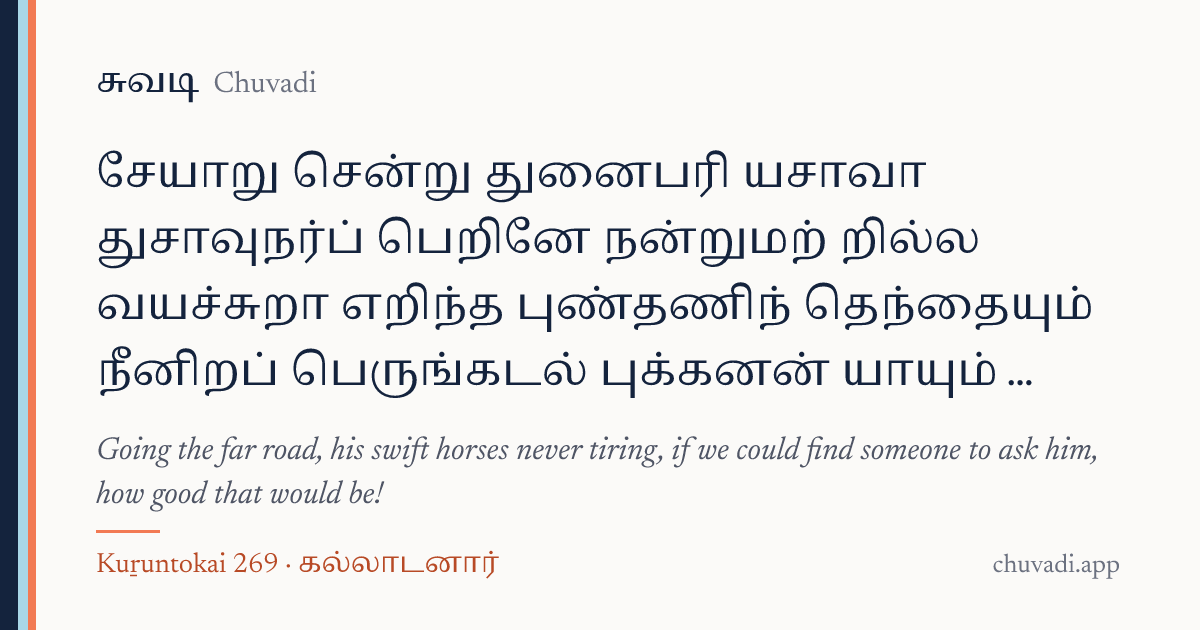

குறுந்தொகை 269
பாடல் · The poem
Tap a word to see where else it occurs.
பொருள் · Meaning in TamilAI
தொலைவழியில் சென்று, விரைந்து ஓடும் குதிரைகள் தளராமல், அவரிடம் சென்று கேட்கக்கூடிய ஒருவர் கிடைத்தால் எவ்வளவு நல்லது! வலிய சுறாமீன் தாக்கிய புண் ஆறியதால் என் தந்தையும் நீலநிறப் பெருங்கடலுக்குள் சென்றுவிட்டான்; என் தாயும் உப்பைக் கொடுத்து வெண்ணெல் வாங்கி வருவதற்காக உப்பு விளையும் களத்துக்குச் சென்றுவிட்டாள். ஆகவே, குளிர்ந்த கரிய பரப்பை உடைய கடற்கரைத் தலைவனுக்கு, "இப்போது வந்தால் இவளை எளிதாகக் காணலாம்" என்ற தூதை யாராவது கொண்டு செல்லவேண்டுமே.
நெய்தல் திணை; தலைவி கூற்று. பெற்றோர் இருவரும் வெளியே சென்றிருப்பதால் இப்போது சந்திக்க ஏற்ற நேரம் என்று தலைவனுக்குச் சொல்ல ஒரு தூதன் கிடைக்காதா என்று ஏங்குகிறாள். மீனவர் வாழ்வின் கடலபாயமும் உப்பு-நெல் பண்டமாற்றும் பாடலில் உயிர்ப்புடன் வருகின்றன. இரண்டாம் அடியின் இறுதித் தொடரின் அமைப்பும், ஏழாம் அடியில் கடற்கரையைக் குறிக்கும் சொல்லும் உறுதியாகத் தெரியவில்லை.
ஆங்கிலம் · English translationAI
Translation
- Going the far road, his swift horses never tiring,
- if we could find someone to ask him, how good that would be!
- My father, the wound from the strong shark healed,
- has entered the great blue sea; my mother too,
- bartering salt to bring back white paddy,
- has gone to the salt-growing fields; and so,
- to the lord of the shore with its cold dark expanse,
- the message: 'If he comes now, she is easy to see.'
What the poem says
The heroine speaks in neytal, the seashore landscape. She longs for a messenger with swift horses who would ride to the hero and tell him that now is the time to come: her father has gone back out to sea after recovering from a shark wound, and her mother has left to trade salt for rice at the salt-pans. With both parents away, she can be met freely.
The poem is full of fishing-village life, from the dangers of the sea to the trade of salt for paddy. Its frankness is touching, and its very practicality hints at how long she has waited.
The second line ends with words (naṉṟu maṟṟu illa) whose construction is not certain; they are read here as an exclamation. In the seventh line the word for the shore is uncertain in the text and the rendering "cold dark expanse" is tentative. The poet is Kallāṭaṉār.