



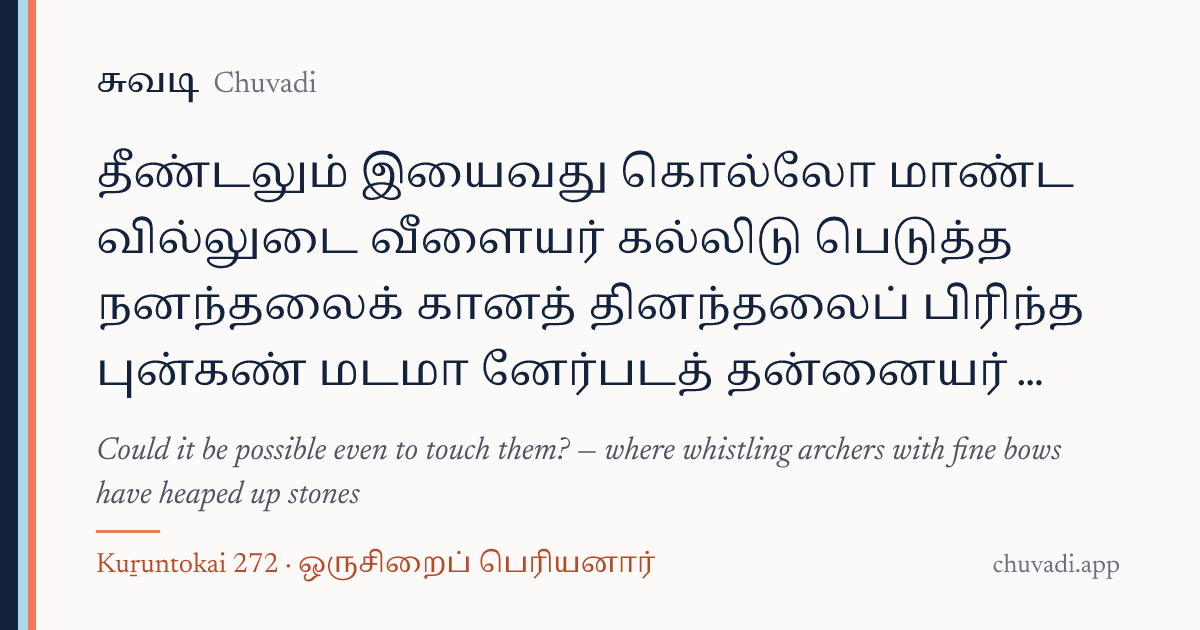

குறுந்தொகை 272
பாடல் · The poem
Tap a word to see where else it occurs.
பொருள் · Meaning in TamilAI
சிறந்த வில்லையும் சீழ்க்கை ஒலியையும் உடைய வேட்டுவர் கற்களைக் குவித்து வைத்த அகன்ற காட்டில், தன் கூட்டத்தைப் பிரிந்த துயரக் கண்களை உடைய இளம்பெண்மான் எதிர்ப்படும். அங்கே அவளுடைய தமையன்மார், சிறந்த வில்லின் கடுவிசையால் கலைமானின் மார்பில் அழுத்தி இரத்தத்தோடு பறித்தெடுத்த சிவந்த அம்புகள் இரண்டை எதிரெதிராக வைத்தது போன்ற மையுண்ட கண்களும், மணக்கும் கரிய கூந்தலும் உடைய அந்தக் குறமகளின் தோள்களைத் தொடுவதாவது எனக்கு இயலுமோ?
குறிஞ்சித் திணை; தலைவன் கூற்று. குறமகளை அடைவது அரிது என்று தலைவன் ஏங்குகிறான். செவ்வரி படர்ந்த அவள் கண்களை இரத்தம் தோய்ந்த அம்புகளுக்கு ஒப்பிடுவது அழகைப் புகழ்வதோடு, அவளைக் காக்கும் தமையன்மாரின் வேட்டைத் திறனையும் அபாயத்தையும் நினைவூட்டுகிறது. "கல்லிடுபு எடுத்த" என்ற தொடரின் பொருள் தெளிவாக இல்லை.
ஆங்கிலம் · English translationAI
Translation
- Could it be possible even to touch them? —
- where whistling archers with fine bows have heaped up stones
- in the wide forest, and a sad-eyed young doe, parted from her herd,
- comes into sight, and her brothers,
- with bows of fine make and fierce force, drive into a stag's side
- and draw out, with the blood, red-shafted arrows —
- eyes lined with kohl like those arrows set against each other,
- the arms of the hill girl with fragrant dark hair?
What the poem says
The hero speaks in kuṟiñci, despairing of ever reaching the heroine. She is a koṭicci, a girl of the hill tribes, and her brothers are hunters who track deer through the forest and bring them down with arrows. Her eyes, long and streaked with red, are compared to two of those bloodied arrows lying side by side.
The comparison praises her beauty and also tells the hero what danger he is in: the men who guard her are the same men who kill so easily. The doe that strays from her herd and falls into their sight may suggest the heroine herself, or the hero's own exposed position. The question "could it be possible even to touch them?" turns her arms into a prize almost beyond reach.
The second line is uncertain. Kal iṭupu eṭutta seems to describe stones heaped or raised by the hunters, perhaps as hides, markers or cairns, but the exact sense is not clear.