




குறுந்தொகை 28
பாடல் · The poem
Tap a word to see where else it occurs.
பொருள் · Meaning in TamilAI
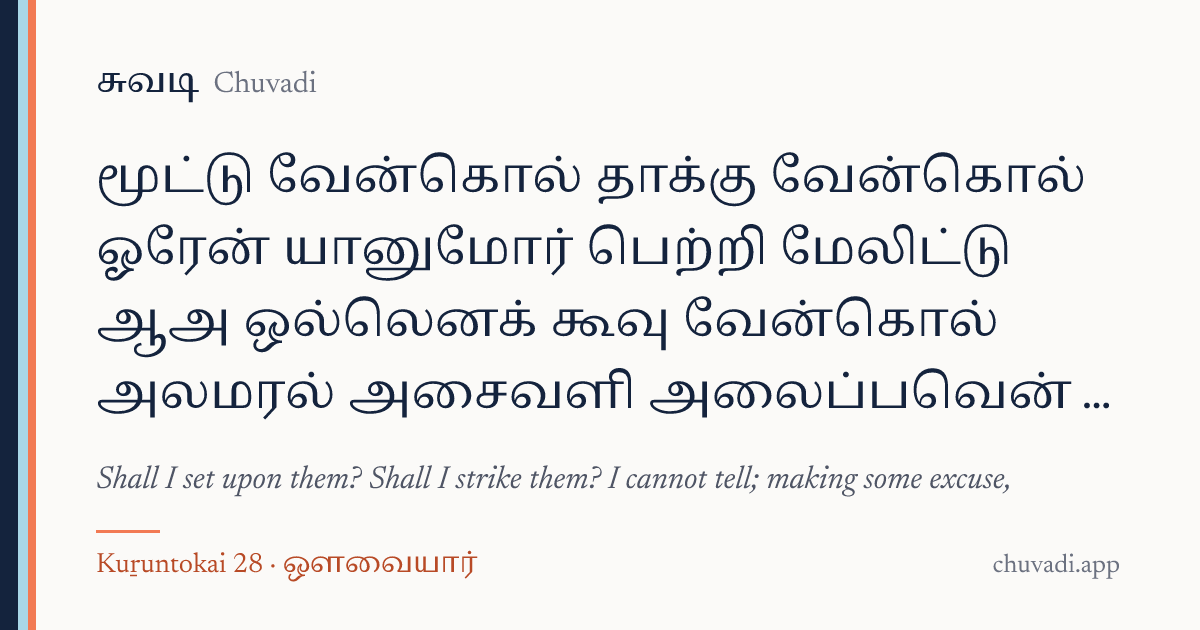
இவர்களைத் தாக்குவேனா? அடிப்பேனா? என்ன செய்வது என்று எனக்குத் தெரியவில்லை. ஏதாவது ஒரு சாக்கைச் சொல்லிக்கொண்டு "ஆ! ஓ!" என்று உரக்கக் கூவுவேனா? சுழன்று அசையும் காற்று என்னை அலைக்கழிக்க, நான் படும் வேதனையை அறியாமல் உறங்கிக்கொண்டிருக்கும் இந்த ஊரை என்ன செய்வேன்?
பாலைத் திணை; தலைவி கூற்று. தலைவன் பிரிந்திருக்கும் இரவில், ஊர் முழுதும் உறங்க அவள் மட்டும் துயரில் தவிக்கிறாள். எதையாவது செய்து ஊரை எழுப்ப வேண்டும் என்ற வெறி அவளுக்கு எழுகிறது; விடையில்லாத கேள்விகளாகவே பாடல் அமைந்திருப்பது அவள் கையறு நிலையைக் காட்டுகிறது. "முட்டுவேன்" என்ற சொல்லின் சரியான பொருள் உறுதியாகத் தெரியவில்லை; முட்டி மோதுவது என்று கொள்ளப்படுகிறது.
ஆங்கிலம் · English translationAI
Translation
- Shall I set upon them? Shall I strike them?
- I cannot tell; making some excuse,
- shall I cry out, 'Ā! Oh!' and shout aloud
- as the restless, shifting wind tosses me — my
- aching sickness it does not know, this town that sleeps?
What the poem says
The heroine speaks in the wasteland setting (pālai). Her lover is away. Through the night the wind buffets her while the whole town sleeps, unaware of her pain. She feels a wild urge to do something, anything, to make them notice: to attack them, hit them, or simply scream.
The poem is a series of questions she cannot answer, and the unanswered questions match her helpless restlessness. 'Making some excuse' (literally 'putting on some pretext') suggests she would need to hide the true reason for her cry even as she cried out.
The exact force of the first verb (mūṭṭu-) is debated. It can mean to attack, to butt, or to set something alight, and the translation chooses a general sense. The poem is attributed to Auvaiyār.