




குறுந்தொகை 281
பாடல் · The poem
Tap a word to see where else it occurs.
பொருள் · Meaning in TamilAI
வெண்மணலில் அடர்ந்து வளர்ந்த, பசிய அடியும் அரம்போன்ற விளிம்புடைய மடலும் உடைய, திரண்ட பனைமரத்தின் உச்சியிலிருந்து எடுத்த வெண்ணிறக் குருத்தோலையையும், வழியோர வேம்பின் கொத்தான ஒளிரும் மலர்களையும், சுருண்ட பிடரிமயிர் போன்ற தலைமுடி பொலியும்படி மக்கள் சூடிக்கொள்ளும், குன்றுகள் உச்சிகளால் ஒன்றோடொன்று நெருங்கிய காட்டுக்கு நம்மவர் சென்றுவிட்டாரோ, செவ்விய அணிகலன் அணிந்தவளே?
பாலைத் திணை; தலைவி தோழிக்குக் கூறியது. தலைவன் உண்மையிலேயே பாலைநிலத்துக்குப் போய்விட்டானா என்று கேட்கிறாள். தான் காணாத அந்த நாட்டை விரிவாக நினைப்பது, நினைவால் அவனைப் பின்தொடர்வதாகும்; இறுதிக் கேள்வி, அவன் சென்றதை அவள் இன்னும் முழுதும் நம்பவில்லை என்பதைக் காட்டுகிறது. பனந்தோடும் வேப்பம்பூவும் சூடுபவர் யார் என்று பாடல் சொல்லவில்லை; பாலைநில மறவராக இருக்கலாம். அவை சேர, பாண்டியரின் அடையாளங்கள் என்ற தொடர்பு இங்கே கருதப்பட்டதா என்பது தெளிவில்லை.
ஆங்கிலம் · English translationAI
Translation
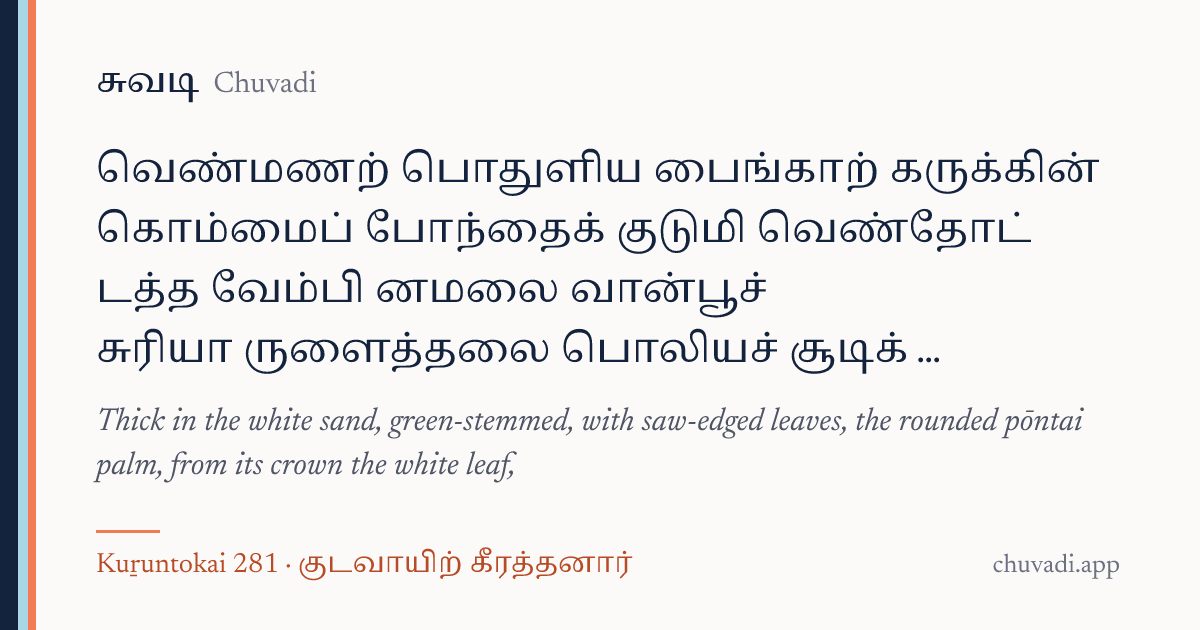
- Thick in the white sand, green-stemmed, with saw-edged leaves,
- the rounded pōntai palm, from its crown the white leaf,
- with the clustered bright flowers of the neem by the road,
- worn so that curling, maned heads look splendid —
- into that forest where the hills crowd their summits together,
- has he gone, then, you of the fine jewels, our man?
What the poem says
The heroine asks her friend whether the hero has really gone away into the pālai wilderness. She knows that country only by report. It is a place of palmyra palms (pōntai) growing in white sand and neem trees by the road, where people wear the white palm leaf and neem blossom in their hair, and where the hills crowd close together.
The detailed description does more than set a scene. Dwelling on a land she has never seen is her way of following him there in thought, and her question at the end shows that she still half refuses to believe he has gone.
The fourth line does not say who wears the palm leaf and neem flowers; the plural, implied subject is probably the fierce people of the wasteland, or possibly warriors. Palmyra and neem are also known as the emblems of the Cēra and Pāṇṭiya kings respectively, but whether that association is meant here is unclear.