



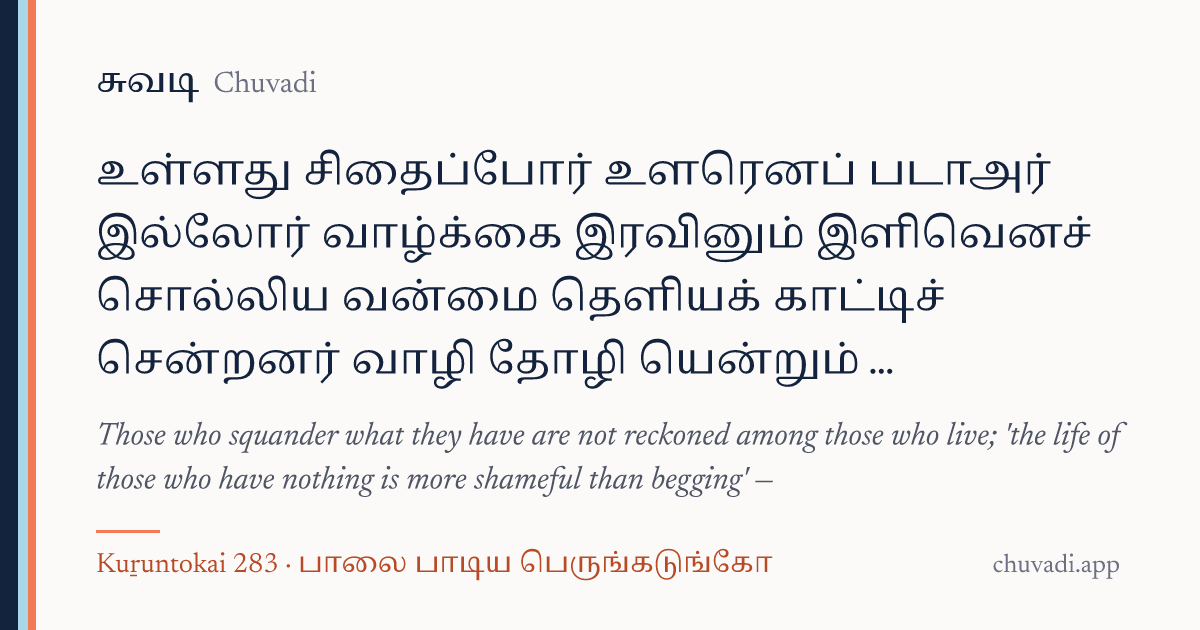

குறுந்தொகை 283
பாடல் · The poem
Tap a word to see where else it occurs.
பொருள் · Meaning in TamilAI
"முன்னோர் தேடிய பொருளை அழிப்பவர் உயிரோடு இருப்பவராகக் கருதப்படமாட்டார்; பொருள் இல்லாதவர் வாழ்க்கை இரத்தலைவிட இழிவானது" என்று சொன்ன கருத்தின் வலிமையைத் தெளிவாக எனக்கு விளக்கிவிட்டு அவர் சென்றார், தோழி, வாழ்க! எப்போதும் கூற்றுவனைப் போன்ற கொலைவேல் ஏந்திய மறவர், வழியருகே தங்கியிருந்து வழிச்செல்வோரைக் கொன்றதால் விழுந்த அழுகிய பிணத்தைப் பருந்து பார்த்திருக்கும், நீண்ட பழைய காட்டிடையே உள்ள நீரற்ற வழி அது.
பாலைத் திணை; தலைவி தோழிக்குக் கூறியது. பொருளீட்டுவதன் தேவையை இரண்டு நீதிமொழிகளால் விளக்கிவிட்டுத் தலைவன் பிரிந்தான். அவன் சொன்ன ஒழுங்கான நியாயத்துக்கும், அது அவனை இட்டுச் செல்லும் கொலைவழிக்கும் இடையிலான முரணே பாடலின் மெல்லிய கசப்பு. தன் முயற்சியால் பொருளீட்டி ஈவதே ஆண்மை என்ற சங்கக்கால மதிப்பு இதில் வெளிப்படுகிறது.
ஆங்கிலம் · English translationAI
Translation
- Those who squander what they have are not reckoned among those who live;
- 'the life of those who have nothing is more shameful than begging' —
- the force of these sayings he made clear to me,
- and went, may you live, friend; where forever,
- like Death himself, warriors with killing spears
- lodge beside the road and slaughter those who pass,
- and the kite sits watching the fallen rotting flesh —
- the waterless road through the long, ancient wilds.
What the poem says
The heroine speaks of the hero's departure in pālai. He left only after explaining his reasons in two maxims: a man who wastes his inheritance does not count as living, and a poor man's life is worse than a beggar's. She accepts the logic, or seems to, but the second half shows what it has cost her.
The road he took is full of the conventional terrors of the wasteland: robbers who kill travellers, kites waiting over carcasses, and no water. The contrast between his tidy moral reasoning and the deadly journey it leads to gives the poem its quiet bitterness.
The maxims voice a value found widely in Sangam poetry, that a man must earn wealth by his own effort in order to give generously and keep his standing. The poet is Peruṅkaṭuṅkō, called "the one who sang of pālai".