



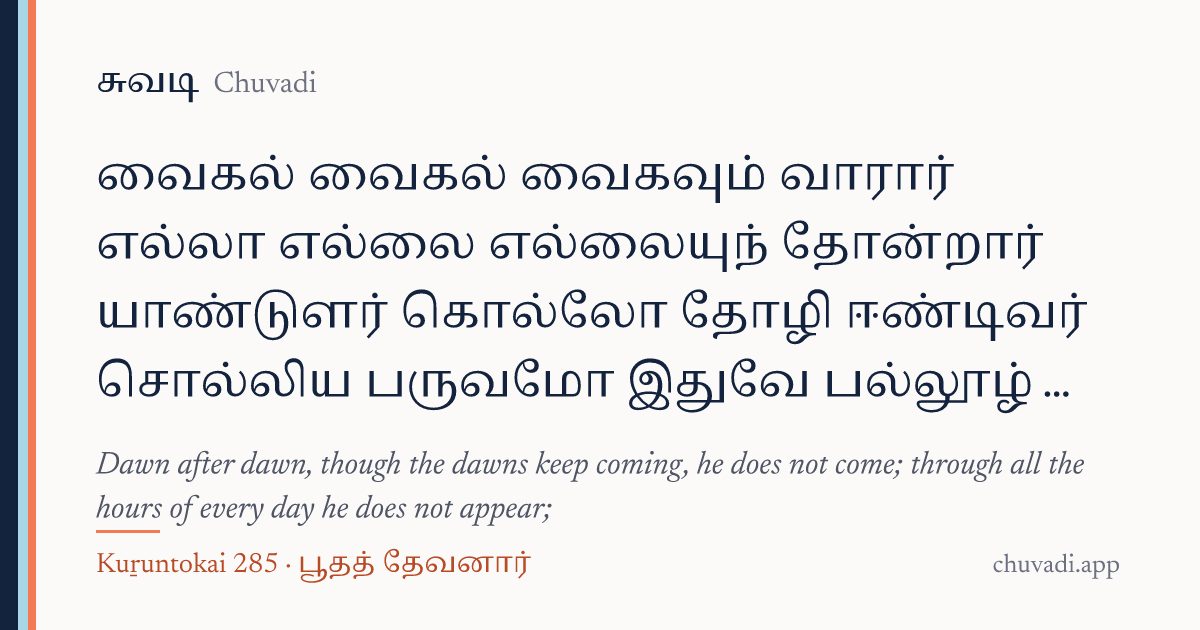

குறுந்தொகை 285
பாடல் · The poem
Tap a word to see where else it occurs.
பொருள் · Meaning in TamilAI
விடியல் விடியலாக நாள்கள் விடிந்துகொண்டே இருந்தும் அவர் வரவில்லை; ஒவ்வொரு நாளின் எல்லாப் பொழுதுகளிலும் அவர் தோன்றவில்லை. தோழி, அவர் எங்கே இருக்கிறாரோ? அவர் இங்கே சொல்லிச் சென்ற பருவம் இதுதானே! பலமுறை மங்கிய முதுகுடைய தன் பெடையை அழைத்து இன்புற்றிருந்த ஆண்பருந்து, கண் இமைக்கும் நேரத்தில் அதற்கு என்ன ஆனதோ, இப்போது ஞெமை மரத்தின் உச்சியில் இறைச்சியை விரும்பித் தனியாக இருக்கும், வானளாவ உயர்ந்த பாறைமலைகளைக் கடந்து சென்றவர் அவர்.
பாலைத் திணை; தலைவி தோழிக்குக் கூறியது. குறித்த பருவம் வந்தும் தலைவன் வரவில்லை. "வைகல் வைகல் வைகவும்", "எல்லா எல்லை எல்லையும்" என்ற ஒலிநயமிக்க இரட்டிப்புகள் காத்திருப்பின் சலிப்பையே ஒலிக்கச் செய்கின்றன. துணையை இழந்து தனித்திருக்கும் பருந்து, தலைவியின் தனிமையையும், வழியில் அவனுக்கு ஏதும் நேர்ந்ததோ என்ற அச்சத்தையும் காட்டுகிறது. ஐந்து, ஆறாம் அடிகளின் அமைப்பு தளர்வானது; பருந்து துணையை இழந்தது என்பது இயல்பான பொருள் மட்டுமே.
ஆங்கிலம் · English translationAI
Translation
- Dawn after dawn, though the dawns keep coming, he does not come;
- through all the hours of every day he does not appear;
- where can he be, friend? Here, the time
- he spoke of — is it not this? Many times,
- calling to its dull-backed mate, delighting —
- in the blink of an eye what has become of it? — on the ñemai's crown
- a lone kite sits, craving flesh,
- on the sky-high ridges of the mountains he has crossed.
What the poem says
The heroine speaks in pālai, waiting for the hero, who has not returned at the season he promised. The first two lines rely on sound: vaikal vaikal vaikavum vārār repeats one word for dawn, and ellā ellai ellaiyum plays on words for daylight and limit, so that the repetition itself sounds like the monotony of waiting.
The closing image is from the wasteland he crossed. A kite that once called to its mate now sits alone on a ñemai tree, waiting for carrion. The poem asks what has happened to its mate "in the blink of an eye". The solitary bird stands for the heroine's own state, and it raises a darker fear about what may have happened on that road.
The ñemai is a tree of the dry tracts whose identity is not certain. The construction of lines five and six is loose, and the reading followed here, that the kite has lost its mate, is the most natural but not the only one.