



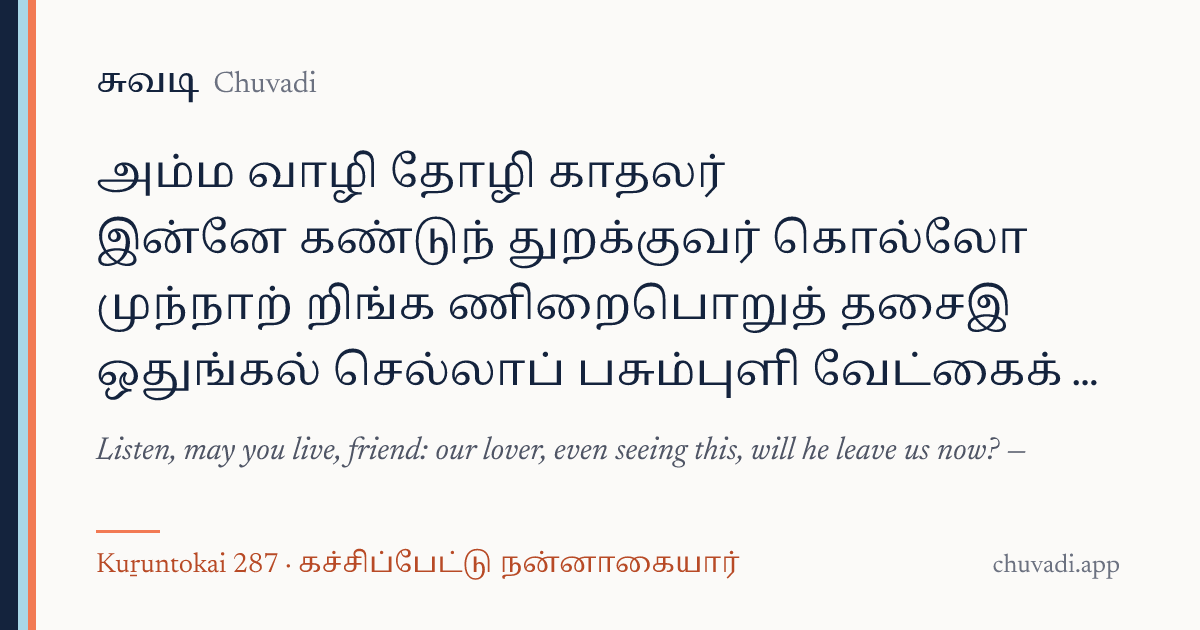

குறுந்தொகை 287
பாடல் · The poem
Tap a word to see where else it occurs.
பொருள் · Meaning in TamilAI
தோழி, வாழ்க, கேள்! முந்நான்கு திங்கள் கருவைச் சுமந்து தளர்ந்து, நடமாட இயலாமல், பசிய புளியங்காயை விரும்பும் நிறைசூல் மகளிரைப் போல, கடலிலிருந்து நீரை முகந்துகொண்டு, வானில் ஏற இயலாமல் அதைத் தாங்கிக்கொண்டு, வளமான பல குன்றுகளை நோக்கிப் பெருமுழக்கத்தோடு மேகங்கள் எழும் இந்தப் பொழுதைக் கண்டும், நம் காதலர் இப்போது நம்மைத் துறந்து போவாரோ?
முல்லைத் திணை; தோழி கூற்று. நீர் நிறைந்து மெல்ல எழும் கார்மேகங்களைப் புளிப்பை விரும்பும் நிறைசூல் மகளிருக்கு ஒப்பிடுவது புதுமையான உவமை; அது வீட்டுக்குரிய நிறைவையும் வளத்தையும் நினைவூட்டி, இப்பருவத்தில் தலைவன் பிரியமாட்டான் (பிரிந்திருந்தால் திரும்புவான்) என்று வாதிடுகிறது. மூன்றாம் அடியில் "முந்நாற் றிங்கள்" என்பது எத்தனை மாதங்களைக் குறிக்கிறது என்பது உறுதியாகத் தெரியவில்லை.
ஆங்கிலம் · English translationAI
Translation
- Listen, may you live, friend: our lover,
- even seeing this, will he leave us now? —
- like women who carry their fullness for months three and four and grow weary,
- who cannot move about and crave green tamarind,
- women heavy with child — so, having taken in water,
- unable to climb the sky, holding it with effort, from the sea,
- toward the many rich hills,
- the great loud clouds come rising, at this time.
What the poem says
The friend speaks in mullai, the tiṇai of the rains. The monsoon clouds are rising over the hills, heavy and slow, and she compares them to women late in pregnancy, weary, craving tamarind, barely able to walk. Surely, she says, the hero will not go away when he sees this season, or, if he is already away, he will not stay away now.
The comparison is vivid and unusual. It makes the rain clouds into an image of fullness and fertility, things that belong at home, and so argues for return. The pregnancy craving for sour green tamarind is a detail from daily life that the poet uses with great precision.
The third line is uncertain: the phrase mu nāl tiṅkaḷ literally reads "three four months" and has been understood in different ways; the exact count meant is unclear. The poet, Naṉṉākaiyār of Kaccippēṭṭu, is one of the women poets of the anthology.