



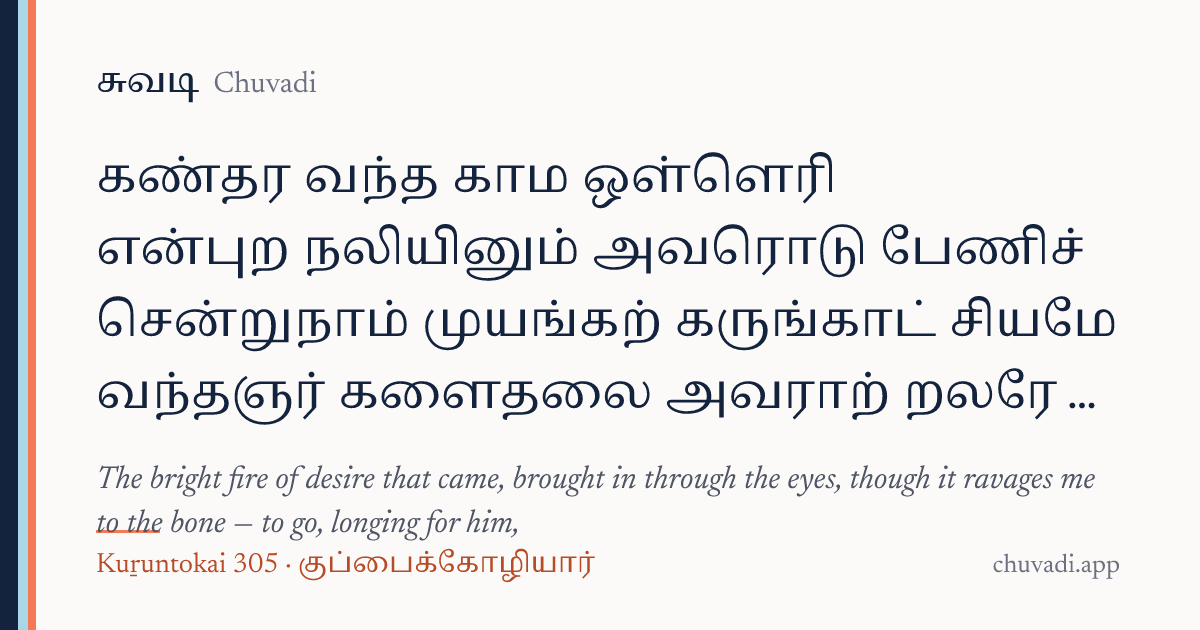

குறுந்தொகை 305
பாடல் · The poem
Tap a word to see where else it occurs.
பொருள் · Meaning in TamilAI
கண்கள் வழியாக உள்ளே புகுந்த காமம் என்னும் ஒளிரும் நெருப்பு என் எலும்புவரை வருத்துகிறது. ஆனாலும் அவரை விரும்பி நாமே சென்று தழுவிக்கொள்ள நம்மால் முடியாது; அவரோ இங்கு வந்து நம் துயரைப் போக்கும் ஆற்றல் இல்லாதவராக இருக்கிறார். குப்பைமேட்டில் இரண்டு கோழிகள் தனியாகச் சண்டையிடும்போது, அவற்றைத் தூண்டிவிடுவாரும் இல்லை, பிரித்து விலக்குவாரும் இல்லை; அவை சாகும்வரை சண்டை தொடரும். அதுபோல, சாவதால் முடிவதைத் தவிர, நம்மைப் பற்றிக்கொண்ட இந்தக் காதல் நோயைத் தீர்ப்பவர் யாருமில்லை.
மருதத் திணை எனத் தொகுக்கப்பட்டிருந்தாலும், பிரிவின் துயரே இப்பாடலின் உணர்வு; தலைவி தோழியிடம் கூறுவது. பெண் தானாகச் சென்று தலைவனைத் தேட இயலாத நிலையும், அவன் வராத நிலையும் சேர்ந்து, யாரும் தலையிடாத குப்பைக் கோழிச் சண்டைபோல அவள் நோய் தன்னைத் தானே அழித்துக்கொள்ளும் என்கிறாள். இந்த உவமையாலேயே புலவர் ‘குப்பைக்கோழியார்’ எனப் பெயர் பெற்றார். ஐந்தாம் அடியின் பொருள் சற்றுச் சுருக்கமானது.
ஆங்கிலம் · English translationAI
Translation
- The bright fire of desire that came, brought in through the eyes,
- though it ravages me to the bone — to go, longing for him,
- and embrace him ourselves is beyond our power;
- to come and drive away our distress, he is not able.
- No one pushes them on, no one pulls them apart or parts them —
- like the lone fight of the cocks on the rubbish heap,
- except to perish as they perish,
- there is no one to end it, this sickness that has seized us.
What the poem says
The heroine speaks of a love that is going nowhere. Though the poem is classed under marutam, its mood is close to separation. Desire entered through her eyes when she first saw him, and now it burns her to the bone. She cannot go to him, for a woman of her station cannot seek out a man; and he does not come to relieve her suffering.
The memorable image is a cockfight on a rubbish heap. In an organised fight someone sets the birds on or pulls them apart, but these fowl fight alone with no one to stop them, until they simply wear each other out. Her love-sickness is like that: no one can intervene, and it will end only when it destroys itself.
The poet is known only by this image: Kuppaikkōḻiyār means 'the poet of the rubbish-heap fowl'. Line 5 is terse, and its reading as 'no one urges them on or separates them' is the most natural sense.