



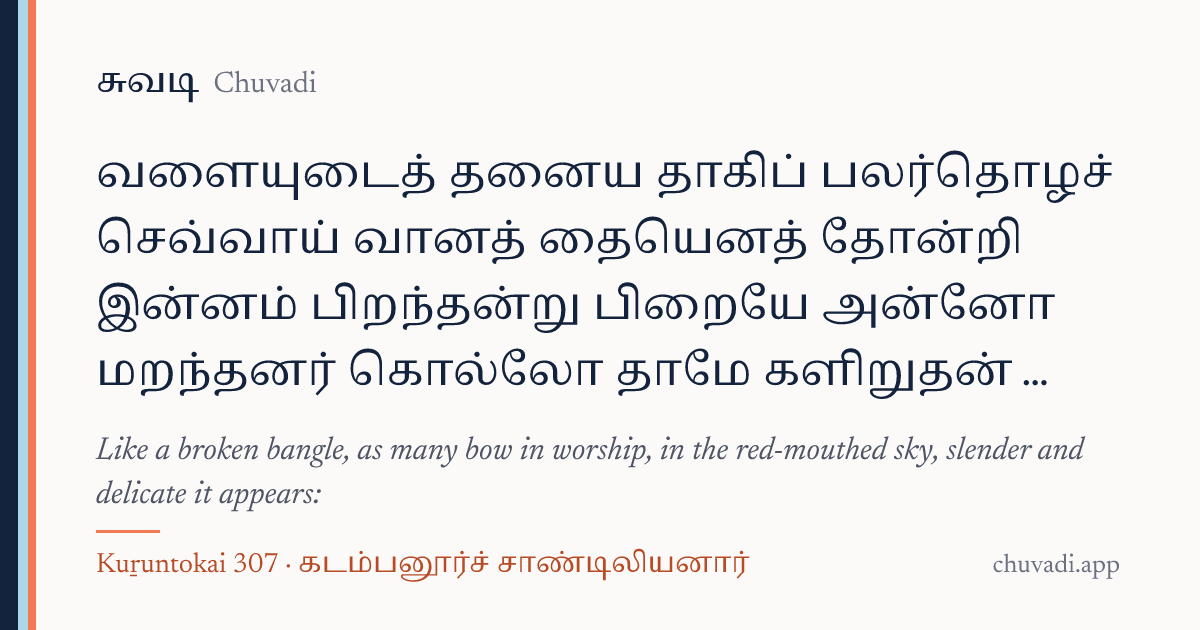

குறுந்தொகை 307
பாடல் · The poem
Tap a word to see where else it occurs.
பொருள் · Meaning in TamilAI
உடைந்த வளையலின் துண்டைப் போன்ற வடிவோடு, பலரும் வணங்கும்படி, செந்நிறமான மாலை வானத்தில் மெல்லியதாகத் தோன்றி, மீண்டும் பிறை பிறந்துவிட்டது. ஐயோ! அவர் நம்மை மறந்துவிட்டாரோ? தளர்ந்த நடையுடைய தன் இளம் பெண் யானையின் வருத்தத்தைப் பொறுக்க முடியாமல், ஆண் யானை உயர்ந்து நிற்கும் யா மரத்தை முறியும்படி குத்தி, அதன் வெண்ணிற நாரை எடுத்துத் துதிக்கையால் சுவைத்து, மேலே அண்ணாந்து பார்த்து, வருந்தும் நெஞ்சத்தோடு பிளிறும் நீண்ட பாலை வழியில், நான் அழ அழப் பிரிந்து சென்றவர் அவர்.
பாலைத் திணை; பிரிவுக்காலத்தில் தலைவி தோழியிடம் கூறுவது. புதிய பிறை மற்றொரு மாதம் கழிந்ததைக் காட்டுகிறது; உடைந்த வளையல் என்ற உவமை, மெலிந்து வளை கழலும் அவள் நிலையையும் நினைவூட்டுகிறது. கொடிய பாலை நிலத்திலும் களிறு தன் பிடியின் துயர் பொறுக்காது வருந்துகிறது; அங்ஙனம் இருக்க, அவ்வழியே சென்ற தலைவன் அழும் தன்னை விட்டுப் பிரிந்தது எப்படி என்ற குறை இறைச்சியாகத் தொனிக்கிறது.
ஆங்கிலம் · English translationAI
Translation
- Like a broken bangle, as many bow in worship,
- in the red-mouthed sky, slender and delicate it appears:
- once again the crescent moon is born. Alas,
- have they forgotten, then? — where the tusker, unable
- to bear the distress of his young cow-mate with her weary gait,
- gores the tall-standing yā tree till it falls,
- takes its white fibre, tastes it with his trunk, looks upward,
- and, with a grieving heart, trumpets
- on the long wilderness road — he who left while I wept.
What the poem says
The heroine speaks in pālai, the mode of separation. The hero has gone away across the dry wasteland, and the sight of a new crescent moon tells her that another month has passed without his return.
The thin crescent is compared to a piece of a broken bangle, a pointed image, since slipping and broken bangles signal a woman's wasting in love. People bow to the new moon, but for her it only measures time. She asks whether he has forgotten her.
The second half describes the land he crossed. A bull elephant, unable to bear his tired mate's suffering in the drought, knocks down a yā tree to get at its moist white fibre, tastes it, and finding no relief, raises his trunk and trumpets in sorrow. The implied meaning is a reproach: even an elephant cares for his mate in that harsh country, so how could the hero leave her in tears?